
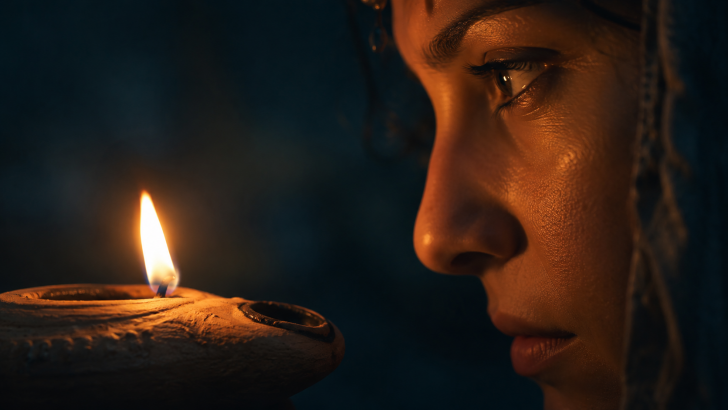
Before tarot cards and crystal balls, ancient practitioners looked for answers in the flame of a simple oil lamp.
Across Egypt and the Greco-Roman world, ritualists darkened rooms and chanted incantations, waiting for spirits to manifest in the fire—often using children as seers.
So how did an ordinary household item become a gateway to the divine?
1. It Started as an Ordinary Household Lamp
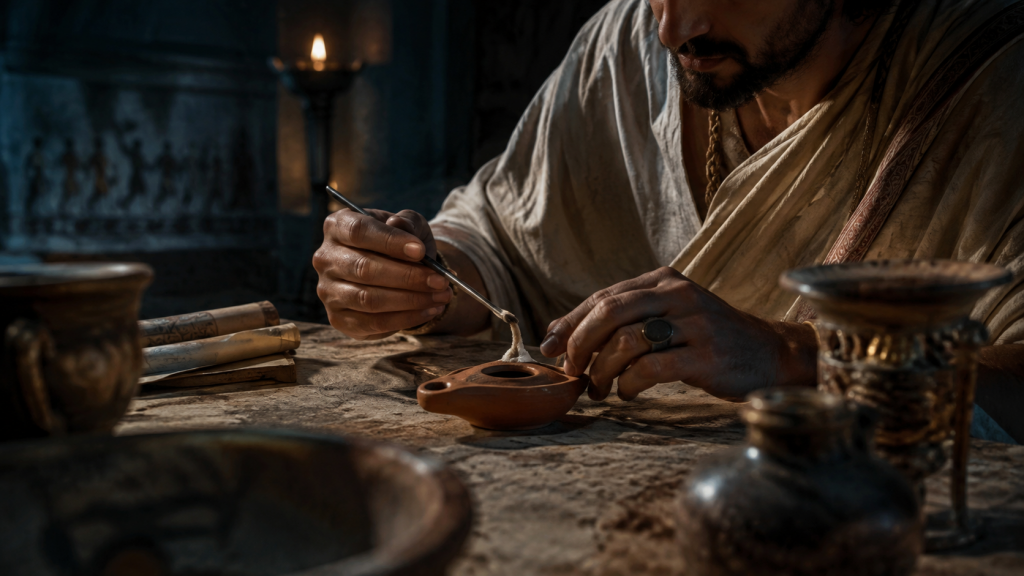
Ancient oil lamps were entirely ordinary.
Compact enough to fit in the palm of a hand, these shallow clay vessels were everyday tools found in homes, workshops, and burial sites. People lit them simply to push back the darkness.
The lamp was not inherently sacred, and that practical origin makes its later role in divination all the more fascinating.
Before any ritual use, however, the lamp had to be prepared.
Practitioners would clean the vessel, select specific oils, burn incense, and recite words of power over the flame.
Some rites even required a brand-new, unused lamp.
Though the object itself remained humble clay, the ritual transformed its meaning entirely, turning an ordinary household light into an oracle.
The lamp’s flame became a place where a divine answer might appear.
2. Why the Room Had to Be Completely Dark
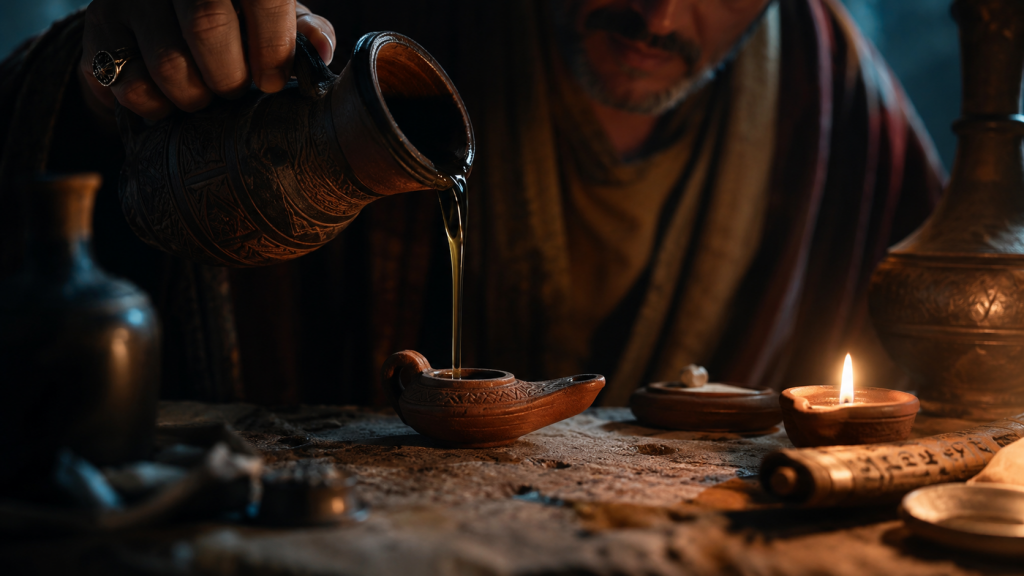
The surviving instructions for lamp divination could be surprisingly specific.
Certain rituals had to begin at a specific hour, while others required a completely sealed room, stripped of any outside light.
That absolute darkness was essential.
With the doors sealed, the solitary flame became the room’s only focal point.
Every small movement suddenly seemed significant. The fire leaned to one side, grew taller, weakened, or released a thin curl of smoke.
Shadows moved across the walls, faces changed in the dancing light, and objects appeared and disappeared at the edges of vision.
After fixating on the light for so long, the flame could seem to take on a life of its own. It began to feel almost alive.
Ancient ritual texts frequently describe gods or spiritual entities materializing within the fire, beside the lamp, or emerging from the surrounding shadows.
The practitioner might see a faint face, an outline, or an entire figure stepping into view.
To those performing the rite, this was far more than mere imagination. The darkened chamber had formed a sacred threshold where the human and divine worlds could briefly intersect.
And the lamp stood directly at the center of it all.
3. Sometimes, a Child Was Asked to Watch the Flame
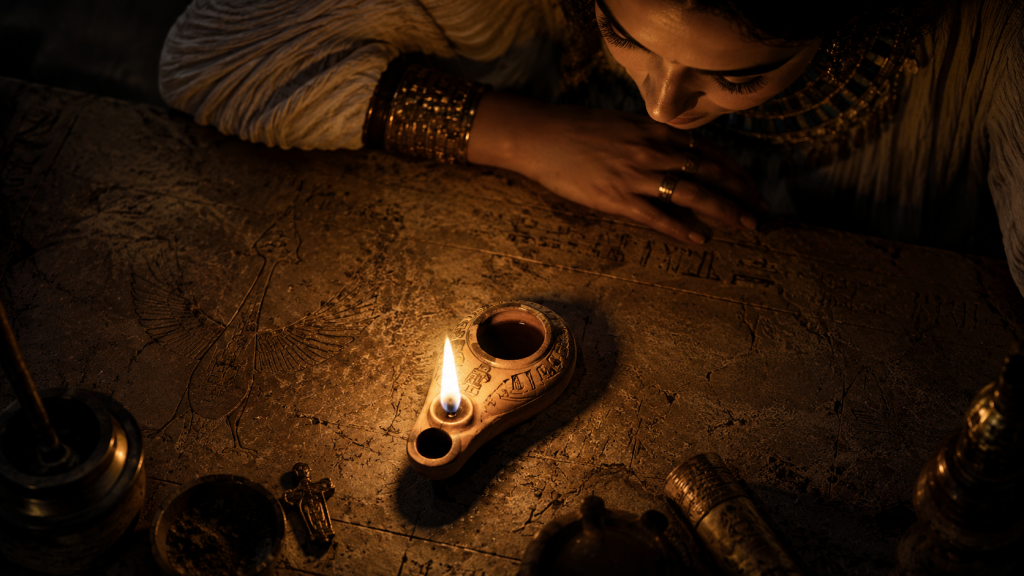
One of the most unusual details is that the primary observer was not always the practitioner.
In some ancient Egyptian rituals, a young boy served as the medium.
An adult practitioner prepared the room, recited the invocations, and asked the questions. The child then gazed into the flame and described what he saw.
The boy is instructed to open his eyes, then asked whether the light has changed. Has a god entered the room? Does he see a figure? What is the entity saying?
Certain deities were believed to act as guides within these visions. Anubis, the jackal-headed god associated with death and the afterlife, frequently appears in magical texts as an intermediary who ushers other divine beings into view.
But why entrust this role to a child?
The texts rarely give a direct explanation. Children may have been considered purer conduits—more receptive, less spiritually burdened, or less corrupted than adults.
Practitioners likely believed that a young medium could perceive what was hidden from ordinary adult sight.
In the end, the lamp never spoke with a voice of its own. The flame generated the vision, and even a child could give voice to whatever emerged from the dark.
4. The Lamp Wasn’t Mainly Used to Predict the Future
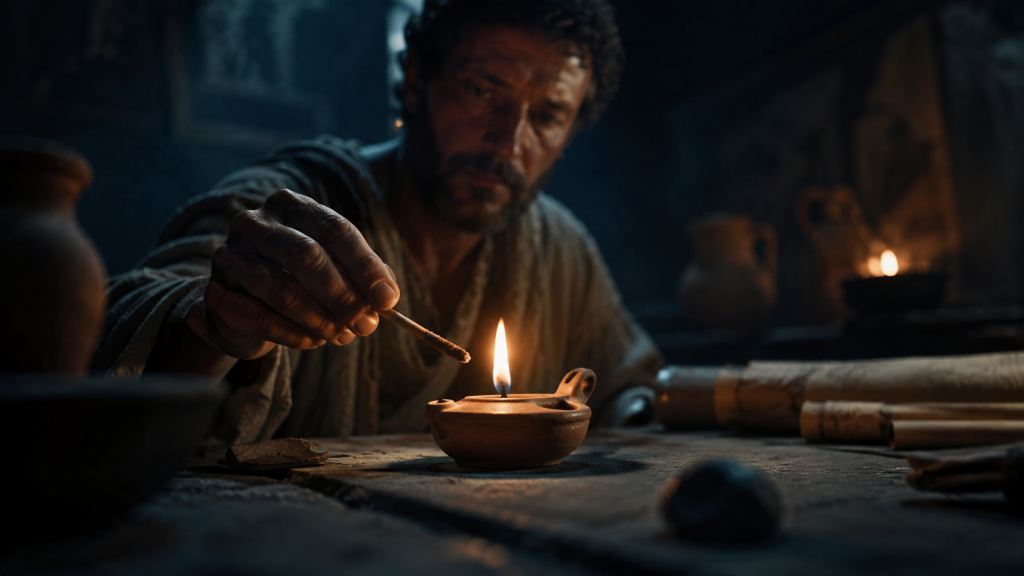
Calling the lamp an oracle can make it sound like an ancient fortune-telling machine. In reality, the questions posed to the flame reached far deeper into the unknown.
People were seeking concealed knowledge.
They asked about missing loved ones, agonizing decisions, mysterious illnesses, impending danger, or the true motives of someone they didn’t trust.
Some sought divine intervention, while others hoped to contact spirits or the dead.
The aim was not a simple glimpse of fate, but a living encounter with the unseen.
Certain rites combined the lamp with a basin of water or oil. When the flame reflected on the liquid’s trembling surface, the light warped and shimmered, allowing the watcher to search those moving patterns for faces, symbols, or signs.
One particularly unusual ritual required a scarab beetle to be suspended directly above the lamp. Heat and smoke rose toward the sacred insect while the practitioner chanted words intended to draw down a deity.
The instructions warned the practitioner not to be afraid when the figure appeared, a detail that suggests just how unsettling the experience was expected to feel.
The lamp was never meant merely to reveal tomorrow. It was designed to host a direct conversation with the unseen.
5. Why a Flickering Flame Seemed Able to Answer
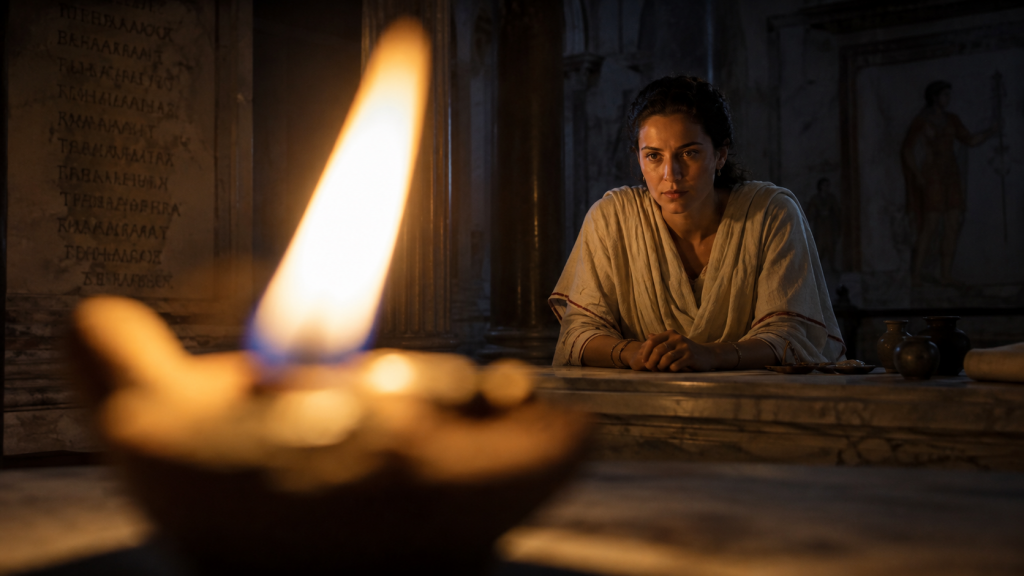
Fire is almost perfect for divination because it never stays still.
A flame stretches, splits, bends, and suddenly surges. Smoke twists into shapes that vanish before the eye can fully resolve them. Shadows grow much larger than the small objects that cast them.
Reflections make the effect even stranger. A single flame seems to duplicate—becoming two, then four—before scattering across the surface of rippling water.
In a dark, silent room, the eye can’t help but follow every movement and search for meaning in it.
The human mind is wired to look for patterns. Subjected to darkness, heightened expectation, and a moving light, ordinary shapes take on profound meaning.
Ancient practitioners didn’t consider these visions to be trickery of the mind. To them, the flame revealed an invisible presence.
Archaeology confirms that lamps featured in ritual settings far more widely than a few surviving manuscripts suggest. Large caches of oil lamps have been unearthed in caves, subterranean chambers, and sanctuaries across the ancient Mediterranean.
At Te’omim Cave near Jerusalem, archaeologists uncovered over 120 Roman-era lamps, many wedged deep into narrow fissures in the rock alongside bronze bowls, weapons, and human skulls.
Some researchers believe people may have visited the site for rituals involving the dead or the search for supernatural answers.
We can’t know every detail with certainty. But the lamps remain.
And they show how easily a familiar object could take on another life. A little clay vessel was carried into the dark, filled with oil, and given a flame.
Then someone leaned close—and asked it a question.
