
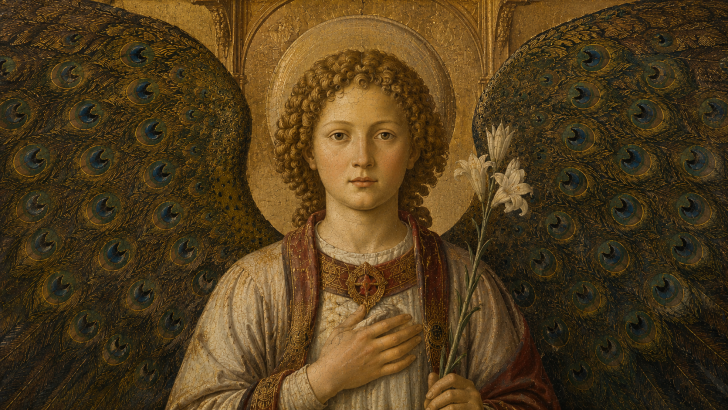
In Fra Filippo Lippi’s Annunciation, the Archangel Gabriel kneels before Mary with two large wings spread behind him.
These wings are not white. They are filled with blue, green, and gold feathers, marked with eye-like patterns that resemble a peacock’s tail.
During the Renaissance, this would have suggested paradise and eternal life. But in this painting, it may also have had a more specific meaning.
1. Gabriel Arrives With Peacock Feathers
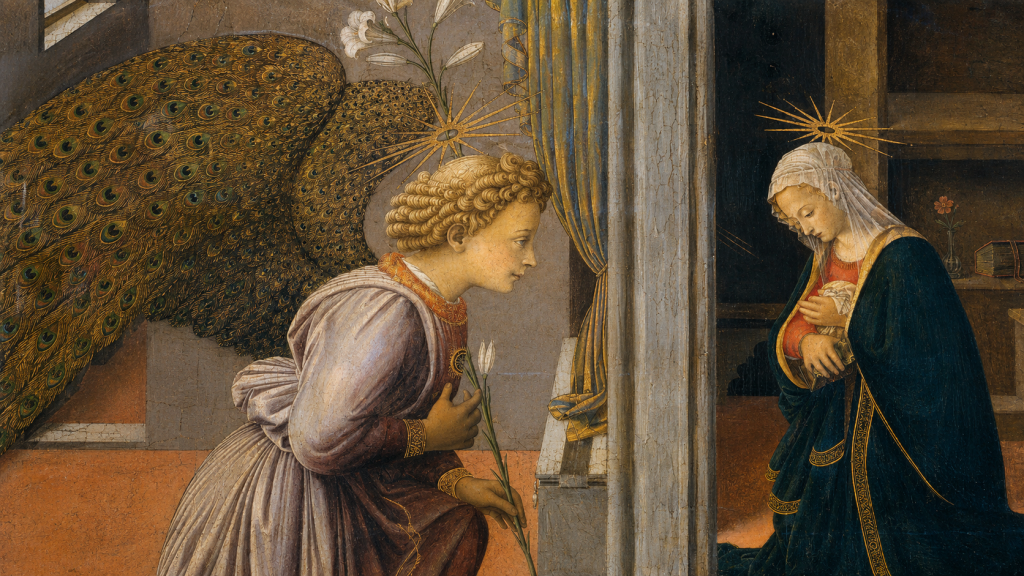
Lippi painted The Annunciation around 1450-53, probably for the Medici palace in Florence.
Gabriel has just entered a carefully ordered world of marble walls, rich fabrics, and a garden filled with flowers. He kneels with his head lowered, but his wings stand out clearly.
They rise above him in dense rows of patterned feathers. Deep blues and greens sit beside flashes of gold, while rounded markings give the surface the look of a peacock’s tail.
The wings make Gabriel look both magnificent and slightly strange. He hasn’t simply stepped into Mary’s home. He seems to have brought the colors of another world with him.
That effect was intentional. Renaissance painters paid close attention to angel wings, changing their shape and color from one work to another.
Lippi chose one of the most symbolically rich birds available to him.
2. The Bible Never Gave Gabriel Peacock Wings
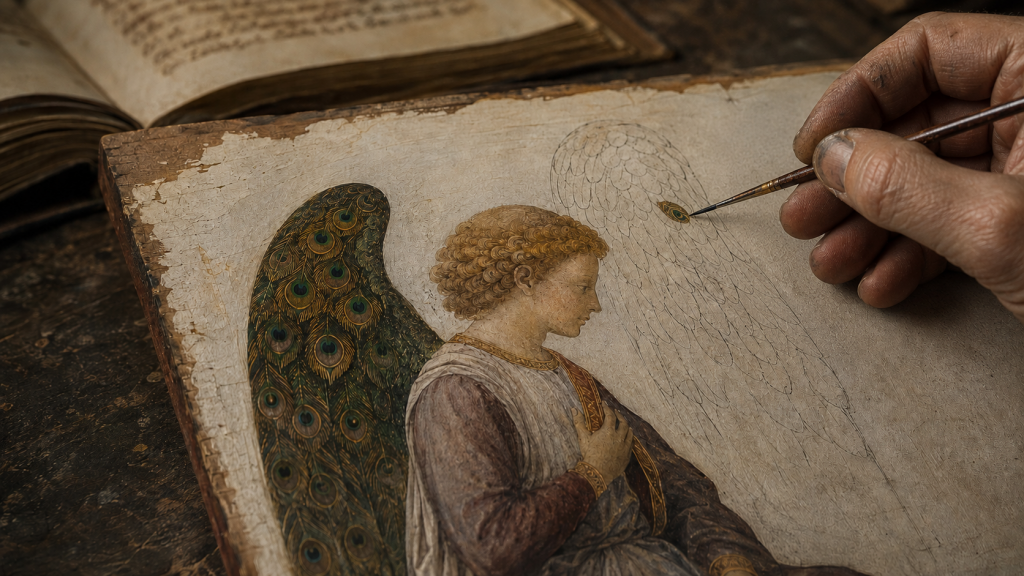
The account of the Annunciation in the Gospel of Luke doesn’t describe Gabriel’s wings at all. In fact, it doesn’t give him wings.
Other heavenly beings in the Bible are winged, though they often look very different from the familiar human-like angels.
Seraphim, for example, have six wings in Isaiah’s vision. Biblical cherubim are complex creatures that bear little resemblance to the round-faced babies later called cherubs.
Gabriel is simply described as a messenger. His peacock feathers come from artists, not scripture.
In early Christian art, angels were sometimes shown without wings. By late antiquity, artists began adding them more consistently, partly because wings made heavenly visitors easy to recognize.
They also suggested speed and the ability to move between heaven and earth.
Once this convention was established, painters could choose what kind of bird an angel’s wings might resemble.
White wings suggested purity, gold evoked divine light, and peacock feathers carried a much older set of associations.
3. The Peacock Already Belonged to Paradise
The peacock had been part of Christian imagery for centuries before Lippi began painting.
By the early Christian period, it appeared in sacred decoration as a symbol of paradise and heavenly splendor.
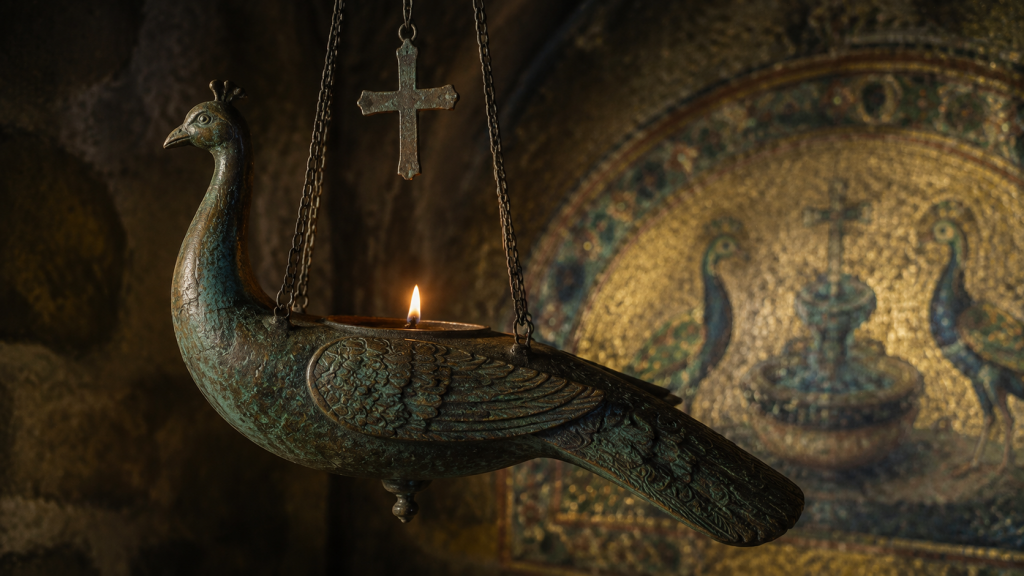
Peacocks were shown in mosaics and church objects, sometimes beside fountains or vessels that evoked the water of eternal life.
A Byzantine hanging lamp made in the sixth or seventh century, now in the Metropolitan Museum of Art, is shaped like a peacock. Suspended beneath a cross, it once held a small flame. Its peacock form connected the lamp with paradise.
This association continued through the Middle Ages. Peacock “eye” feathers were used to decorate angels’ wings in English church embroidery long before the Italian Renaissance.
By the time of Renaissance painting, the peacock already belonged comfortably in sacred spaces. Adding its feathers to an angel simply brought two established images of heaven together.
4. The Bird Carried a Promise of Immortality
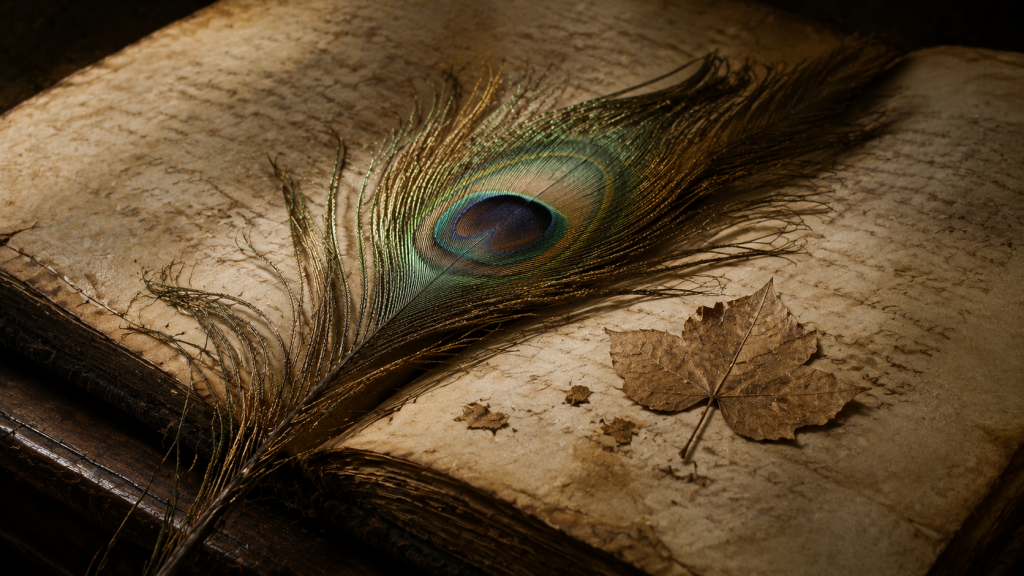
One unusual belief made the peacock especially useful to Christian artists.
In the ancient and medieval worlds, people often claimed that peacock meat did not decay easily.
Augustine even mentions this in The City of God, describing cooked peacock that seemed to spoil more slowly than expected.
This reputation linked the bird with incorruptibility. It appeared to resist the normal decay that affects all living things.
Christian art gradually adapted this idea to represent resurrection and eternal life. The peacock could suggest life beyond death without showing death itself.
When placed on an angel’s wings, the feathers carried that meaning into the figure. The messenger seemed to belong to a realm untouched by decay or time.
This symbolism was especially fitting in images of heaven, Christ’s triumph, and the Annunciation.
Gabriel’s message begins Christ’s earthly life, but Renaissance viewers already knew how the story would end: with death and resurrection.
5. Every Feather Seemed to Contain an Eye
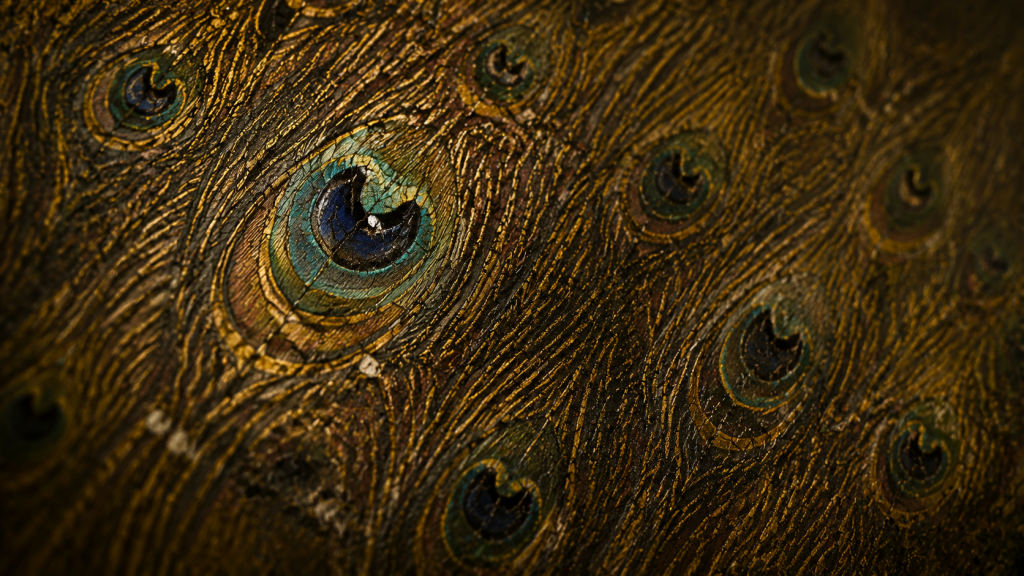
Peacock feathers are hard to look at without noticing their “eyes.” Each one seems to hold a dark pupil surrounded by rings of color.
The pattern has its own history. In classical mythology, the feathers were linked to Argus, the many-eyed watcher whose eyes were said to have been placed on the peacock’s tail.
Later interpretations read the markings as signs of vigilance, divine awareness, or a gaze that never closes.
This doesn’t mean every painted feather was meant to signal God watching over humanity. Artists rarely explained each detail, and meanings could change from person to person.
Still, the visual effect is very powerful. A plain wing suggests flight, while a peacock wing seems filled with sight.
On Gabriel, those repeating eyes make the angel feel alert and ever-present. They also turn the wing into something cosmic, like a small night sky scattered with stars.
6. One Painting May Also Have Been Speaking to the Medici
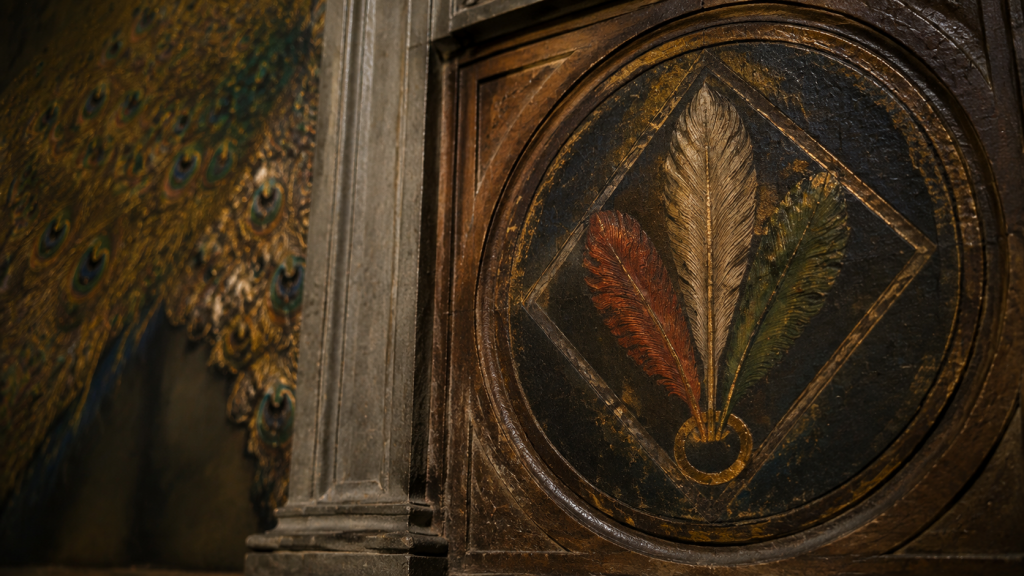
Lippi’s wings become more interesting when we consider the painting’s original setting.
The Annunciation came from the Medici palace and was made as a companion to a panel showing seven Medici patron saints. The two works may have hung above doors near Piero de’ Medici’s private study.
Inside the scene, Lippi included an emblem linked to Piero: feathers enclosed in a diamond ring. The National Gallery also notes that peacock wings were used as a Medici symbol during this period.
This makes Gabriel’s large, carefully painted wings feel more personal.
They still carried Christian associations with paradise and immortality, but they may also have reflected the identity of the family who owned the painting.
Renaissance patrons often filled religious art with details that tied sacred stories to their own households. These signs could be subtle enough for modern viewers to miss, while still being clear to those who lived with the works.
7. Peacock Wings Were Never a Universal Angelic Uniform
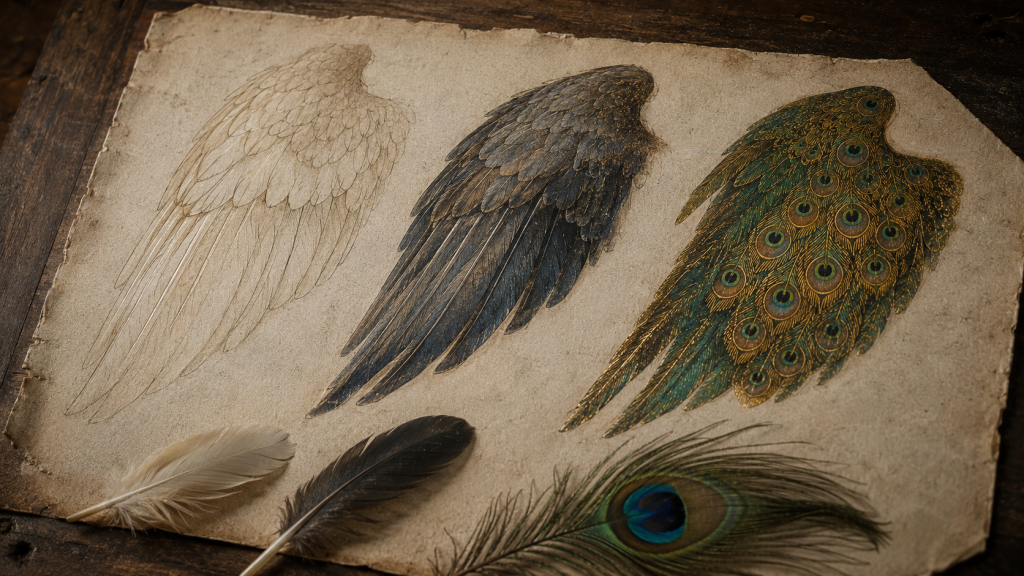
Lippi wasn’t alone in using the motif.
In Zanobi Strozzi’s Annunciation, Gabriel arrives with gilded wings patterned like a peacock’s. Fra Angelico’s Christ Glorified in the Court of Heaven shows angels with long blue-and-gold wings marked in a similar way.
The idea predates both artists. A small Annunciation painted in the Netherlands or France in the 1380s, now in the Cleveland Museum of Art, gives Gabriel peacock-like wings against a gold background. It was likely part of a portable devotional diptych.
But the pattern was never fixed. Some painters used pale or dark feathers instead. Others based their angels on different birds entirely.
Even peacock-like wings vary. Some closely follow the eye markings, while others simply echo the bird’s rich colors and shimmering surface.
There was no single code that made everyone read the feathers the same way. They could suggest immortality or paradise.
In other contexts, the same richness might signal an angel’s rank. In Lippi’s painting, however, patronage may also have played a role.
And before any of these meanings were considered, they did something simpler. They made Gabriel look as though he had brought a piece of paradise into the room.
