

A strange new trend is circling the social media where practicing Christians also dabble in witchcraft and manifestation.
Some of them call it white magic, and even though I believe there’s no ill intention behind what they’re doing, they’re still doing something that Scripture openly condemns.
Let’s explore this trend and see exactly what the Bible says about witchcraft!
1. So, What Is Christian Witchcraft?
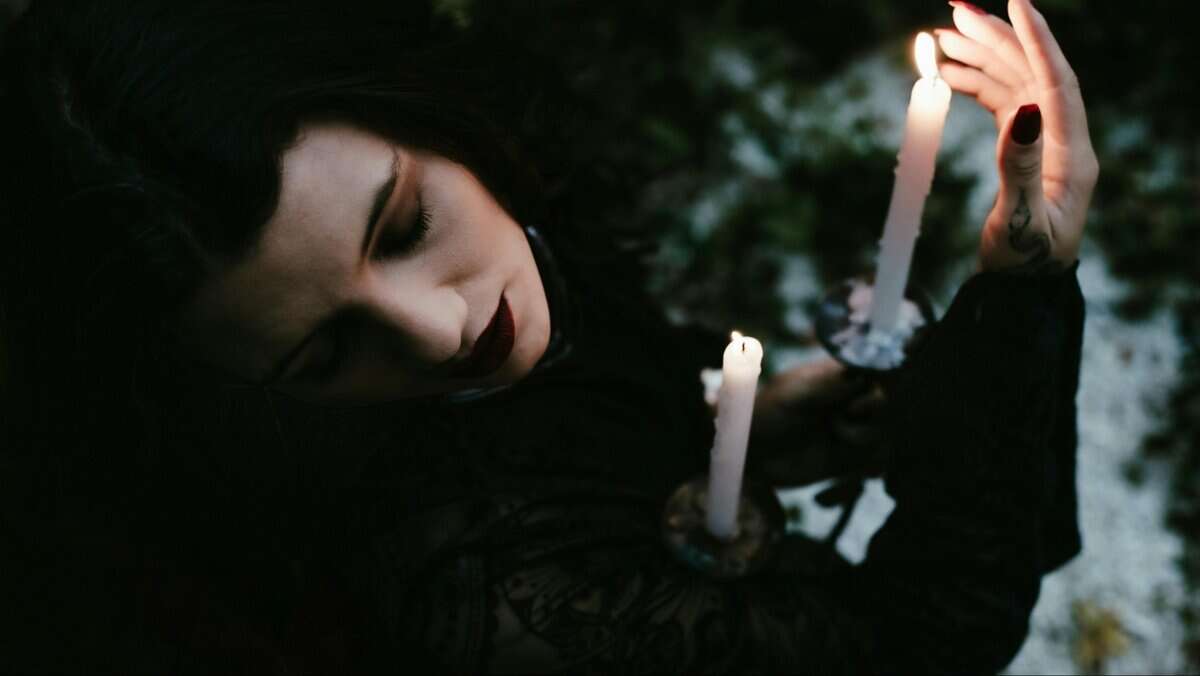
This trend shows up in many forms, but it’s always blending occult practices with Christianity.
Christian witches do letture dei tarocchi guided by the Holy Spirit, they perform moon rituals or use spell candles labeled with Bible verses.
These people aren’t trying to abandon Jesus; they’re just seeing witchcraft as another set of tools that can help them invite His Grace.
So, this is the trickiest part! It doesn’t look like they’re rejecting the faith, just making it feel more “empowered.”
Scripture calls certain practices out by name, regardless of the practitioners’ good intentions.
Good intentions and biblical faithfulness don’t always go hand-in-hand, and we need to address it.
2. Were Moses and Jesus Witches?

One argument you might hear from those who practice Christian witchcraft is that many important biblical figures were witches themselves!
Moses parted the Red Sea, Elijah called down fire, and Jesus healed the sick and raised the dead. What’s the difference between the magic they performed and any other?
The Bible teaches us that the crucial difference is God’s authority.
The power to perform miracles came to these Biblical men directly from God. They were vessels for His power, unlike witches who tend to manipulate unseen forces to get results.
Moses didn’t need spells; he simply obeyed God and was able to part the sea. Jesus spoke with the authority of the Son of God, and creation responded to Him.
On the contrary, witchcraft means that you’re trying to summon or direct power yourself.
3. Blaming King James
Another popular talking point claims that the Bible’s attack on witchcraft is a translation problem!
It says that King James’s translators exaggerated the condemnation to justify persecuting women centuries ago.
But the truth is that the prohibitions against sorcery and divination appear in the original Hebrew texts of the Torah.
Leviticus and Deuteronomy were written over a thousand years before the 1611 English translation.
The Hebrew texts were very specific about the exact occult practices that were forbidden.
Though witch trials were a horrific crime against mankind, it doesn’t justify the use of witchcraft.
4. “Aligning With God’s Energy”

Some Christian witches claim that they’re not trying to create magic themselves; they’re simply aligning with God’s energy or coming in touch with the Source.
These words make the practice sound more passive, but it still involves spell casting, manifestation rituals, and divination tools, which were made to produce certain outcomes.
Calling it allineamento doesn’t change the fact that it’s witchcraft.
It’s still a person using ritual to try to dare forma alla realtà according to their own will rather than surrendering to God’s power.
Prayer is also often dubbed a chant or spell. However, prayer doesn’t mean you tell God what you want, and He has to make it happen.
It’s a conversation with the Creator that inspires you and helps you understand and accept His will.
5. The Craft Means You Rule Yourself
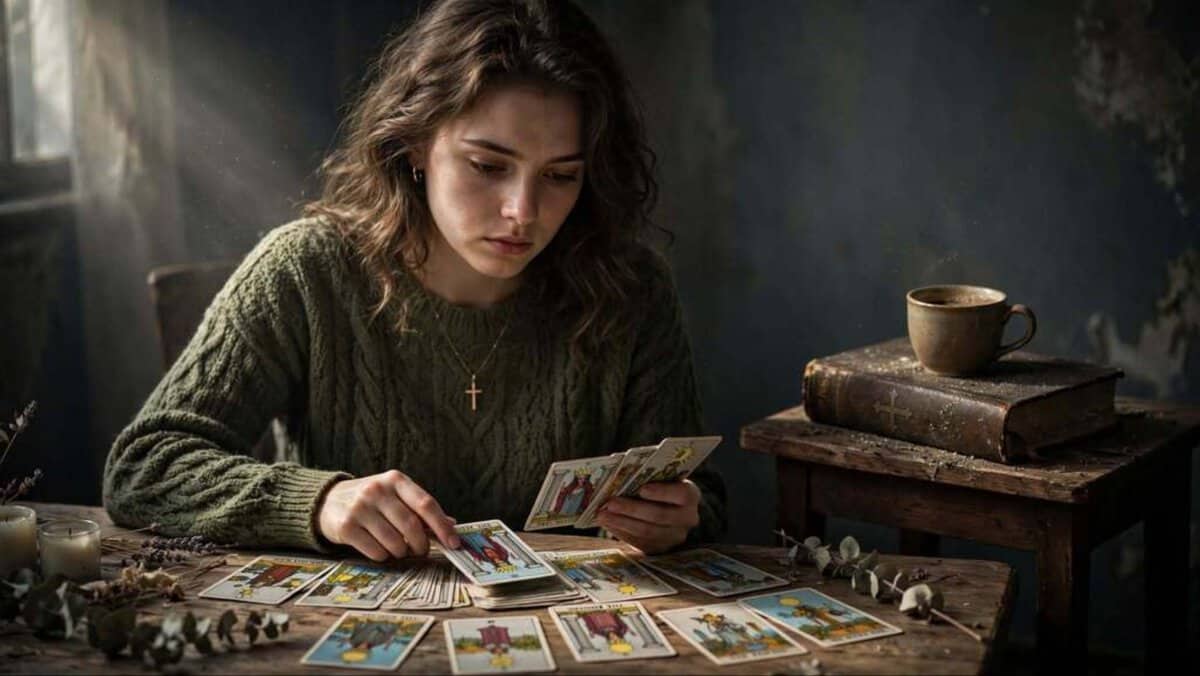
Being a devoted Christian means surrendering to Jesus. All of your decisions and choices depend on His teachings and what you know He would want you to do.
Witchcraft, in nearly every form it takes, means that you hold the power to shape your circumstances through your own will and rituals.
Christian faith rests upon the words thy will be done, while the craft means doing all that’s necessary to impose your own will on things.
You can’t fully submit to God while also reaching for tools of spiritual power. It’s the same impulse behind the very first sin in Eden: the desire to be like God!
Your faith weakens because it becomes divided.
6. Leviticus
In Leviticus 19:26 and 19:31, the people of Israel are directly told not to practice divination or turn to mediums. They’re warned that doing so would defile them.
Later, in Leviticus 20:6, God says He’ll set His face against anyone who turns to mediums!
Leviticus 20:27 further explains the severity of this offense before God and the law.
Occult and pagan practices were common in the surrounding cultures, so the God’s people were constantly reminded not to seek power and answers in this way.
Holiness meant trusting in Him, not picking and choosing from different traditions.
7. Deuteronomy
Deuteronomy 18:9-12 condemns witchcraft in detail.
Moses warns Israel not to learn to imitate the practices of the nations they were about to displace.
The list of prohibitions is quite long: divination, sorcery, interpreting omens, casting spells, consulting mediums, seeking answers from the dead…
He says anyone who does these things is detestable to God, and these words are very deliberate. There’s nothing vague about them, and there’s no room for interpretation.
Instead of these practices, God tells Israel He would raise up prophets to speak His word to them directly!
God wasn’t leaving His people without guidance or answers, but how they got those answers mattered!
8. 1 Samuel and 2 Kings
Scripture also shows us what happens when these rules are ignored.
1 Samuel 15:23 compares rebellion itself to the sin of divination, showing just how seriously God links disobedience with witchcraft!
2 Kings 17:17 explains that Israel’s downfall came partly because the people practiced divination and sorcery. Their actions provoked God’s anger.
2 Kings 21:6 and 2 Chronicles 33:6 both describe King Manasseh, who practiced sorcery and even sacrificed his own son!
Time and again, these sins lead to judgment and exile.
Whenever Israel drifted away from God, turning to any form of witchcraft, the consequences were severe.
9. The Prophets
Isaiah 47:9-13 mocks Babylon for trusting in witchcraft, telling the empire that, despite all of that, disaster will fall upon them regardless.
Nahum 3:4 makes a similar point about Nineveh, tying the city’s witchcraft directly to its corruption and downfall.
Both passages insist that occult power is powerless in the face of real crisis.
It promises control and hidden knowledge, but it fails to deliver when it matters most.
However, God is shown to be reliable even in the worst circumstances.
10. The New Testament
It’s not only the Old Testament that condemns witchcraft.
Galatians 5:19-21 lists sorcery right alongside other “acts of the flesh” like idolatry and hatred. It warns that anyone who turns to it won’t inherit the kingdom of God.
Acts 8:9-24 tells the story of Simon the sorcerer, a man in Samaria who amazed people with his magic before converting.
Acts 19:18-20 speaks of the new believers in Ephesus who had practiced sorcery. They brought all their scrolls together and burned them in public, which helped God’s word spread around them.
The apostles treated occult practice as incompatible with genuine faith, making even the term Christian witchcraft an oxymoron.
11. Revelation
Revelation 21:8 lists sorcerers among those excluded from the new heaven and new earth, grouped alongside murderers, idolaters, and liars.
The fate that awaits them is called the second death.
1 John 4:1 gives instructions on how to deal with the confusion that trends like Christian witchcraft create: don’t believe every spirit, but test them to see whether they’re from God.
Just because something references Jesus, it’s not necessarily legitimate.

A little Aquarius, devoted to writing and embroidery. Through my writing, I hope to empower readers to align with their true selves and navigate life’s mysteries with confidence.