
For two thousand years, Christians have been creating new and beautiful names for Mary, the mother of Jesus.
The result is one of the richest collections of titles in human history!
Some come from Scripture, and some came from ecumenical councils.
Others were whispered by sailors and shouted by soldiers.
Each one captures her grace!
1. Mother of God
This one sounds bold, as it should be.
Calling Mary the Mother means the child she carried was, from the first moment, truly divine.
The title was defended at the Council of Ephesus in 431, when the bishop of Constantinople argued Mary should only be called the mother of Christ, because he worried that saying more blurred the line between God and man.
Cyril of Alexandria pushed back.
If Mary’s son was split into two persons then God never really became one of us!
So the Church agreed that Jesus is one person, fully God and fully human, and Mary is the mother of that person.
The title reminds us that the Creator let himself be nursed and raised by this woman!
2. Theotokos
This title means God-bearer in Greek. Believers were using it long before Ephesus.
The oldest known Marian prayer survives on an Egyptian papyrus from around the 3rd century, and it begs Mary’s protection by calling her Theotokos.
Christians were already running to her for shelter during persecution.
When the Council of Ephesus affirmed the word in 431, crowds filled the streets with torches and celebrated long into the night.
Ordinary people felt like their faith had just been defended.
And in the Eastern Churches, the word never faded. It appears in countless hymns and icons, painted in Greek letters beside her halo.
3. Queen of Heaven
In the Old Testament, the king’s mother held a special seat of honor, and in 1 Kings, Solomon bows to Bathsheba and sets a throne at his right hand for her.
Since Jesus is the Son of David and King of kings, his mother wears the crown beside him.
Revelation adds the image of a woman clothed with the sun, the moon beneath her feet, twelve stars on her head.
Artists painted her crowned in heaven for centuries, and the ancient hymn Regina Caeli has been around since the Middle Ages!
In 1954 Pope Pius XII made it official for the Church with a feast of the Queenship of Mary.
4. Queen of Angels

If Mary is queen, she has angels in her court, according to the old Litany of Loreto, which calls her Regina Angelorum.
She’s the one the archangel Gabriel approached with reverence, so it makes sense that heaven’s messengers would honor her.
But the title is also historically relevant.
In the early 1200s, St. Francis of Assisi repaired a tiny chapel called the Portiuncula, dedicated to Our Lady of the Angels, and made it the heart of his new movement.
Locals said they sometimes heard angelic singing inside.
Centuries later, Spanish settlers in California named their village after the same devotion: El Pueblo de Nuestra Señora la Reina de los Ángeles.
That’s how Los Angeles got its name!
5. Star of the Sea
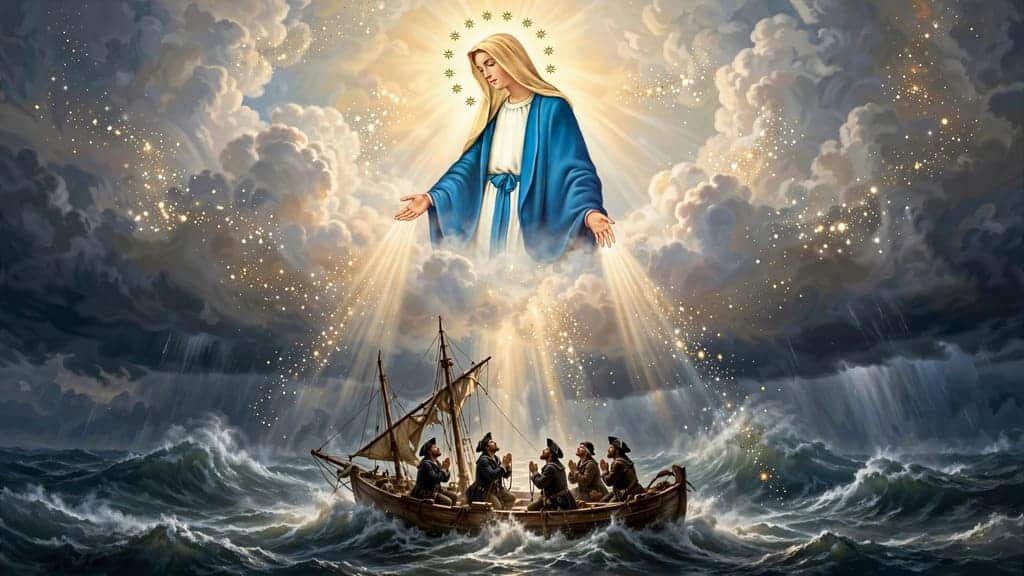
Sailors have always needed something solid to guide them, and for centuries Christians looked to Mary.
The title Stella Maris comes from a happy accident!
St. Jerome, translating Hebrew names in the fourth century, explained Miriam as “drop of the sea,” and somewhere in the copying, stilla got changed to stella, star.
Scholars still debate it, but the mistake stuck because it was too beautiful to let go.
The hymn Ave Maris Stella asks her to guide us safely home.
St. Bernard of Clairvaux even said, when the storms hit, look to the star, call on Mary!
Everyone’s been lost in the dark at some point, and everyone needs a light that doesn’t give out.
6. Seat of Wisdom
Sedes Sapientiae is one of the most striking titles in the Litany of Loreto.
Scripture calls Christ the Wisdom of God, and Mary is where that Wisdom sat down among us.
Medieval artists, especially in 12th century France, carved the idea into wood: Mary sits upright and calm, facing forward, with the child on her lap, both of them looking like royalty rather than ordinary people.
These statues were trying to tell us just how important the two figures are.
The title also became the patron of learning. Catholic universities around the world adopted it for their seals and chapels.
7. Mystical Rose

The title Rosa Mystica appears in the Litany of Loreto and draws on Scripture.
Sirach compares wisdom to rose plants in Jericho, and the Song of Songs speaks of the rose of Sharon.
Christians connected those lines to Mary, who bloomed in a hard world and gave it fragrance. The rose also gave us the rosary.
The word comes from the Latin rosarium, a rose garden, and the idea is that each prayer is a flower offered to her.
Dante, in his Paradiso, even pictures heaven as an enormous white rose with Mary at its heart!
In some traditions, the white, red, and gold roses stand for her joys, her sorrows, and her glory.
8. Tower of Ivory
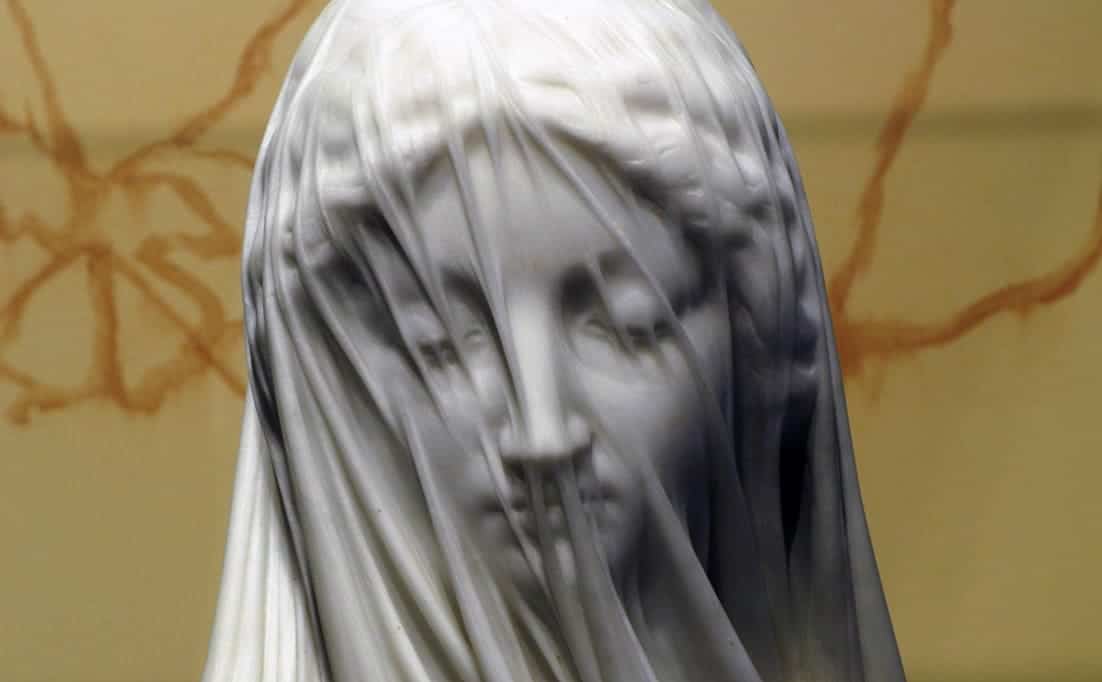
Ivory is rare and pure, and a tower is strong and hard to topple. Put them together and you get one of the strangest, most poetic titles of all: Turris Eburnea, the Tower of Ivory!
It comes from the Song of Songs, where the lover compares his beloved’s neck to a tower of ivory.
Early commentators read the whole book as a love story between God and his people, and Mary, the purest member of that people, became the picture of it.
The imagery sends two messages at once. One is a message of purity, because ivory is white and flawless.
The other is of strength, because a tower stands against attack.
Mary was a young woman from a small town, yet she endured when everything around her was uncertain.
The Mother of God isn’t a fragile figure.
9. Ark of the Covenant
In the Old Testament, the Ark of the Covenant was the holiest object in Israel.
Christians noticed something remarkable hiding in the Gospel of Luke. When Mary visits Elizabeth, the scene echoes the story of David bringing the Ark to Jerusalem.
David asks how the Ark of the Lord could come to him, and Elizabeth asks why the mother of her Lord should come to her!
The Ark stayed three months in a house; Mary stays about three months with Elizabeth.
David danced before the Ark, and John leaps in the womb.
Then in Revelation, the Ark appears in heaven and, right after, the woman clothed with the sun.
Mary carried the Word of God and the Bread of Life.
She carried God more closely than any chest ever could.
10. Help of Christians
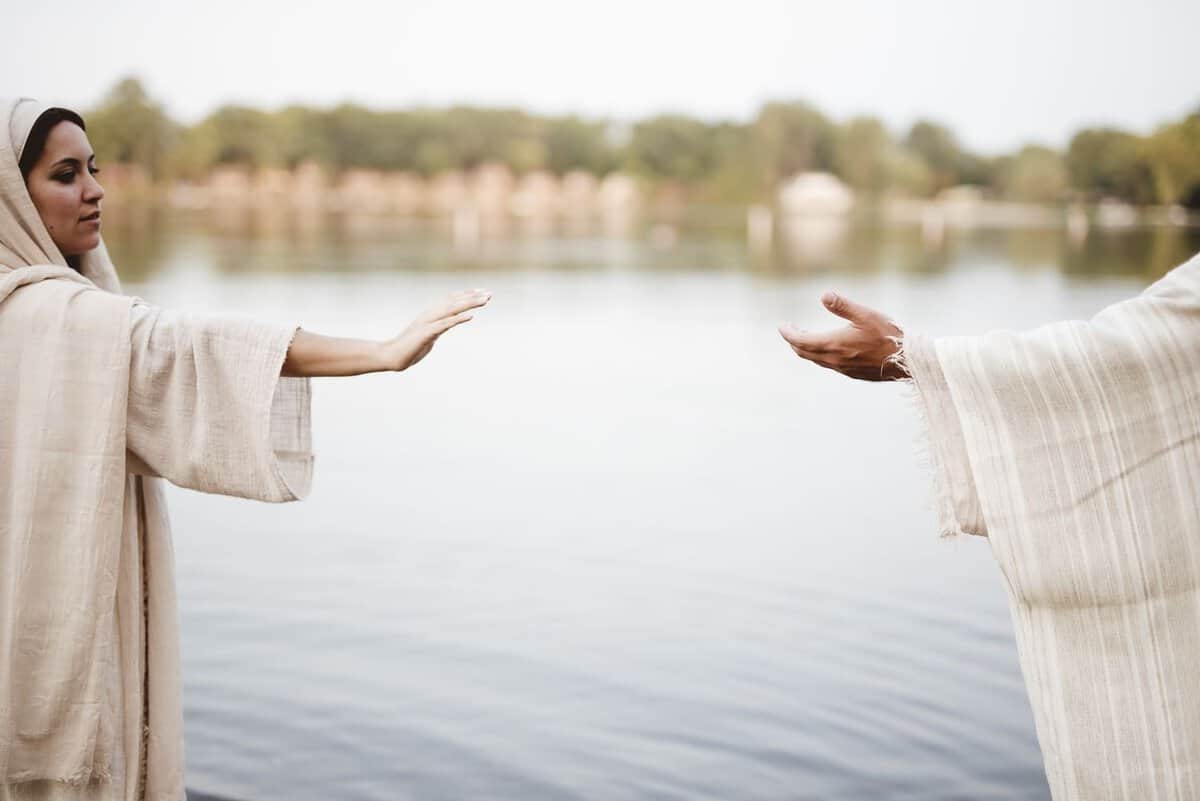
Some titles are born in quiet prayer. This one was born in battle.
In 1571, the Ottoman fleet threatened Europe, and Pope Pius V asked all of Christendom to pray the rosary while a Christian alliance sailed out to meet them at Lepanto.
They won, and Pius V added Auxilium Christianorum, Help of Christians, to the Litany of Loreto in thanks.
More than two centuries later, Pope Pius VII, held prisoner by Napoleon for years, returned to Rome on May 24, 1814, and he set that date as the feast of Mary, Help of Christians.
In Turin, St. John Bosco, who worked with poor and forgotten boys, built a great basilica to her in 1868, saying she herself had shown him what to do.
When people are cornered, they call on her!
She never leaves us to deal with our troubles alone.
11. Mother of Mercy
If you’ve ever prayed the Salve Regina, you’ve already said this name in the opening line.
The prayer is from the 11th century, and tradition ties it to a monk named Hermann of Reichenau, who was born with severe disabilities and wrote hymns anyway.
Pilgrims, monks, e sailors sang it for centuries.
It centers on mercy because Mary lived it.
In the Magnificat she says God’s mercy reaches from generation to generation. At Cana she notices a couple’s embarrassment before anyone asks and quietly steps in.
At the cross she stays.
In 1218, Peter Nolasco founded an order that ransomed Christian captives and vowed to take their place if necessary, all under the banner of Our Lady of Mercy.
That is her influence.
12. Our Lady of Sorrows
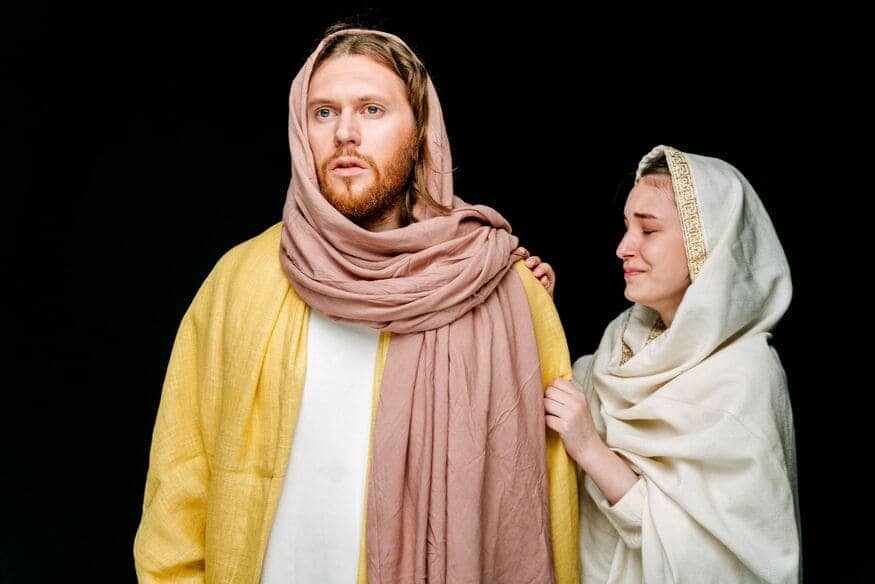
When Mary and Joseph brought the infant Jesus to the Temple, an old man named Simeon told her that a sword would pierce her own soul.
She carried that sentence for thirty-three years.
Tradition counts seven sorrows: the prophecy, the flight into Egypt, the loss of the boy Jesus in Jerusalem, meeting him on the road to Calvary, standing at the crucifixion, receiving his body, and his burial.
In 1233, seven Florentine merchants left their business to form the Servite order, devoted to meditating on her grief.
The medieval hymn Stabat Mater pictures her standing faithfully at the cross, and Michelangelo’s Pietà shows her holding her dead son with a stillness that breaks anyone who looks upon it.
Her feast is September 15.
For anyone who has buried someone they love, this title is a quiet consolation.
13. Our Lady of Lourdes
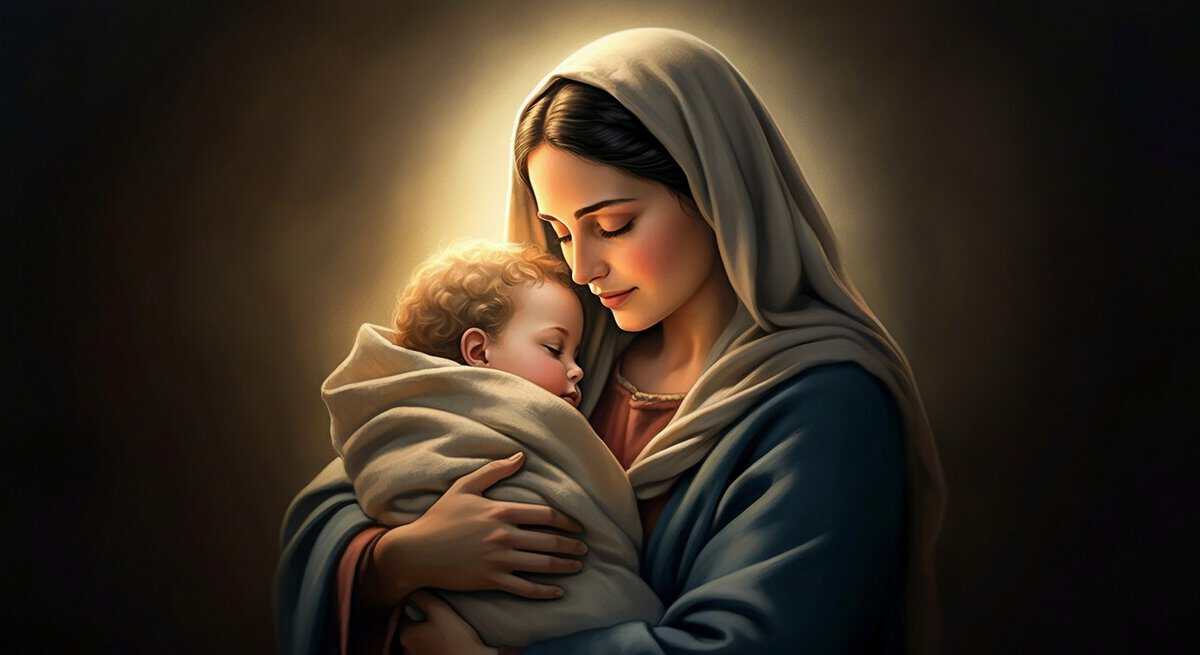
On February 11, 1858, a girl named Bernadette Soubirous went to gather firewood near a grotto in Lourdes, a poor town in southern France.
She was sickly and her family lived in a former jail cell.
There she saw a luminous young woman.
Over the next five months, Bernadette reported eighteen apparitions.
During one, she was told to dig in the dirt, and a spring appeared. When the local priest demanded the lady’s name, the answer came on March 25: “I am the Immaculate Conception!”
Today millions of pilgrims visit each year, many of them ill, and the Church has formally recognized seventy healings as miraculous!
Bernadette herself was never physically healed. The true miracle was what brought the broken together to carry each other.
14. Our Lady of Fatima
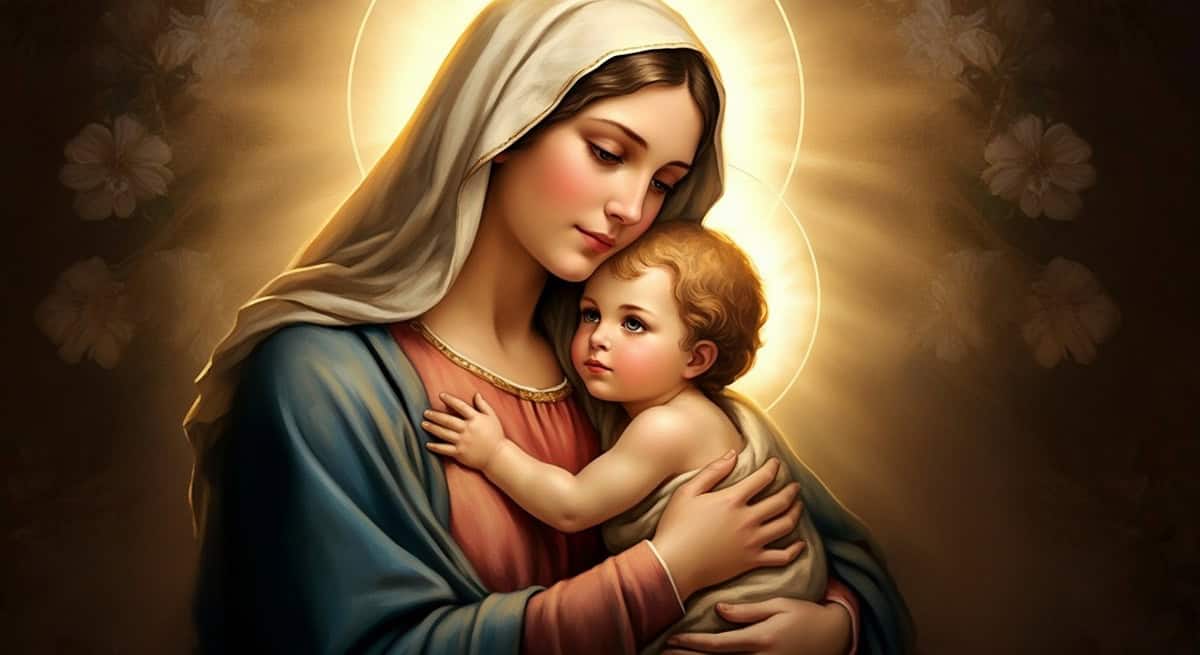
In 1917, while World War I was tearing Europe apart, three shepherd children in the Portuguese village of Fatima said a radiant lady appeared a loro on the thirteenth of most months.
She asked them to pray the rosary, to make sacrifices for sinners, and to pray for peace.
Word spread. Local officials threw the children in jail and threatened them, and still they wouldn’t deny what they saw.
On October 13, tens of thousands gathered in the rain and mud, and many reported seeing the sun spin and blaze in the sky, then dry the soaked ground.
Skeptics and believers have argued about it ever since.
The two children died young in the flu pandemic, in 1919 and 1920, and were canonized in 2017.
15. Our Lady of Guadalupe
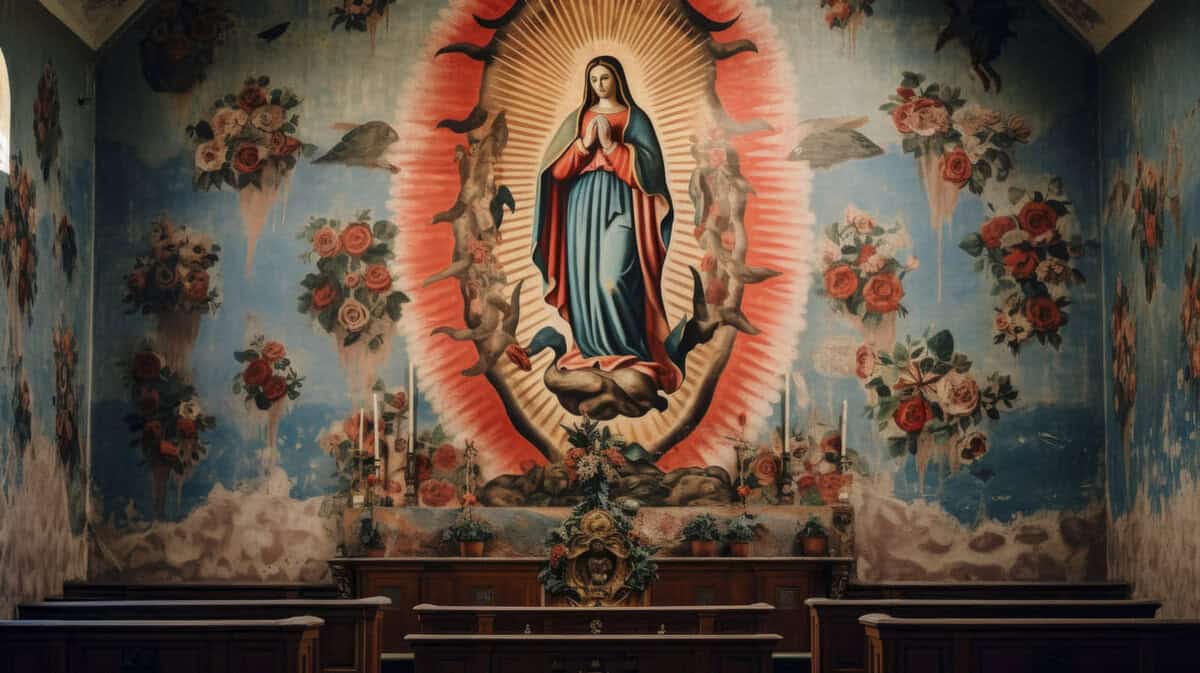
In 1531, ten years after the Spanish conquest of the Aztec capital, an indigenous man named Juan Diego heard music and saw a young woman who spoke to him in Nahuatl.
She told him to build a church there.
The bishop wanted proof, so the woman told Juan Diego to gather roses blooming out of season on the hillside, and he carried them to the bishop.
When he unfolded it, the flowers fell, and on the fabric appeared her image, except she had darker skin.
Today the Basilica of Guadalupe is one of the most visited Catholic shrines, and Juan Diego was canonized in 2002.
For millions of believers, she is la Morenita, il one who looks like them, who came to say: you matter!
16. Madonna
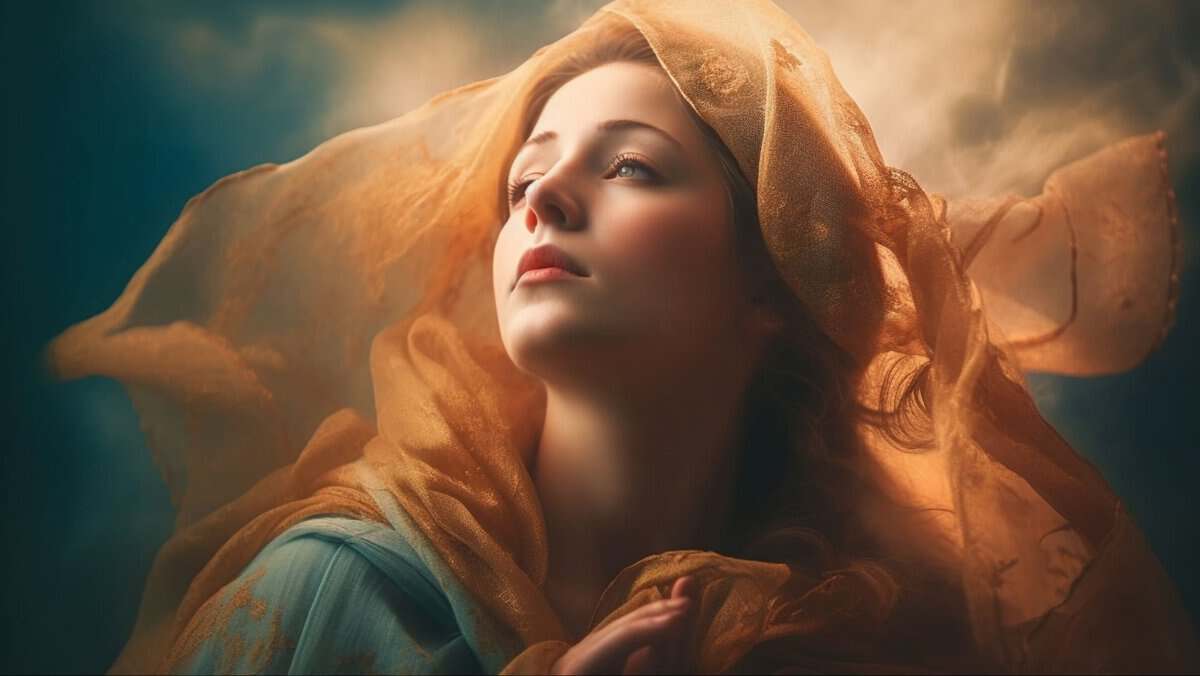
Madonna is simply Italian for my lady. In medieval Italy it was a polite and affectionate way to address a woman of rank.
Later on, it became the tender way to address Mary.
Then the Renaissance did something extraordinary with it.
Raphael painted her again and again, so gentle and human that his Madonnas are still reproduced on greeting cards five centuries later!
Leonardo, Botticelli, Bellini, and Michelangelo all took their turn, each trying to capture a mother with her child in a way that felt both holy and real.
Earlier Byzantine icons showed her solemn and majestic; these artists let her be tender.
Madonna says she belongs to us personally, not as a distant figure, but as someone we’re allowed to love.
17. Immaculate Conception
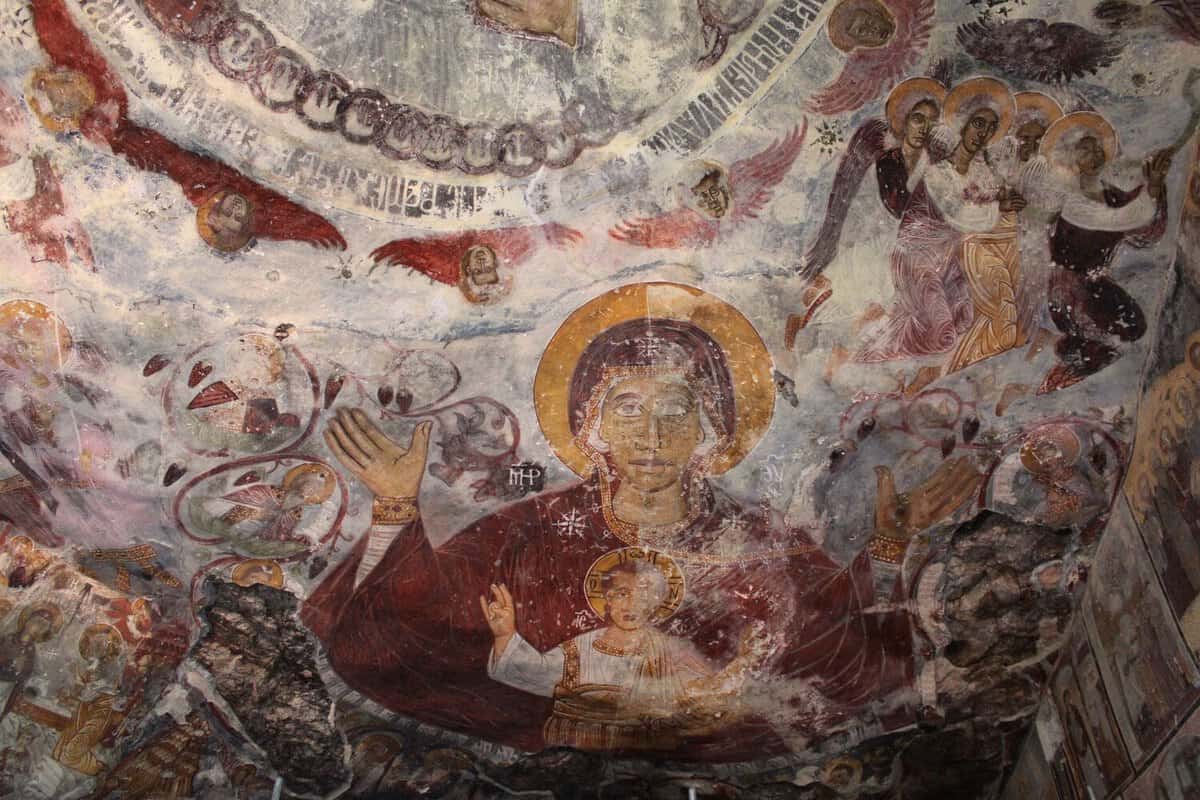
The title Immaculate Conception points to a belief that Mary was kept free from sin from the first moment of her existence.
It’s often confused with the virgin birth of Jesus, but it’s actually about her own conception.
In Scripture, the angel Gabriel greets her as “full of grace,” a phrase that suggested to early Christians that she was uniquely prepared for her mission.
Theologians debated for centuries.
Around 1300 Duns Scotus suggested that God could have saved her in advance, through the deeds of Christ that were only to come.
Pope Pius IX defined it as dogma on December 8, 1854.
Four years later at Lourdes, a girl who couldn’t read said the lady called herself by that title!
18. The New Eve
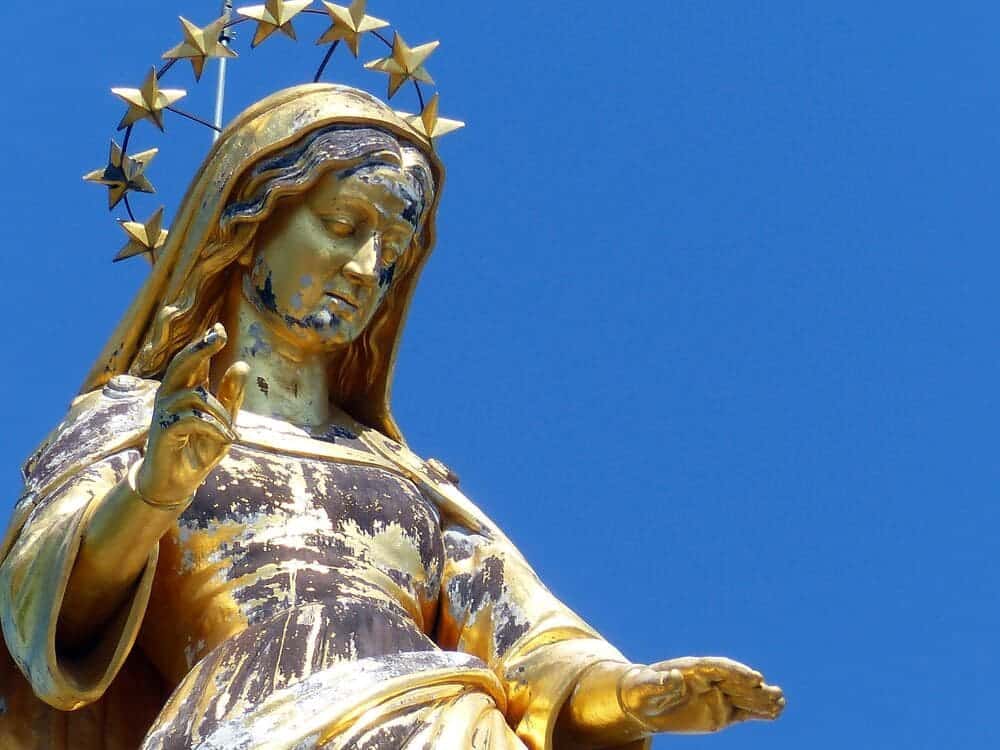
Around the year 180, St. Irenaeus of Lyons wrote that Eve’s disobedience tied a knot, and Mary’s obedience untied it.
A virgin had helped bring the fall, he argued, and another virgin helped bring the salvation.
Justin Martyr said the same a generation earlier.
They read Genesis 3:15, where a woman and her offspring are promised victory over the serpent, as a first glimpse of Mary and her Son.
In Latin, Gabriel’s greeting, Ave, is Eva spelled backward, a play on words the old hymn Ave Maris Stella celebrates.
In John’s Gospel, Jesus calls his mother “woman” at Cana and at the cross, as if she stands in for the first woman.
Death came through Eve, life through Mary!

A little Aquarius, devoted to writing and embroidery. Through my writing, I hope to empower readers to align with their true selves and navigate life’s mysteries with confidence.