

Greek mythology is filled with powerful goddesses, but not all of them ruled over love, war, or the natural world.
Some were connected with something much more personal. Healing.
Among these divine figures was Aceso, a lesser-known Greek goddess associated with the process of recovering from illness and injury.
Unlike Athena or Aphrodite, Aceso rarely appears in dramatic mythological stories.
She does not have famous battles, complicated romances, or enormous temples dedicated exclusively to her.
But her role was still important. The ancient Greeks understood that healing was not always immediate.
Recovery could require time, care, patience, and the gradual return of strength. Aceso represented that process.
She belonged to the divine family of Asclepius, the god of medicine, alongside other figures connected with health and well-being.
And although she remains one of the quieter goddesses of Greek mythology, her symbolism is surprisingly meaningful.
Here are nine fascinating things you probably didn’t know about Aceso, the Greek goddess of healing.
1. Her Name Literally Refers to Healing

One of the most interesting things about Aceso is the meaning of her name.
The Greek name Akeso, commonly written as Aceso in English, is connected with the Greek word akesis, meaning healing or cure.
That makes her identity unusually direct. She was not a goddess whose association with medicine developed through a complicated myth.
Healing was central to her very name. In ancient Greek religion, divine figures sometimes personified specific qualities or processes.
Victory could be represented by Nike. Peace was associated with Eirene. And healing could take the form of Aceso.
But her name suggests something more specific than simply being healthy. It points toward the act of becoming well.
That distinction matters. Someone who is already healthy does not experience healing in the same way as someone recovering.
Aceso represented the transition between those states. Her divine power belonged to the gradual process of improvement.
This makes her a particularly gentle figure in Greek mythology. She reminds us that recovery is not always a single dramatic moment.
Sometimes it is a series of small changes that eventually lead toward better health.
2. She Was One of the Daughters of Asclepius
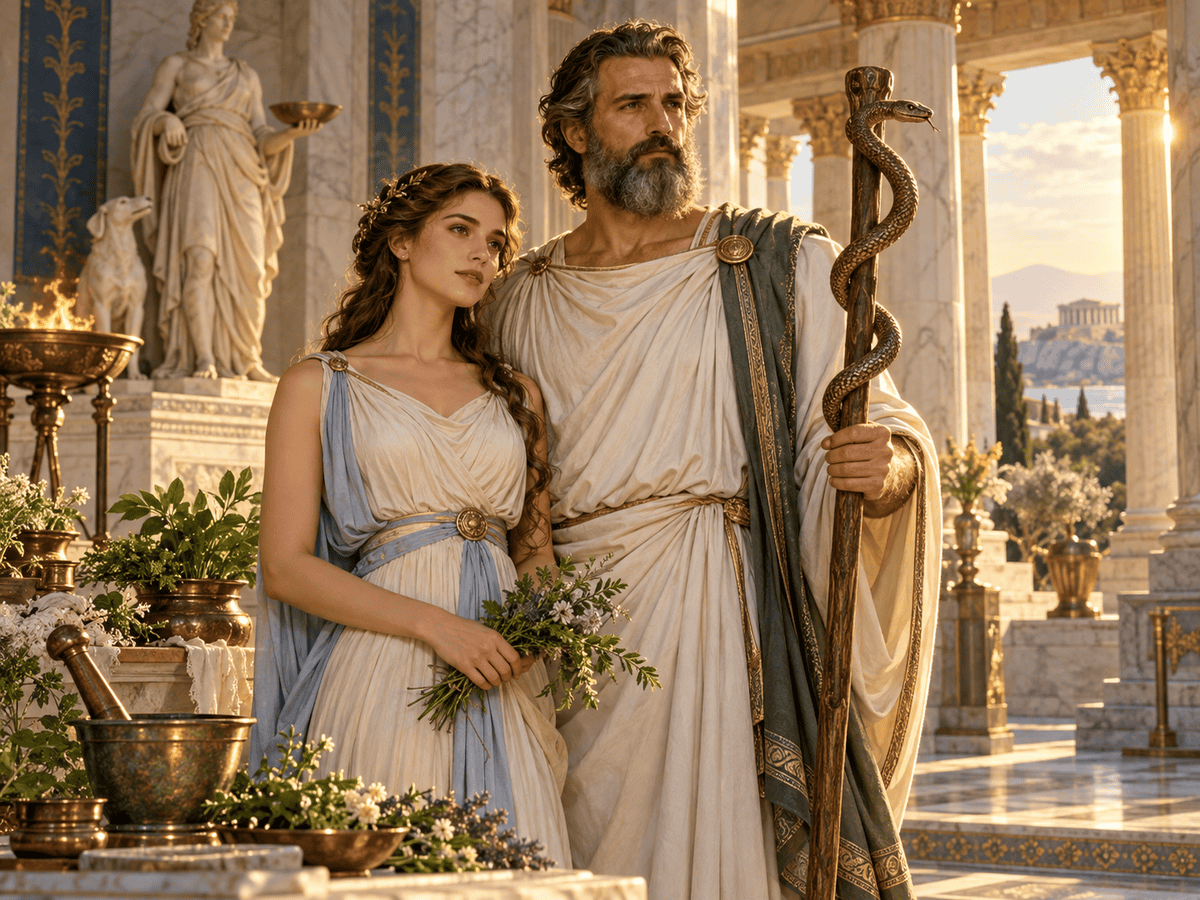
Aceso belonged to one of the most important divine families associated with medicine.
Her father was Asclepius, the Greek god of healing. According to Greek mythology, Asclepius was the son of Apollo and the mortal woman Coronis.
He became famous for his extraordinary medical abilities.
In some stories, his healing powers became so great that he could even restore the dead to life.
Aceso was counted among his daughters, who represented different aspects of health and medicine.
The family included Hygieia, Panacea, Iaso, and other figures whose names and roles varied across traditions.
Each goddess expressed a different part of the healing world. This arrangement reflected an interesting understanding of medicine.
Health was not a single simple concept. It involved prevention, treatment, recovery, and the preservation of well-being.
Aceso’s place within this family emphasized the importance of the healing process itself.
She was not simply another name for her father. She represented a particular aspect of the divine power associated with medicine.
And that made her an important member of the household of Asclepius.
3. Aceso Represented Recovery Rather Than Perfect Health

Aceso is sometimes confused with her sisters because they were all connected with healing.
But their symbolic roles were not exactly the same. Hygieia was associated with health, cleanliness, and the preservation of well-being.
Panacea represented the idea of a universal remedy. Iaso was connected with recovery and healing.
Aceso, meanwhile, was especially associated with the process of curing and becoming well.
The distinctions between these goddesses were not always rigid in ancient worship.
Their meanings could overlap, and surviving evidence does not provide a complete system assigning every stage of medicine to a different deity.
Still, Aceso’s name strongly connects her with healing as an ongoing action. That makes her symbolism particularly interesting.
A person might receive treatment and still need time to recover. An injury could improve gradually.
Strength might return slowly. Aceso represents that space between receiving help and feeling completely restored.
In a mythology filled with gods who accomplish extraordinary things instantly, she reminds us that some important changes happen little by little.
4. She Was Connected With the Famous Healing Sanctuary at Epidaurus

One of the most important centers of ancient Greek healing was the sanctuary of Asclepius at Epidaurus.
People traveled there seeking divine assistance with illness and physical suffering.
The sanctuary became famous for its religious ceremonies, sacred spaces, and healing practices.
Visitors could participate in a ritual known as incubation, which involved sleeping in a sacred area in the hope of receiving a meaningful dream.
Such dreams might be interpreted as messages from Asclepius.
The sanctuary also had connections with other divine figures associated with healing.
Aceso appears in evidence connected with the wider cult of Asclepius, including the healing traditions of Epidaurus.
That is important because she was not merely an invented character in a later mythology book.
She belonged to an actual religious environment where people sought divine help.
For ancient worshippers, healing was deeply connected with both physical care and spiritual belief.
Aceso’s presence within this world reflects the hope that recovery could be supported by divine forces.
Her role may have been quieter than that of Asclepius. But the process she represented was central to what visitors hoped to experience.
5. Ancient Greeks Sometimes Honored Healing Goddesses Together
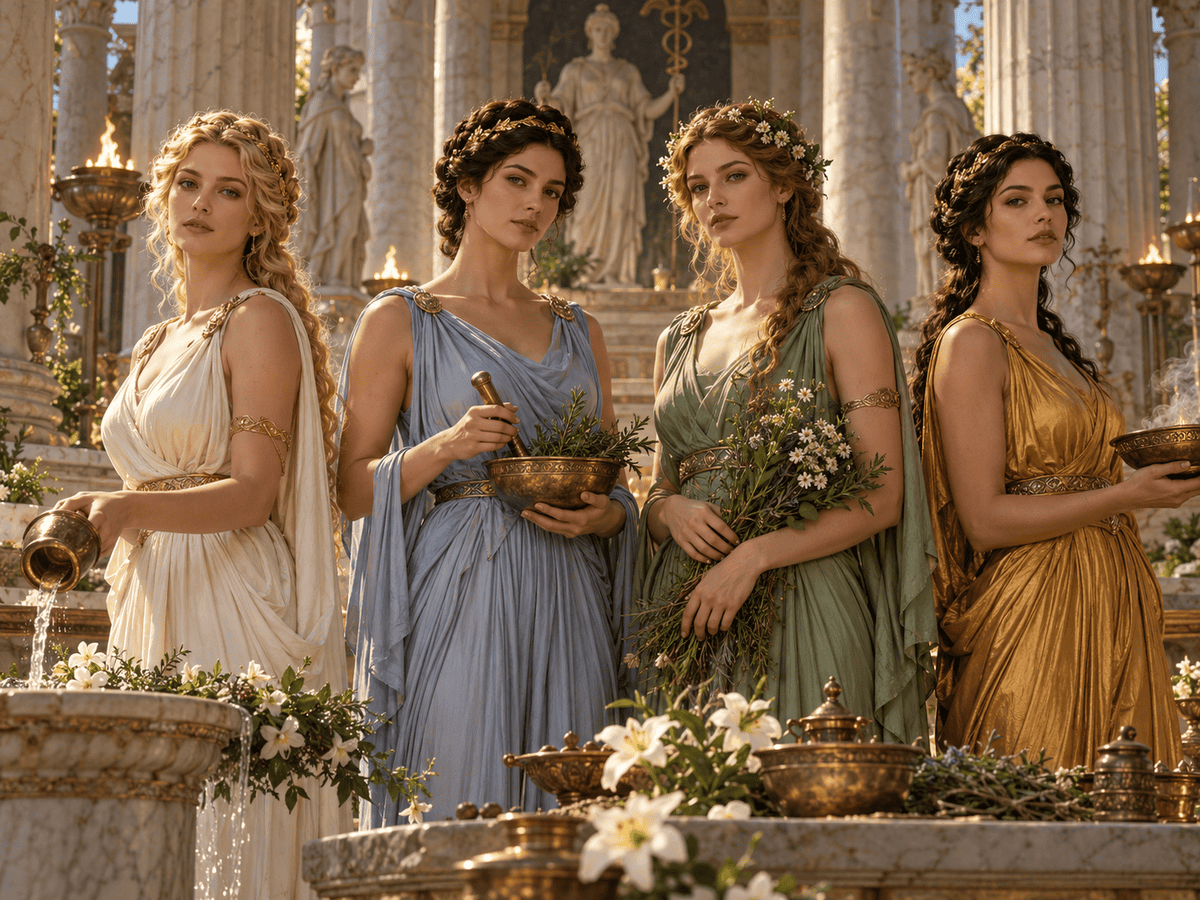
Aceso was not always worshipped separately from the other members of her divine family.
Ancient Greek religious practices often honored several related deities together.
This was especially natural in the cult of Asclepius. The god of medicine could be accompanied by Hygieia and other healing figures.
One particularly interesting piece of evidence comes from the Athenian healing cult.
Ancient inscriptions preserve references to Aceso alongside other deities connected with medicine.
This suggests that she had a recognized place in religious worship.
It also shows how the Greeks understood divine assistance as something that could involve several related powers.
A person seeking recovery might hope for treatment, protection, and the return of health.
Those wishes were connected but not identical. Aceso represented one part of that larger hope.
This collective worship is easy to overlook because modern mythology often focuses on individual gods and their personal stories.
But ancient religion was not always organized around isolated divine personalities.
Sometimes several deities were honored together because their powers were believed to complement one another.
6. She Had a Special Connection With the Athenian Asclepieion

Athens was home to an important sanctuary dedicated to Asclepius.
Known as the Asclepieion, it stood on the southern slope of the Acropolis.
The cult of Asclepius was introduced to Athens in the late fifth century BCE.
Over time, the sanctuary became an important place for religious healing.
Aceso appears in evidence associated with this healing tradition.
An inscription from Athens refers to her in connection with other divine figures honored within the cult.
This is particularly valuable because Aceso has relatively few surviving myths.
They show that people knew these divine names and included them in actual acts of worship.
The Athenian connection also places Aceso within one of the most famous cities of the ancient Greek world.
While philosophers debated the nature of existence, ordinary people still worried about illness and recovery.
The healing sanctuary offered a place where those concerns could be expressed through religion.
Aceso belonged to that deeply human side of ancient Greek life.
7. She Was Related to Apollo, the God of Healing and Prophecy

Aceso’s divine family connects her to one of the most famous Olympian gods. Apollo.
Although Apollo is often remembered for music, prophecy, and the arts, he also had important associations with healing.
He could be invoked as a protector against illness. Yet in Greek mythology, Apollo also possessed the power to send disease.
This combination of healing and danger was not unusual in ancient religious thought.
Divine powers could have more than one side. Asclepius, Aceso’s father, was traditionally considered Apollo’s son.
That made Apollo her grandfather within the mythological genealogy.
Through this connection, Aceso belonged to a family associated with both the prevention and treatment of illness.
But her own role was more focused. She did not represent Apollo’s enormous range of powers.
Instead, she personified a specific part of the healing experience.
This makes her an interesting example of how Greek mythology developed specialized divine figures.
One god might rule over several major aspects of life. Other deities could represent particular processes within those larger domains.
Aceso’s place in Apollo’s extended family shows how important healing was within the Greek divine world.
8. Aceso Was Not Known for Dramatic Mythological Adventures

Some Greek goddesses are remembered because of unforgettable stories. Athena competed with Poseidon for the patronage of Athens.
Demeter searched desperately for Persephone. Artemis appeared in tales involving hunters, wild animals, and divine punishment.
Aceso is different. Very few surviving mythological narratives focus on her as an individual character.
There is no widely attested ancient story describing her defeating a monster or undertaking an extraordinary journey.
That does not mean she was unimportant. It means her significance came mainly from what she represented and how she was honored.
Many ancient divine figures were known through religious practices rather than elaborate myths.
People did not necessarily need a dramatic story to understand why a goddess mattered.
Aceso’s name expressed a hope that almost everyone could recognize. The hope of becoming well again.
Her relative absence from famous myths may actually make her more interesting.
She represents a side of Greek religion that modern retellings sometimes overlook.
Not every deity needed to change the course of the universe.
Some were honored because they were connected with the ordinary struggles of human life.
9. Her Greatest Symbolism Is That Healing Takes Time
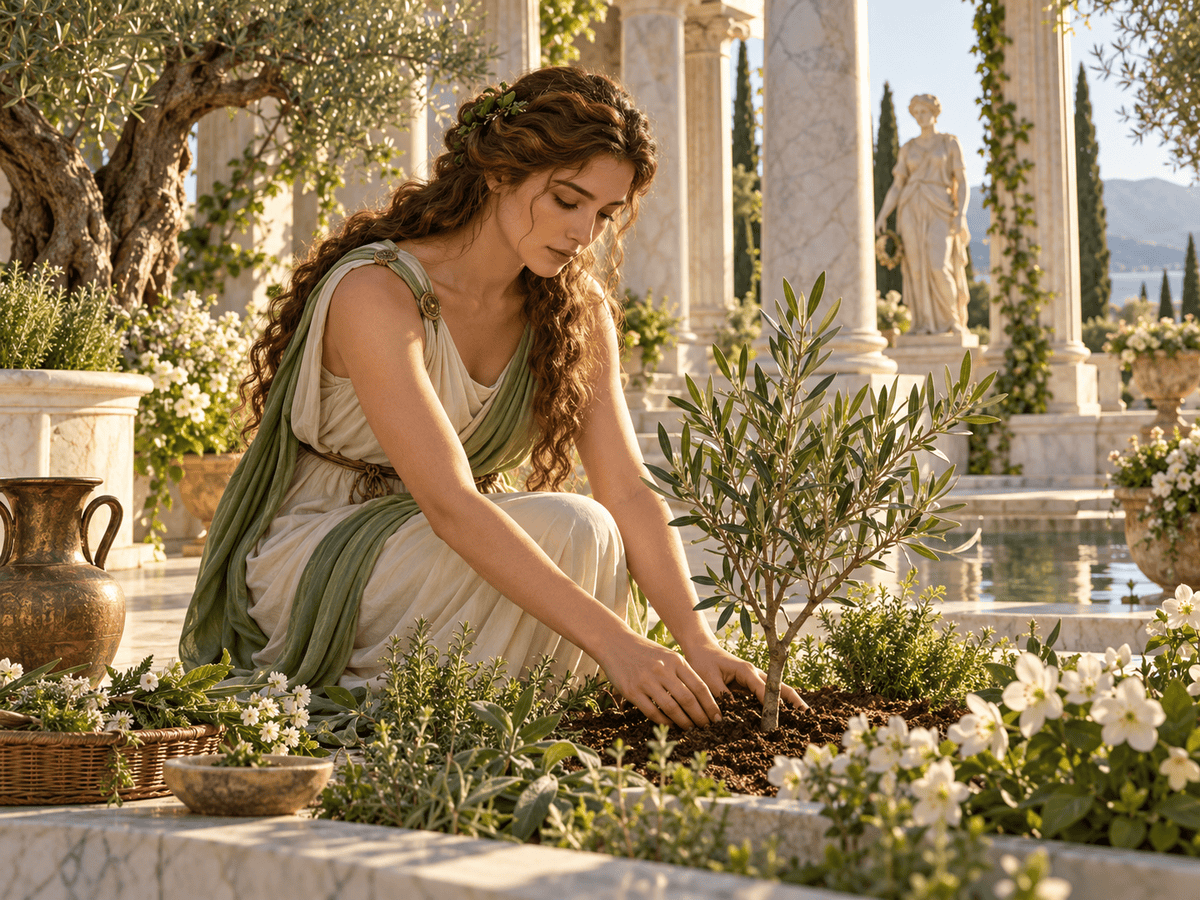
Perhaps the most meaningful thing about Aceso is how different she feels from many famous Greek gods.
Zeus commands thunder. Poseidon rules the sea. Athena represents wisdom and strategic skill.
Their powers often appear dramatic and immediate. Aceso represents something quieter.
The process of getting better. Her name reminds us that recovery can involve patience, care, and gradual improvement.
In ancient Greek religion, this process could be understood as something deserving divine attention.
And that idea remains meaningful even outside its original religious setting.
People often celebrate the moment a problem is finally solved.
They pay less attention to the smaller steps that made the solution possible.
Aceso’s symbolism encourages a different perspective. Every improvement matters.
A little more strength. A little more comfort. A small sign that things are moving in a better direction.
Those moments may not seem extraordinary, but they are part of recovery.
Of course, ancient religious beliefs about healing are not substitutes for modern medical care.
But Aceso can still serve as a beautiful mythological symbol of patience and hope.
She reminds us that becoming well is not always a sudden transformation.
Sometimes healing is a journey. And in ancient Greek mythology, that journey had a goddess of its own.

Ho sempre sentito una forte connessione con il Divino fin dalla mia nascita. Come autrice e mentore, la mia missione è aiutare gli altri a trovare l'amore, la felicità e la forza interiore nei momenti più bui.