

In 745, eight angel names were read aloud before a church council in Rome.
By the end, only one name in the prayer was still considered angelic.
The rest had become evidence against a preacher whose version of heaven challenged the Church’s authority to define what people believed.
1. The Case Arrived in Rome Without the Accused

On October 25, 745, Pope Zachary gathered a Roman synod inside the Lateran Palace.
The Gospels were placed at the center before a messenger entered carrying a letter from Boniface, the powerful missionary bishop working in Frankish lands.
But Aldebert, the man at the heart of the case, wasn’t there.
Boniface wasn’t there either. His accusations arrived on parchment beside Aldebert’s writings. So Rome encountered the accused through a file prepared by the man determined to stop him.
That matters when you read the surviving acts of the synod. They give us a vivid record, but not a neutral one. Almost everything we hear about Aldebert comes through hostile voices.
And those voices had plenty to say.
2. Aldebert Had Already Made Himself a Saint

Aldebert wasn’t an obscure thinker writing strange prayers in private. He had followers.
According to Boniface, people saw him as a holy man with miraculous power. They gathered at places of worship he established outside the usual church structure.
His influence no longer depended on bishops like Boniface, whose long fight against Aldebert shaped the case that reached Rome.
Then the council opened a written account of Aldebert’s life.
It declared him holy from birth. To the men hearing it in Rome, this sounded like a living man writing himself into sainthood.
Boniface accused him of going even further. He said Aldebert gave people pieces of his own hair to carry as relics.
And there was the deeper threat. His followers could reach holiness through him without going where the Church told them to go.
The angel names hadn’t even been read yet. Rome was already listening to the story of a rival source of sacred power.
3. Then the Council Read His Prayer

The names finally entered the room during the synod’s third session.
A prayer composed by Aldebert was read aloud. At first, its language sounded Christian enough. It addressed God and placed Aldebert’s soul in Christ’s care, as the translated record of the hearing still shows.
Then it changed.
The prayer called upon eight angels. Michael stood among them, but the words soon moved into less familiar territory with Uriel and Raguel.
The bishops said every name except Michael belonged to a demon hiding behind an angelic identity. Only the scriptural trio of Michael, Gabriel, and Raphael received their approval.
That was the real trial inside the larger trial.
No one was deciding whether a heavenly being had committed a crime. Rome was deciding whether a name carried divine authority—or opened a door that should remain closed.
4. Uriel Wasn’t an Unknown Name
And this is where the story gets much stranger.
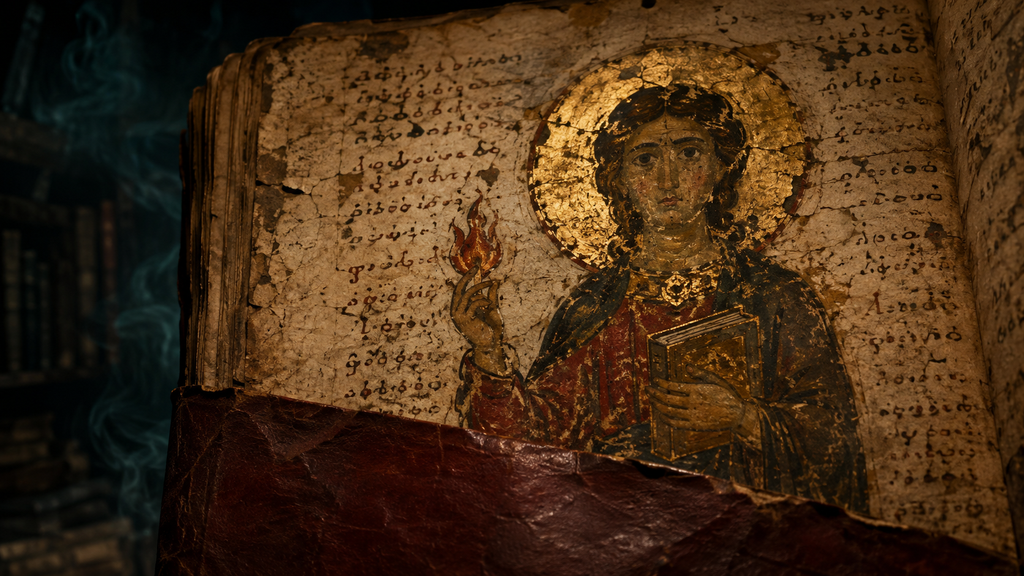
Uriel wasn’t something Aldebert invented. The name had existed in religious tradition for centuries. In the ancient Book of Enoch, Uriel appears as a holy angel given power over part of the unseen world. Raguel appears there too.
So when the council treated Uriel as demonic, it wasn’t exposing a brand-new name created by one troublesome preacher.
It was drawing a boundary around Scripture.
The Book of Enoch carried real influence in early Jewish and Christian thought, but it didn’t belong to the biblical canon accepted in Rome. Uriel also appeared in Fourth Ezra, another work outside that boundary.
And for the council, that difference mattered more than the name’s age.
You can see the fear beneath the verdict. If a spiritual name came from a book Rome didn’t accept, how could anyone know what stood behind it?
Their answer was severe because uncertainty itself looked dangerous.
5. The Names Were Part of a Bigger Threat
Taken by itself, Aldebert’s prayer probably would’ve told a less frightening story.
Unusual angel names already circulated beyond his followers. Aldebert seems to have drawn from a religious world that was much messier than the council wanted it to be.
But Rome didn’t receive the prayer by itself.
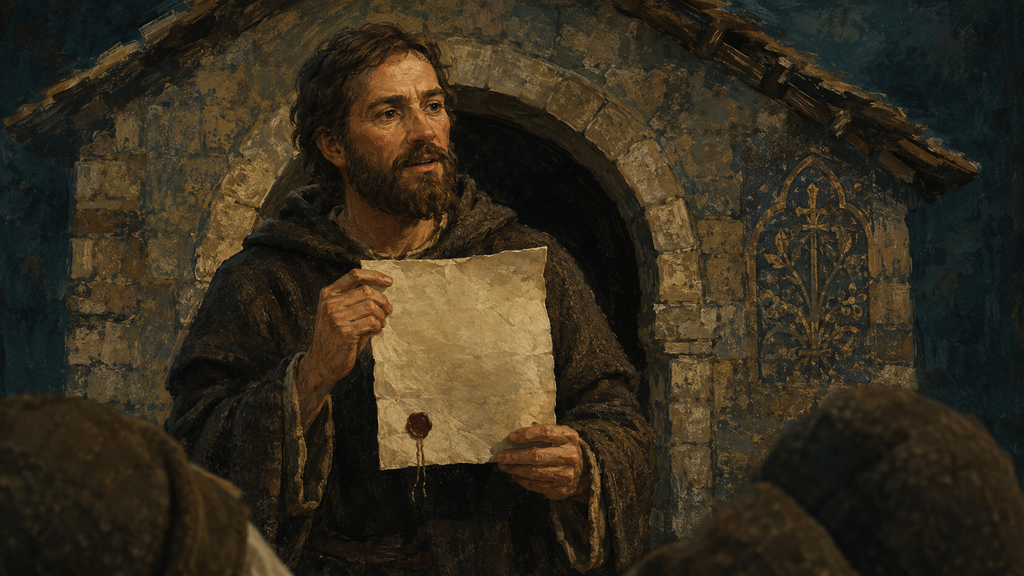
It arrived beside a letter that Aldebert reportedly claimed had fallen from heaven. The document gave him a message the Church couldn’t easily supervise.
Now the pattern looked clear. Every claim pulled authority closer to Aldebert.
Later scholarship on his case shows why this was more than a bizarre argument over angelology. Aldebert attracted people through devotion that slipped beyond the growing church hierarchy.
And once his prayer entered that story, the unfamiliar names stopped looking like old traditions. They looked like proof.
6. Rome Drew the Line at Three
The council wanted Aldebert’s writings burned.
Pope Zachary made a stranger choice. He agreed they deserved the flames, but ordered copies kept in the Roman archives. That decision is one reason we can still enter the room through the surviving record.
As for Aldebert, the final judgment removed him from priestly work and ordered him to repent. If he continued, the sentence would harden into anathema.
So the angel ruling wasn’t a free-standing ban for every Christian everywhere. It lived inside a judgment against one man whose spiritual authority was under attack.
Still, the council had said something powerful. Accepted Scripture now marked the safe side of the line.
And Uriel didn’t cross it.
In the Western Church, that distinction would prove far stronger than Aldebert’s own memory.
7. The Argument Never Completely Ended
More than twelve centuries later, you can still see the line Rome drew.
Modern Catholic guidance discourages giving angels names beyond the same three recognized in 745. The concern hasn’t changed much. Naming unseen beings can turn devotion into certainty with no clear foundation.
But the council never settled the question for all Christianity.
Uriel continued to live in prayer beyond the Latin West. Eastern Orthodox tradition still honors him, and the Greek Orthodox calendar places his name among the heavenly powers celebrated in November.
So the 745 synod didn’t make Uriel disappear. It revealed how much an angel’s identity depended on which books a church trusted.
And that’s what was truly on trial that day.
Not heaven itself. The human authority to name what lives there.
