
Angels weren’t always imagined delivering messages or guarding individual people.
Some were given much larger territories.
Stars, planets, winds, nations—even rivers and seasons—were placed under angelic care.
And once you start looking at their assignments, heaven becomes far stranger than you might expect.
1. Two Hundred Angels Were Assigned to the Stars
In 2 Enoch, the biblical Enoch is taken through several levels of heaven and introduced to the beings working within them.
The first group he meets is enormous.
Enoch sees 200 angels who govern the stars and their different arrangements. The ancient text says they fly around the planets, keeping watch over the lights moving across the sky.
Their names aren’t given. You don’t meet one angel assigned to Sirius and another watching the North Star. They appear as an entire heavenly order responsible for the stars collectively.
But their purpose is very clear.
The stars weren’t believed to move through darkness without guidance. Angels watched their paths, maintained their patterns, and helped keep them where they belonged.
The same text even mentions angels guarding the storehouses of clouds, snow, ice, and dew.
Nothing in the sky was unattended.
2. Other Angels Kept the Sun and Moon on Schedule
Deeper into 2 Enoch, another group appears.
In the sixth heaven, Enoch sees seven bands of archangels studying the movements of the stars, the phases of the moon, the path of the sun, and the condition of the entire cosmos.
These angels aren’t just looking at the sky. They’re watching its timing.
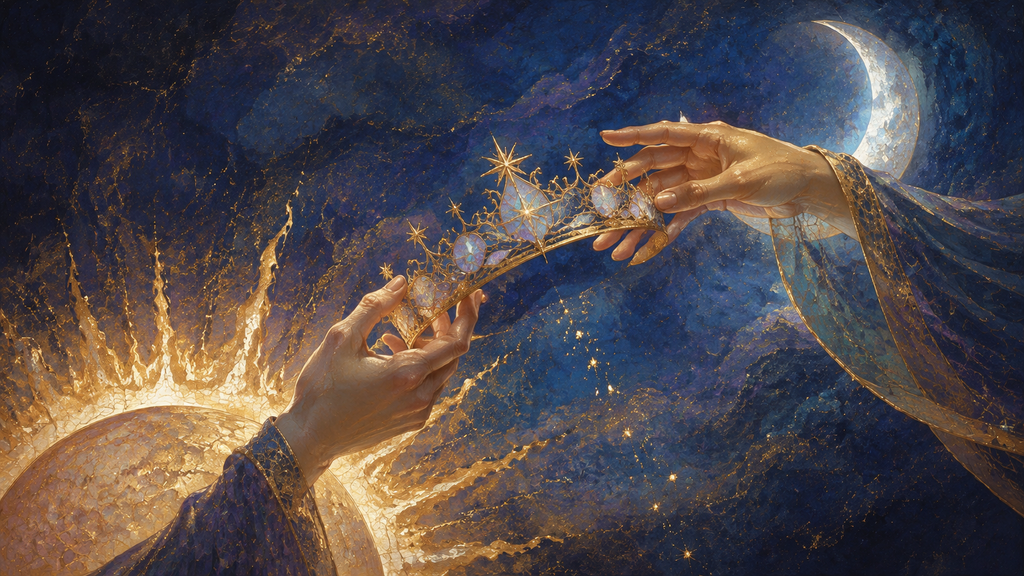
One especially strange passage describes 400 angels removing the sun’s shining crown at sunset, guarding it during the night, and returning it before sunrise.
The image turns dawn into a carefully prepared event, with angels making sure the sun is ready to appear again.
And suddenly, sunrise feels like the result of an invisible ritual taking place while you sleep.
These angels made sure that days followed nights, months followed their proper cycles, and the heavenly lights didn’t wander away from their appointed paths.
3. Seven Angels Became Rulers of the Planets
The angels assigned to individual planets received names much later.
During the Renaissance, writers brought together astrology, Christian angel traditions, philosophy, and Jewish mystical ideas.
One of the most influential was Heinrich Cornelius Agrippa, whose Three Books of Occult Philosophy listed an angel for each of the seven classical planets.
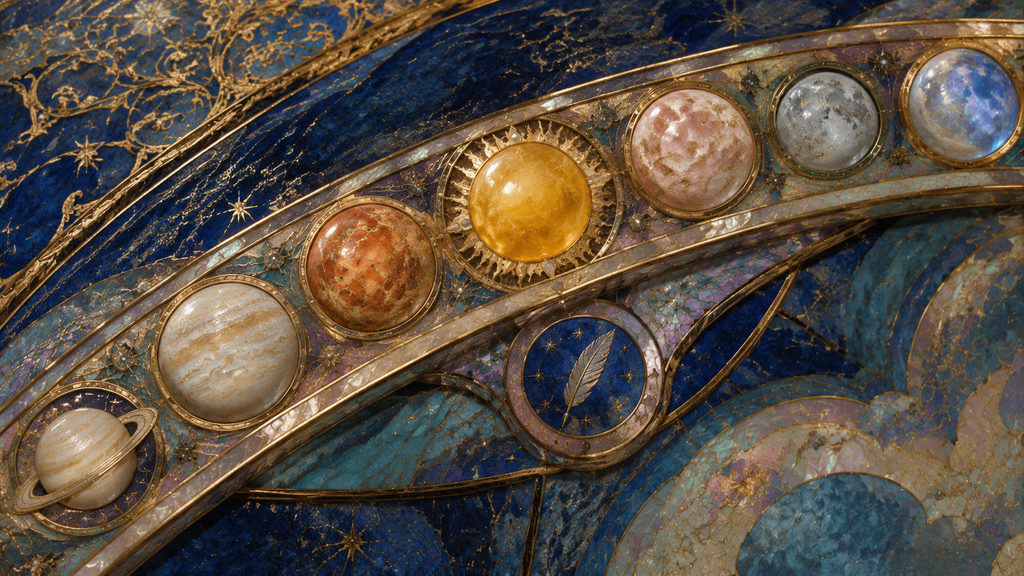
One list recorded by Agrippa placed Zaphkiel over Saturn, Zadkiel over Jupiter, Camael over Mars, Raphael over the Sun, Haniel over Venus, Michael over Mercury, and Gabriel over the Moon.
The Sun and Moon counted as planets because ancient and medieval astronomy used the word for the seven bright objects that seemed to wander against the fixed stars.
Camael’s connection with Mars reflected power, conflict, and severity. Haniel matched the beauty and attraction of Venus.
Gabriel, an angel closely connected with birth and revelation, became ruler of the changing Moon.
But there was a complication.
Agrippa also preserved a different set of planetary correspondences. In that version, Michael ruled the Sun rather than Mercury, while Raphael moved from the Sun to Mercury.
Even famous angels could change planets depending on which tradition you followed.
4. Four Angels Were Given Control of the Winds
The angels of the winds appear in one of the Bible’s most dramatic visions.
In Revelation 7, four angels stand at the four corners of the earth, holding back the four winds, physically restraining them.
The world is completely still while another angel commands them not to harm the land, sea, or trees until God’s servants have been marked.
Revelation doesn’t name these four figures. Later writers did.
Agrippa placed Michael over the eastern wind, Raphael over the western, Gabriel over the northern, and Nariel—sometimes called Uriel—over the southern.
Together, they formed a heavenly compass.
And their assignment carried real power. These angels were imagined holding forces capable of striking the whole world.
5. Entire Nations Had Angelic Princes
Some angels were assigned to nations.
In Daniel 10, a heavenly messenger tells Daniel that the “prince of Persia” resisted him for 21 days. Michael eventually came to help, but the conflict wasn’t over.
The messenger still expected to face the Persian prince again, followed by another figure called the prince of Greece.
Michael, meanwhile, is called “your prince,” connecting him with Daniel’s people.
The passage makes earthly politics look like the visible half of a much larger struggle.
Persia, Greece, and Israel don’t only have kings, soldiers, and borders. They also have powerful representatives in the unseen world.
And these national beings aren’t presented as equally good.
Michael protects and helps. The prince of Persia resists a divine messenger.
So the idea wasn’t simply that every country had a friendly guardian angel. Some of these princes could become rivals, opponents, or forces standing behind earthly empires.
6. Named Angels Received Some Very Strange Assignments
The planetary lists weren’t the only attempt to give individual angels specific territories.
Chapter 20 of 1 Enoch names seven holy angels and explains what each one watches.
Uriel is placed over the world and Tartarus. Raphael watches over human spirits. Raguel deals with the world of the heavenly lights. Michael is assigned to the best part of humanity and chaos.
Then there’s Saraqael, who watches spirits that sin. Gabriel presides over Paradise, serpents, and the Cherubim. And Remiel is placed over those who rise.
It’s a strange collection.
One angel watches humanity. Another watches imprisoned beings. Another stands over Paradise.
Their responsibilities cross between the natural world, human souls, punishment, resurrection, and places no living person could reach.
Each had a territory—and a reason for being there.
7. An Angel’s Assignment Could Change With the Tradition
There was never one universally accepted chart explaining which angel controlled everything.
2 Enoch gives you hundreds of mostly unnamed angels tending stars, seasons, rivers, oceans, plants, and food. 1 Enoch gives named angels their own unusual areas of authority.
Daniel describes princes attached to nations, while Revelation places four unnamed angels over the winds.
Then Renaissance writers add planetary rulers, directional angels, elemental angels, and competing lists of names.
That’s why Michael can appear as the prince of a people in Daniel, the ruler of Mercury in one planetary system, the angel of the Sun in another, and the guardian of the eastern wind somewhere else.
The assignment depended on the text, time, and tradition.
But the angels always remained at the center of it.
They were the watchers who kept stars in place, the princes who stood behind nations, and the powerful figures believed to restrain the winds at the edges of the world.
Angels were everywhere within it—watching, guarding, guiding, and carrying out assignments large enough to shape the world below.
