
Translation takes away dal sostanza of any book, much less an ancient and layered one such as the Bible.
Contexts, metaphors, and hidden meanings are easily lost in a new language.
When it comes to regular books, it makes their stories shallow and less enjoyable. But when it comes to a moral guide, it can create serious issues.
So, here are 10 biblical misconceptions the world bought into simply due to translation.
1. The Role of Women

Translation of passages like Ephesians 5:22-24 leads many to assume women are meant to submit to men in every way, implying inequality.
However, the Greek word hypotasso doesn’t truly mean forced submission; it can also stand for cooperation and working together in harmony.
The broader biblical message speaks of rispetto reciproco and love; husbands and wives serving each other.
When we look at these verses in the context of culture and original language, it’s clear that hierarchy isn’t the point.
Mutual submission is based on love and choosing each other.
Women aren’t called to be subservient, but to respect and be respected.
2. Did Jesus Christ Die For Our Sins?
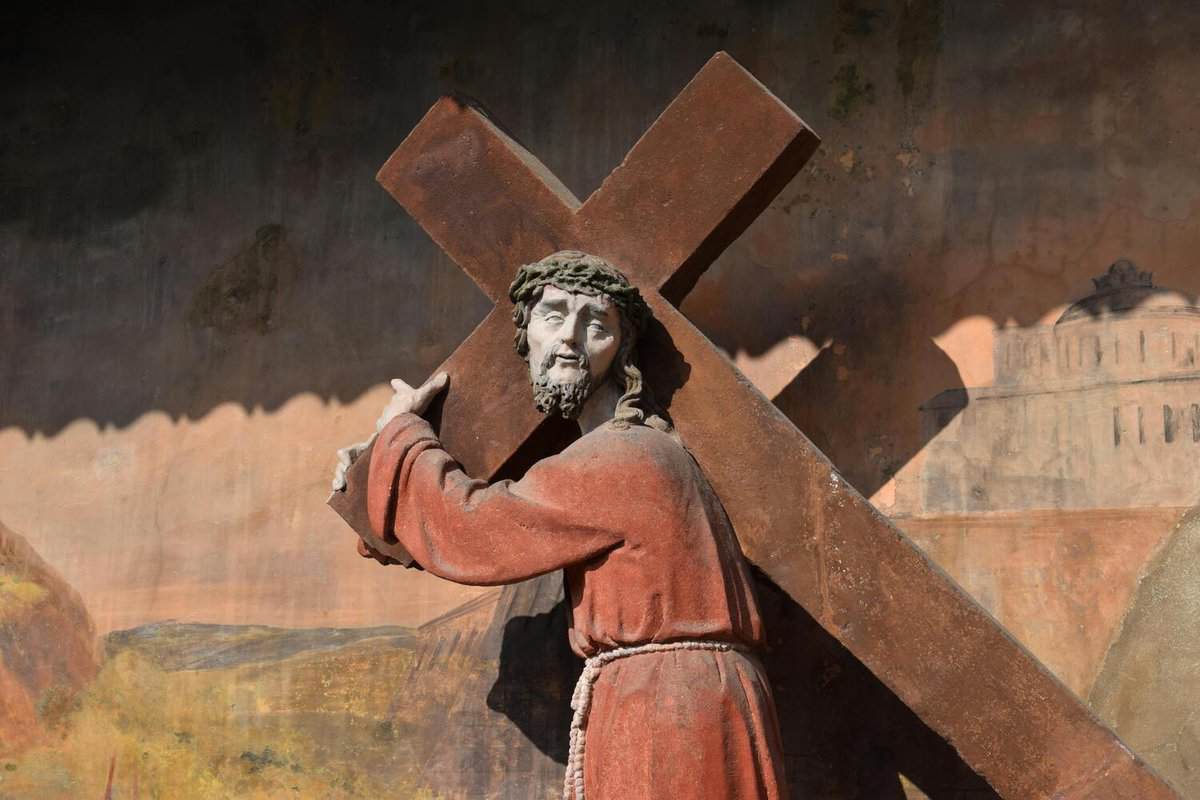
For the longest time, we believed that Christ’s death was meant to be a substitution – His life for our forgiveness.
But the Greek huper can mean “on behalf of,” “instead of,” and “for,” which adds more nuance.
His sacrifice came as a response to the brokenness caused by sin.
It’s still a story of sacrificial love, but it’s also Jesus engaging with human suffering and injustice.
Some sources also claim that it could be interpreted as “because of our sins,” which simply reflects the fact that the people of His time didn’t have faith and chose to kill Him.
The common translation of “dying for our sins” oversimplifies the complex truth.
3. The Sodom and Gomorrah Misinterpretation

Many associate the destruction of Sodom and Gomorrah with homosexuality, leading to it being presented as the core sin that angered God.
However, the translation misleads us again. The biblical story actually highlights greed, inhospitality, lust, e violence as the main issues.
The city’s wickedness can’t just be reduced to sexuality; it was their lack of compassion and justice that invoked destruction.
We miss the bigger picture by reducing it to just one thing. God is calling us to be righteous and merciful.
The actual sin was turning away from God’s way, not being of a particular sexual orientation.
4. The Description of Hell
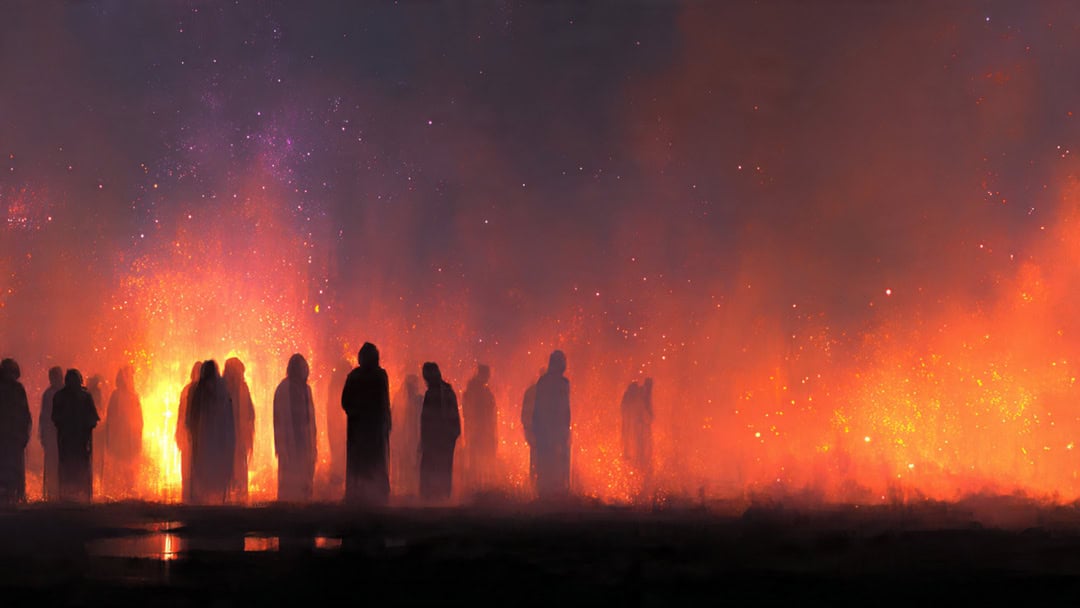
Hell is typically pictured as a fiery pit where souls burn forever. However, the Hebrew Sheol and Greek Hades are not necessarily places of torture.
The translation and later cultural influence led us to create this idea of hell. It’s contradictory that a loving God would want us to suffer forever.
The Bible presents Him as a righteous judge who desires our salvation.
Many theologians argue that “eternal punishment” is a metaphor for separation from God‘s presence rather than literal flames.
Understanding the original language shows that things aren’t as black and white as translation sometimes makes them seem.
5. The Mark of Cain

Translation made some people interpret the mark of Cain as a racial marker that implies divine disfavor.
However, the original text wasn’t very clear about what the mark actually was.
It was likely a protective sign meant to prevent others from killing Cain.
The idea that it was a curse or a racial marker is relatively new and doesn’t hold up with the original language and context.
The story shows God’s mercy and protection, even for Cain.
The mark was a symbol of divine protection, and definitely not a call for racial discrimination.
6. Should We Never Judge?
Christ’s words, “Judge not lest ye be judged,” often get interpreted as a call to never pass judgment at all.
But that’s where the translation misleads us again, since it’s not what the original meaning suggests.
Jesus warns against hypocritical and harsh judgment, and condemning others when we’re guilty ourselves.
As a matter of fact, the Bible encourages discernment and holding each other accountable with good intentions.
The phrase discourages condemning altri unfairly, much like the Pharisees condemned Jesus and sought His death.
His words call for humility and self-awareness.
7. The Rapture
Many believe in a rapture where believers are taken up before the tribulation, based on a literal translation of certain passages.
However, the Bible’s references to rapture are quite ambiguous and debated among scholars.
The idea of explicit rapture isn’t spelled out in Scripture; it’s a theological interpretation that emerged later.
Different Christians understand these passages differently.
Some see them as referring to Christ’s return in a single event, and others see the rapture and the second coming as two different events.
What is certain is that the Bible emphasizes readiness and faithfulness, regardless of how the rapture might happen.
8. Is Wealth Sinful?

Due to a strong emphasis on humility, many people tend to see wealth as inherently sinful and a sign of lacking faith.
But biblical figures like Abraham o Job were both wealthy and righteous.
Wealth in the Bible is presented as a blessing from God when used wisely.
The translation confuses this with warnings against greed and trusting in riches instead of God.
The Bible teaches balance: money can be a tool for good or a trap for avidità, and it all depends on our choices.
It’s our own attitude and idolatria of wealth that makes it sinful.
9. “The Meek Shall Inherit the Earth”
Meekness is often misinterpreted as being weak and passive. The translation did not create this misconception on its own; it’s also our understanding of the word.
It’s even at the core of Nietzsche’s Antichrist, and its idea that to be Christian is to be weak, a slave, passive…
However, in biblical terms, meekness means humility and strength under control. It means having power but choosing to wield it with wisdom and compassion.
Jesus Christ was meek Himself, yet He was divine and powerful at the same time.
These words are targeted at those who trust God’s sovereignty over their own strength.
It’s an encouragement for believers to embrace humility and patience.
10. The Kingdom of God
The Kingdom of God is often seen as a future realm; something to come after this life.
However, Jesus often spoke of it as a present spiritual reality: keeping God in our hearts now.
Gaining access to His Kingdom means choosing to live under God’s rule today. Some even argue that Heaven is simply a state of mind.
È un enlightened mindset of people who bring justice and peace to their environment through faith.
This misunderstanding leads us to turn passive and abandon the world our children will have to live in, for the idea of gaining entrance to some better world after death.
Jesus invites us to participate in His Kingdom here and now, transforming our lives and communities for the better through His love.

A little Aquarius, devoted to writing and embroidery. Through my writing, I hope to empower readers to align with their true selves and navigate life’s mysteries with confidence.