
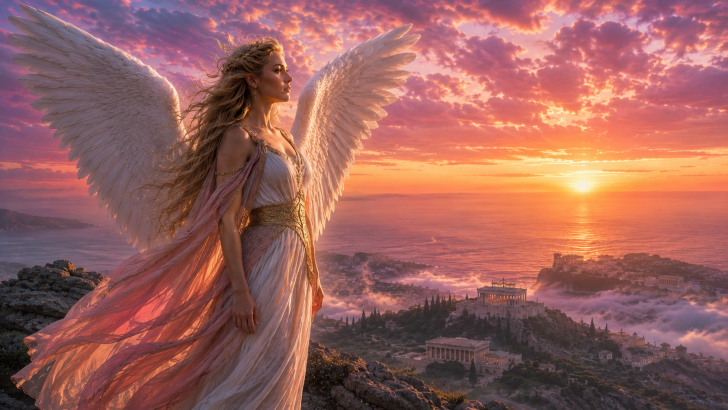
Long before science explained the movement of the Earth, the Greeks believed dawn arrived because of Eos, the beautiful goddess who opened the gates of heaven each morning.
With her rosy fingers and golden light, she announced the coming of the Sun and marked the beginning of every new day.
Although she is not as famous as Athena or Aphrodite, Eos appears in many fascinating myths involving love, adventure, tragedy, and even immortality.
Her stories reveal a goddess who was both joyful and deeply emotional.
Here are ten fascinating things you may not know about Eos, the Greek goddess of dawn.
1. Eos Was the Goddess Who Brought Every Sunrise
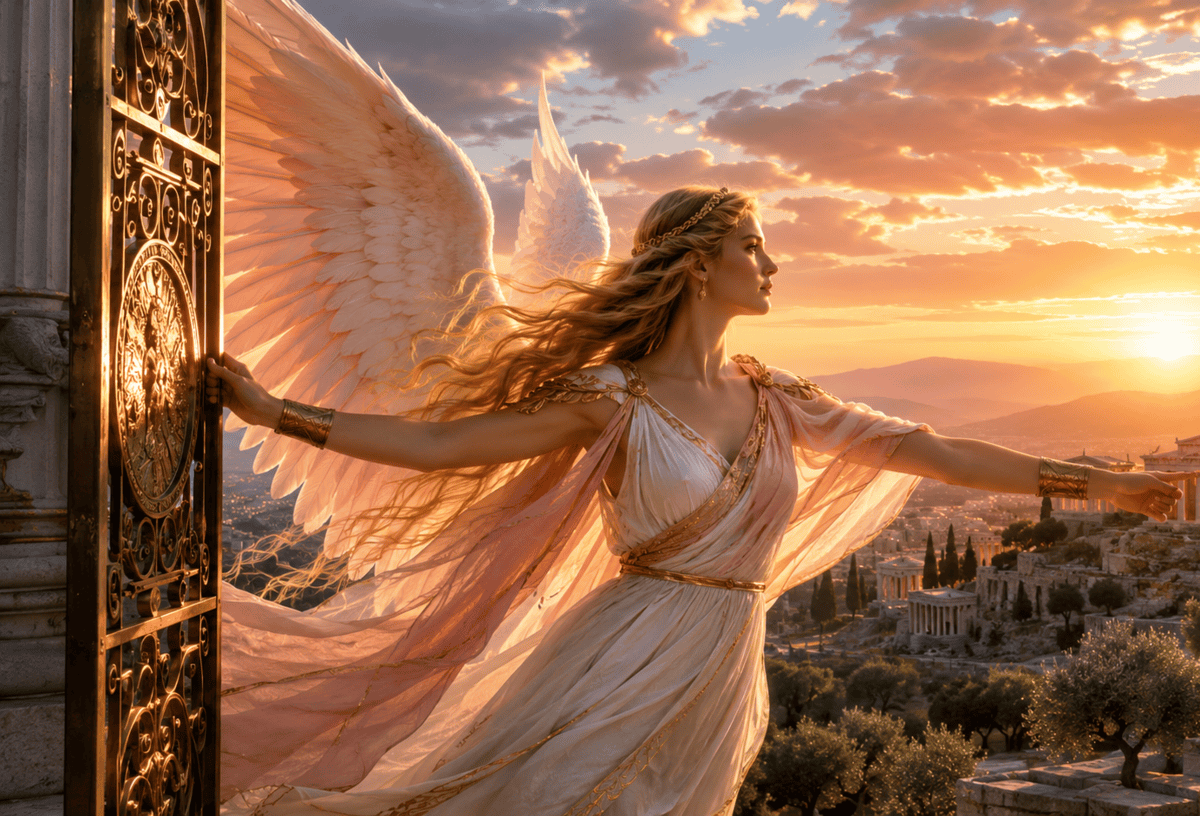
Every morning, the ancient Greeks believed Eos appeared before the Sun crossed the sky.
Her task was to announce the arrival of daylight by opening the gates of heaven and spreading the first light across the world.
This beautiful image helped explain why the sky slowly brightens before the Sun becomes fully visible.
Ancient poets often described Eos with the phrase “rosy fingered,” referring to the pink and golden colors that appear across the horizon at dawn.
To the Greeks, every sunrise was a reminder that Eos had once again begun her daily journey, bringing hope, light, and another chance for new beginnings.
Her daily appearance also reflected the dependable rhythm of nature, reminding people that every ending was followed by a fresh beginning and another opportunity to move forward with hope.
2. She Was the Daughter of Two Titans
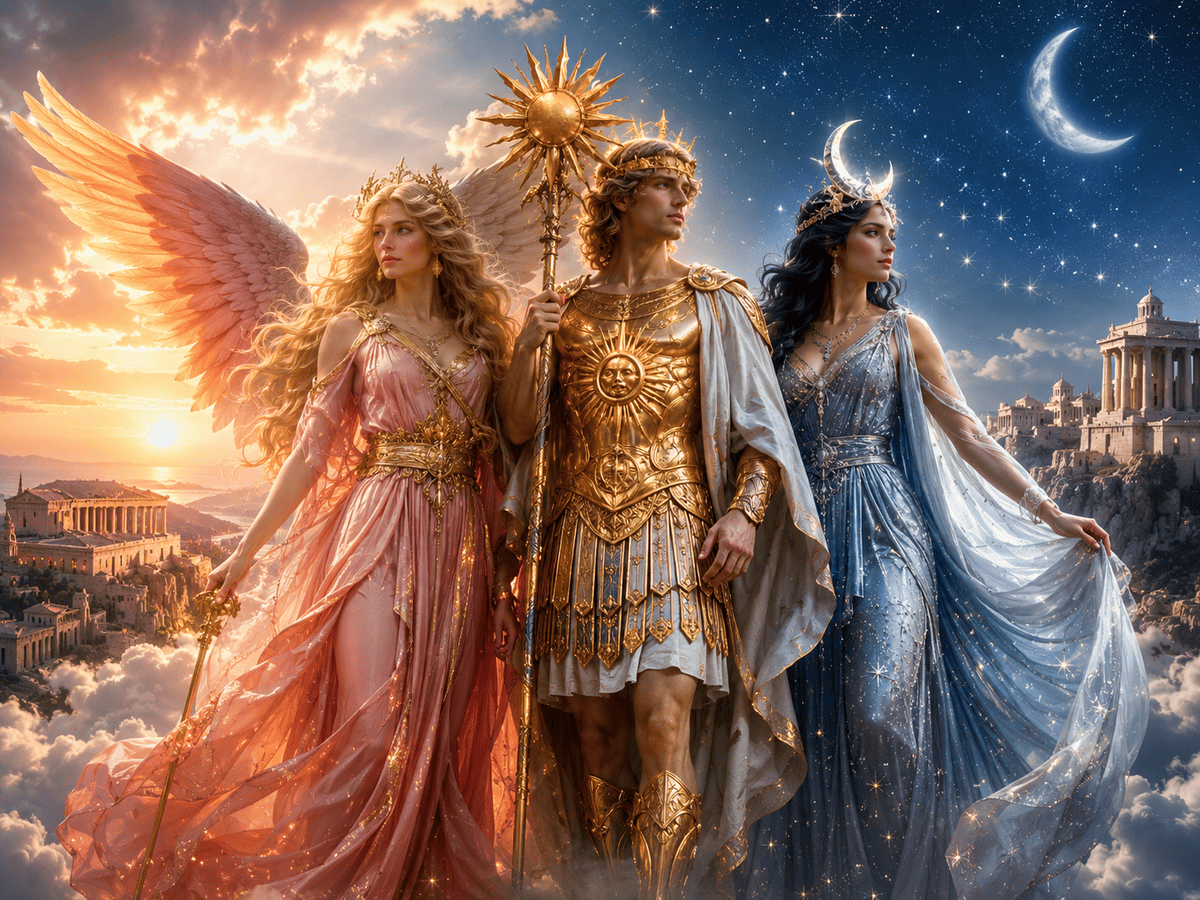
Eos came from one of the most powerful families in Greek mythology.
She was the daughter of the Titans Hyperion and Theia, making her part of a family closely connected with light and the heavens.
Her brother was Helios, the god of the Sun, while her sister was Selene, the goddess of the Moon. Together, the three siblings governed the changing cycle of day and night.
This close family relationship helped the ancient Greeks understand how sunrise, daylight, sunset, and moonlight formed a continuous pattern that kept the natural world in balance.
Their stories worked together to explain the sky from morning until night, creating one of the most beautifully connected families in all of Greek mythology.
3. She Rode Across the Sky in a Golden Chariot
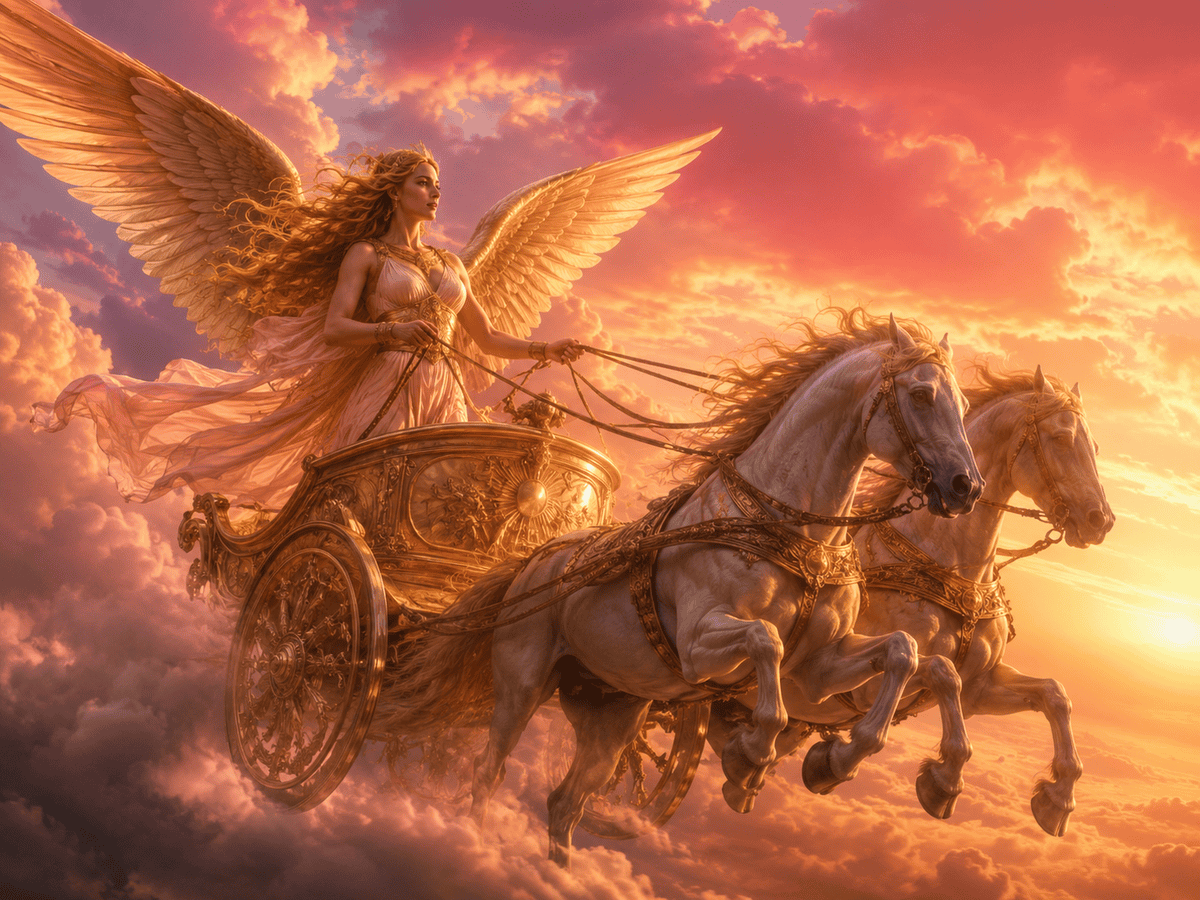
The Greeks imagined Eos traveling across the eastern sky in a magnificent golden chariot. Her swift horses carried her ahead of Helios each morning, preparing the heavens for the Sun’s arrival.
As she traveled, darkness slowly disappeared, and the colors of dawn spread across the horizon.
Artists often showed her with flowing robes, graceful wings, and radiant light surrounding her.
These beautiful images captured the peaceful transition between night and day that people could witness every single morning.
Her journey became a powerful symbol of consistency, showing that no matter what happened in the world below, dawn would always faithfully return the next day.
4. Eos Was Known for Her Many Love Stories
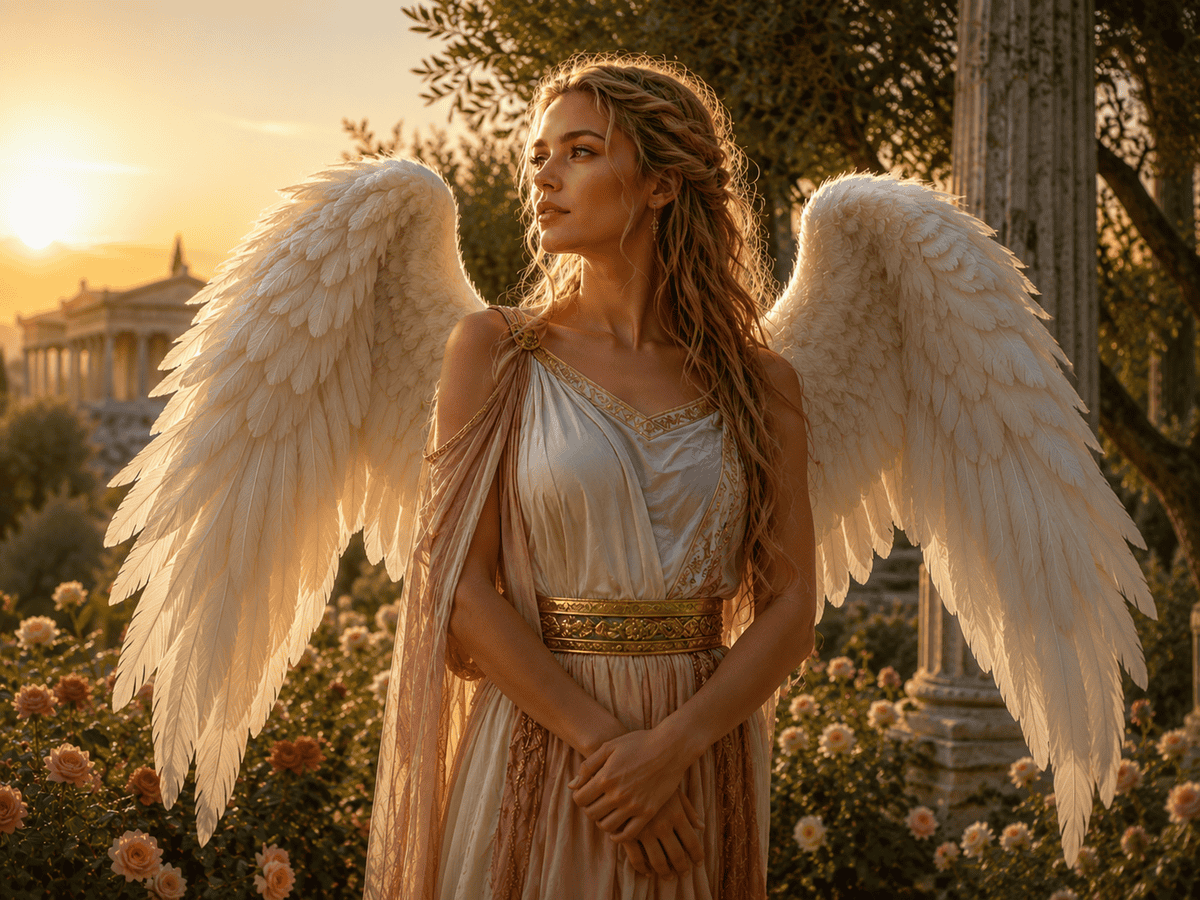
Unlike many other Greek goddesses, Eos became famous for falling in love several times.
Ancient myths describe her relationships with both gods and mortal men, making romance one of the most important parts of her mythology.
Some stories suggest that Aphrodite caused Eos to experience endless romantic longing as punishment for an earlier offense.
Whether viewed as a blessing or a curse, these tales made Eos one of the most emotional and human figures among the Greek deities.
Her stories often explored both the joy and heartbreak that can accompany love.
These myths reminded audiences that even divine beings experienced longing, disappointment, and loss, making Eos one of the easiest Greek goddesses for ordinary people to understand emotionally.
5. She Fell Deeply in Love With Tithonus
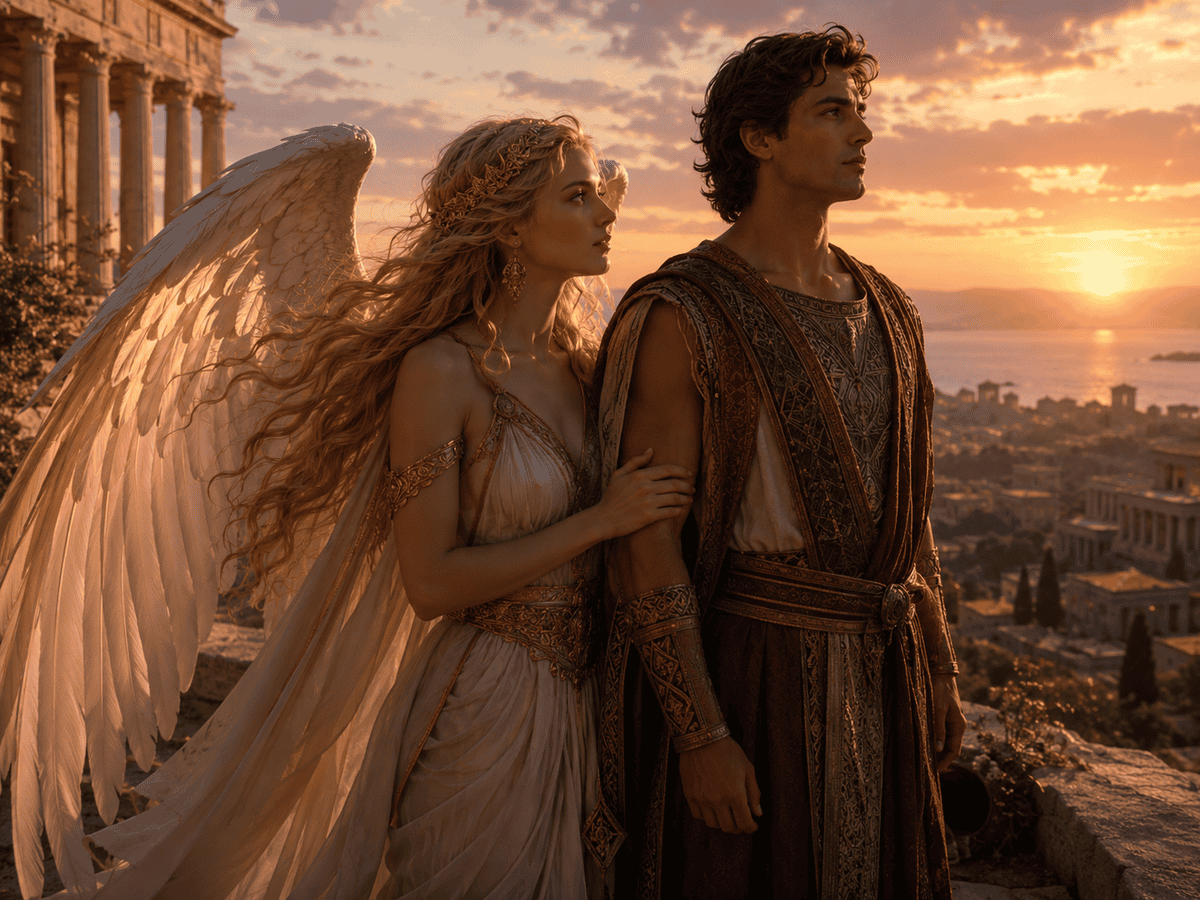
Perhaps Eos’s most famous story involves the handsome prince Tithonus. She loved him so much that she asked Zeus to grant him immortality.
However, she forgot to ask for eternal youth. As the years passed, Tithonus continued growing older without ever dying.
Eventually, he became so old and weak that later versions of the myth say he was transformed into a cicada, forever singing but never regaining his youth.
The story became a powerful reminder that even wonderful gifts can bring unexpected consequences.
For centuries, writers have used this myth to explore the importance of thinking carefully before making wishes, since every choice can carry consequences that are impossible to predict.
6. She Was the Mother of the Winds

Eos was not only associated with the dawn but also with the winds.
With the Titan Astraeus, she became the mother of several important wind gods, including Boreas, Zephyrus, Notus, and Eurus.
Each represented a different direction and brought its own seasonal weather.
She was also connected with the stars through her children, strengthening her role as one of the great goddesses of the sky.
Her family helped explain many natural phenomena that fascinated the ancient Greeks.
This remarkable family connected many parts of the natural world, allowing the Greeks to explain changing weather, shifting seasons, bright stars, and the daily arrival of dawn.
7. Homer Mentioned Her Again and Again
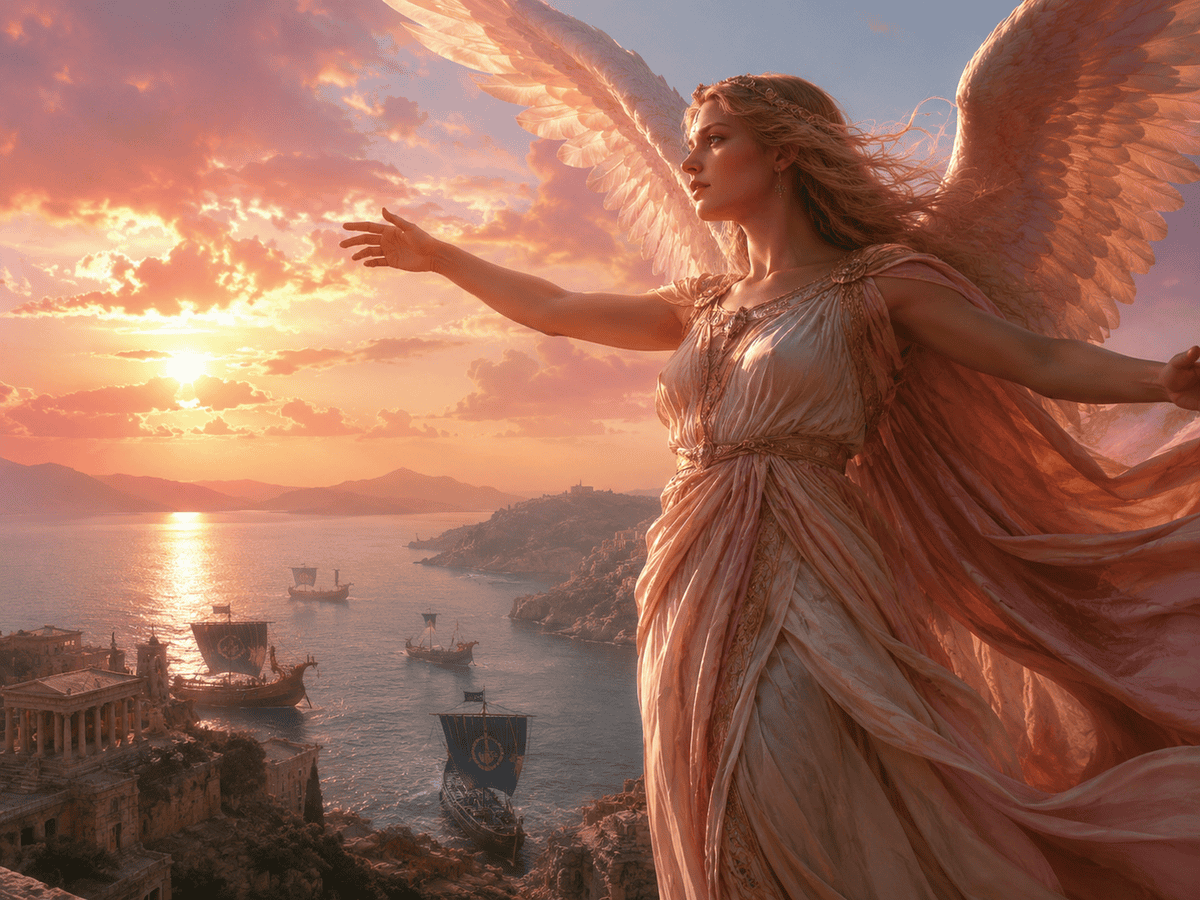
Eos appears frequently in the works of the ancient poet Homer. Both the Iliad and the Odyssey describe her arrival almost every time a new day begins.
Rather than simply writing that the Sun rose, Homer often introduced the morning by describing Eos spreading her rosy light across the heavens.
These repeated descriptions gave his stories a beautiful rhythm while reminding readers that every new adventure began with the arrival of dawn.
Her poetic imagery became one of the most recognizable features of ancient Greek literature.
Because of Homer’s influence, generations of readers came to associate dawn with Eos, helping preserve her memory long after the ancient myths were first written down.
8. Artists Loved Depicting Her Wings
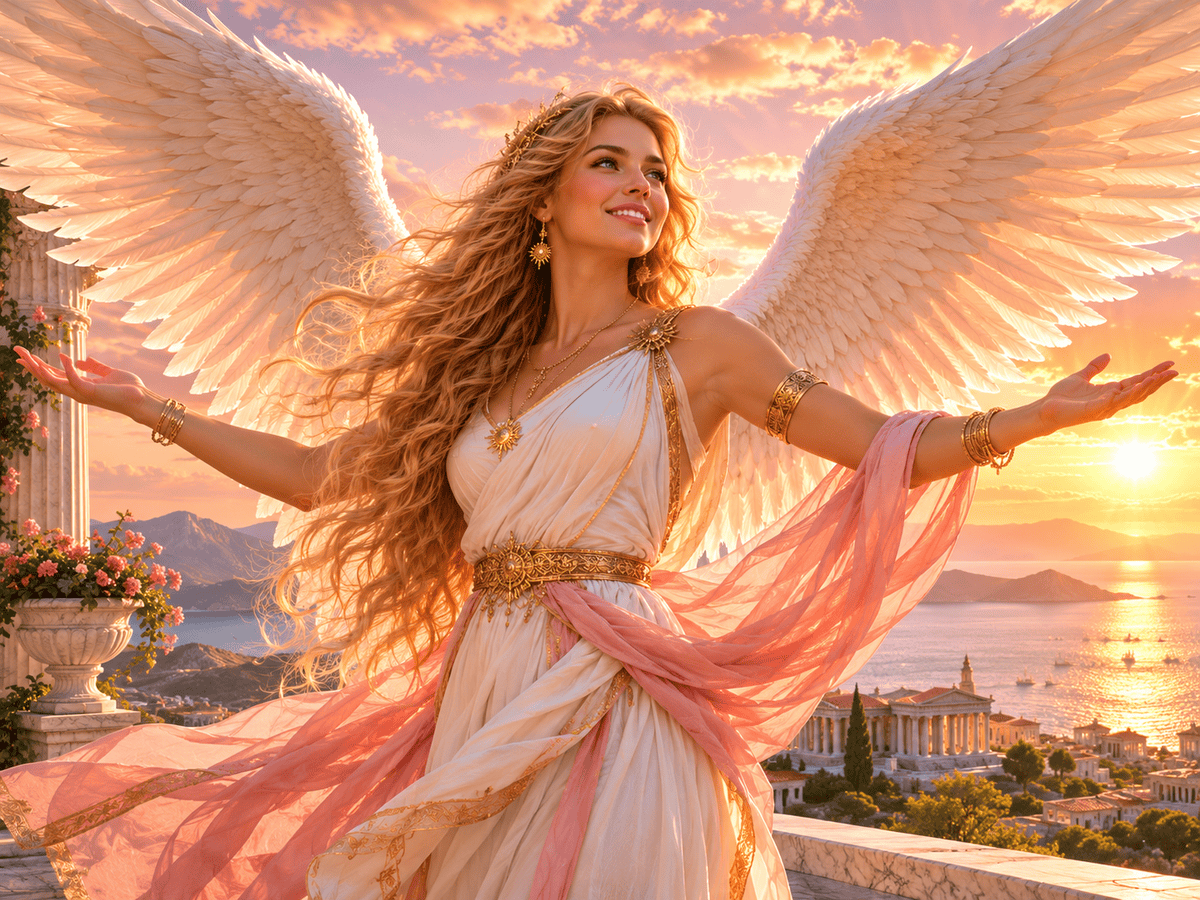
Ancient Greek artists often portrayed Eos as a graceful winged goddess. Her wings symbolized her ability to move quickly across the sky each morning.
Paintings on pottery, carved reliefs, and sculptures frequently show her flying through the heavens or carrying away someone she loved.
Her elegant appearance made her one of the most visually striking goddesses in Greek art.
Even today, surviving artwork helps historians understand how the Greeks imagined the beauty and movement of dawn.
Her flowing robes, graceful pose, and radiant expression helped artists capture the peaceful beauty of sunrise, creating timeless works that continue to fascinate museum visitors today.
9. She Represented Hope and New Beginnings
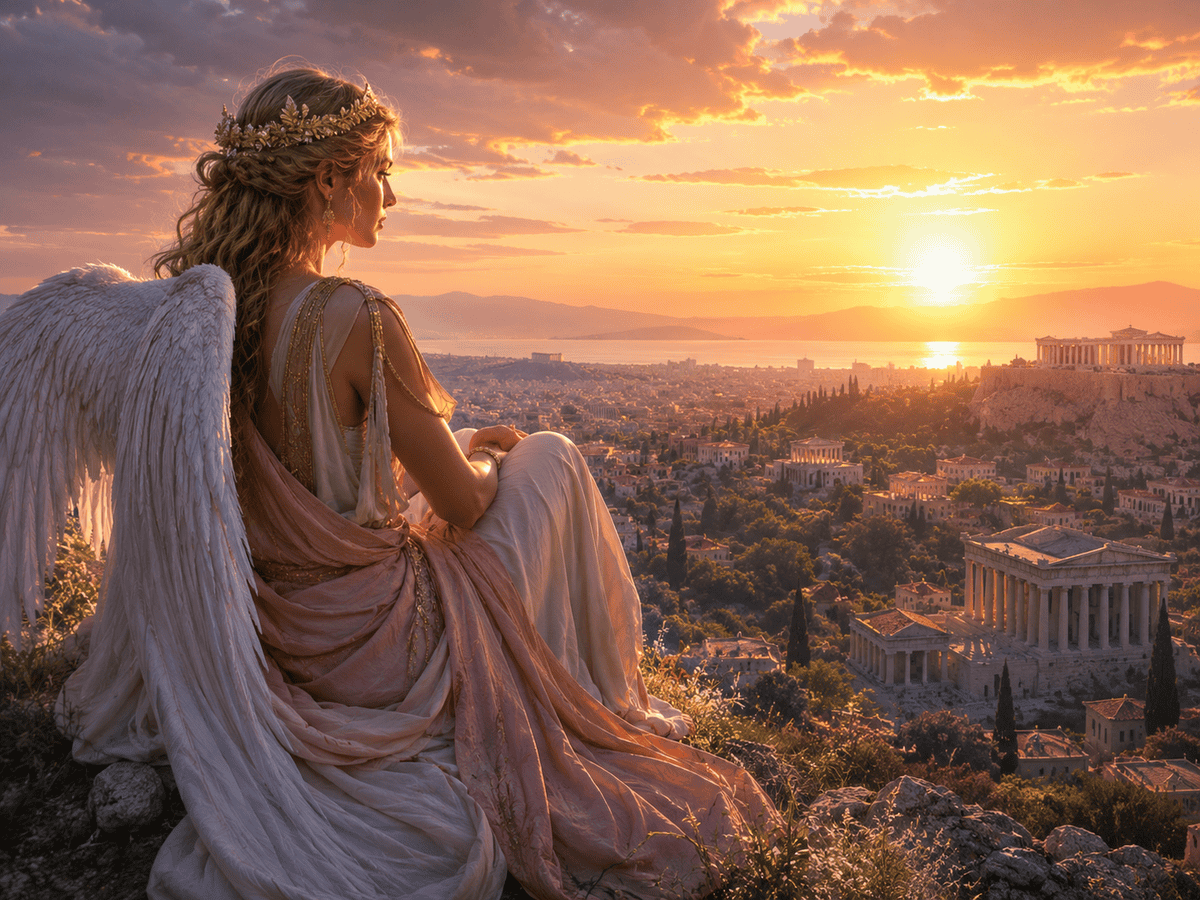
Every sunrise brought another opportunity, and Eos became the perfect symbol of fresh starts.
No matter how difficult the previous day had been, dawn always returned.
For the ancient Greeks, this daily cycle reflected the idea that life constantly moves forward.
Darkness never lasted forever because Eos always appeared with the first light of morning.
Her mythology continues to remind people that hope often arrives quietly, one new day at a time, bringing fresh possibilities with every sunrise.
Her story continues to inspire people facing difficult moments, encouraging them to believe that brighter days often arrive gradually, just as the first light slowly fills the sky.
10. She Is Still With Us
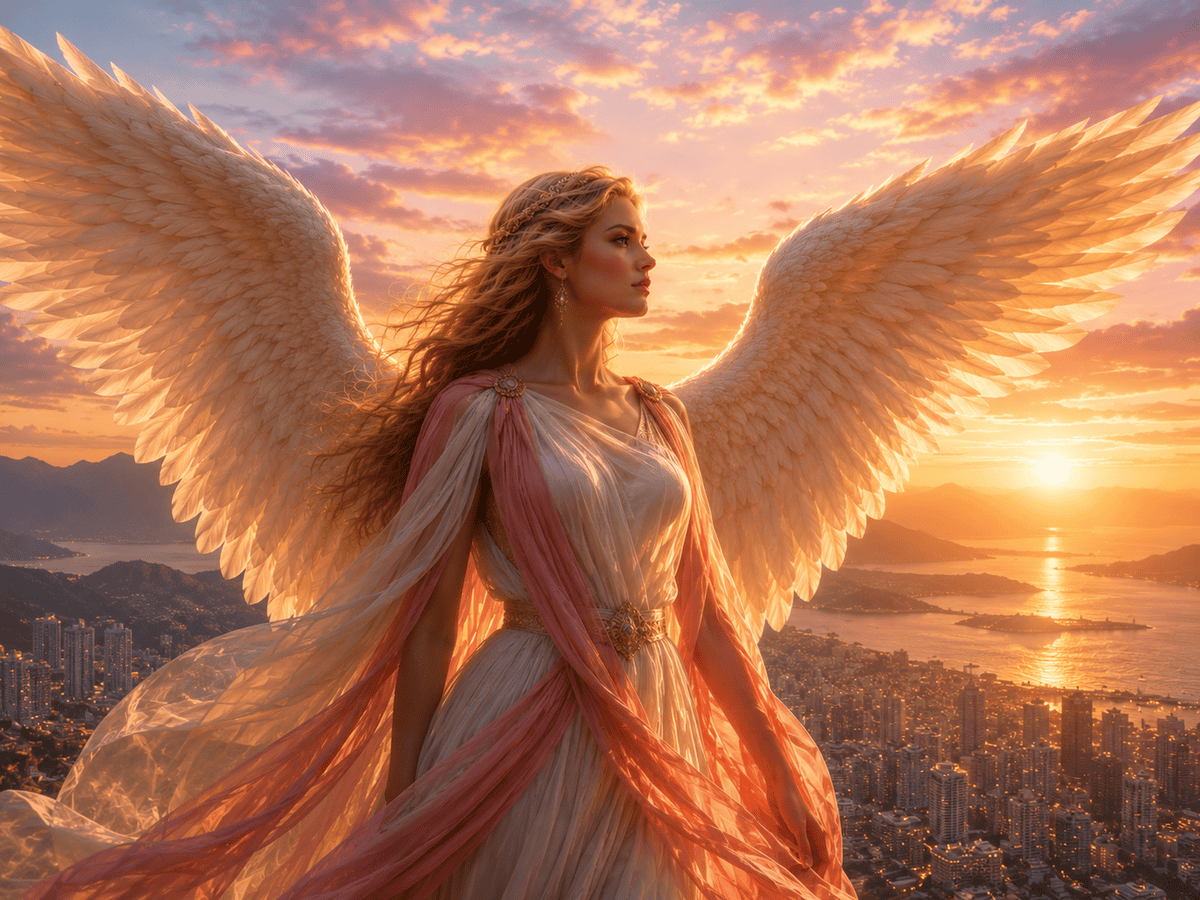
Although people no longer worship Eos, her influence remains surprisingly strong.
Poets, painters, musicians, and writers continue using dawn as a symbol of hope, renewal, beauty, and possibility, themes closely connected with the ancient goddess.
Her name also appears in astronomy, literature, and modern culture, preserving her memory thousands of years after the myths were first told.
Every sunrise still inspires people around the world, much as it inspired the ancient Greeks.
In many ways, the beauty of each new morning keeps the story of Eos alive.
Her enduring legacy shows how powerful ancient myths can remain, continuing to shape art, language, and imagination while reminding us that every sunrise carries the promise of another beginning.

Ho sempre sentito una forte connessione con il Divino fin dalla mia nascita. Come autrice e mentore, la mia missione è aiutare gli altri a trovare l'amore, la felicità e la forza interiore nei momenti più bui.