
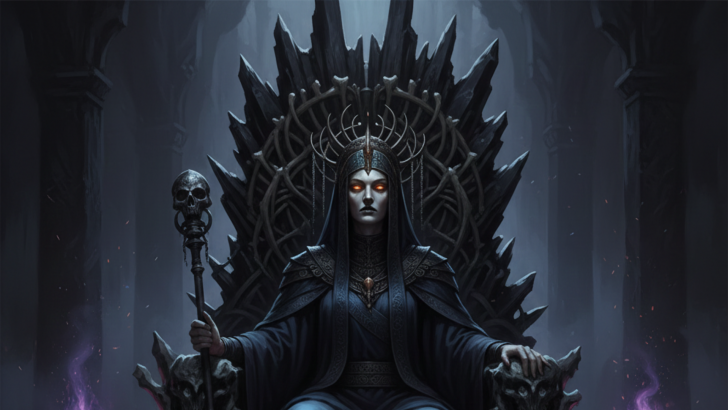
Among the great figures of ancient Mesopotamian stories, Ereshkigal stands out as one of the most powerful and mysterious.
She ruled the land of the dead and held a position that no other god wished to take from her. Her name carries weight even today because she was not simply a goddess of endings.
She was a guardian of order, a keeper of secrets, and a ruler whose authority stretched across a realm that every living being would eventually enter.
Exploring her story opens a window into a world where gods had their strengths and weaknesses, and where even the most feared deities had stories filled with emotion.
Ereshkigal reminds us that ancient mythology was rich with characters who felt real, complex, and deeply human.
The Silent and Unmatched Ruler of the Underworld
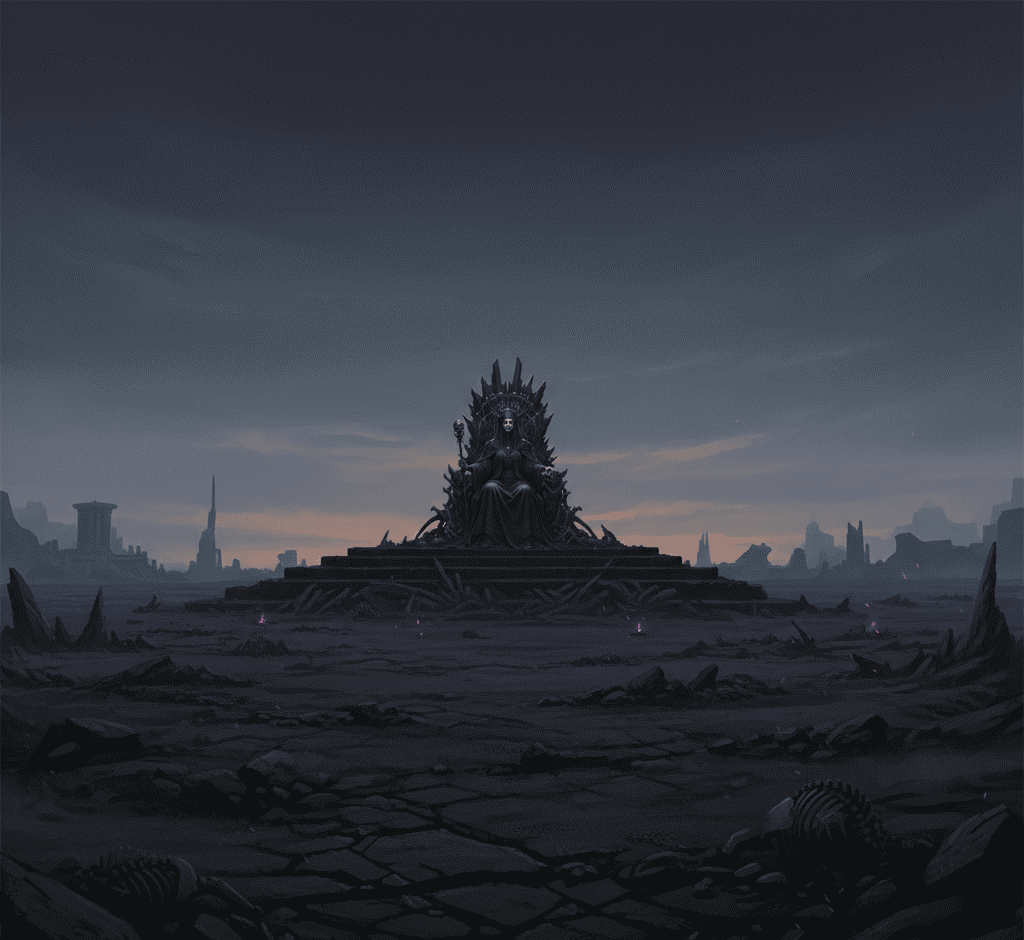
Ereshkigal ruled a place known as the Great Below. In the stories, this realm was dark and quiet, a world far removed from the brightness of the heavens and the busy life of the earth.
She did not visit other realms and rarely left her throne. This separation made her mysterious, even among the gods.
The Great Below was not a place for the living, and to enter it meant that there was no return. Ereshkigal watched over this shadowed land with complete authority.
Her power came from the simple truth that no god wanted to challenge her. The underworld was a place that even mighty gods feared.
It was a reminder that all life had an end. In ancient beliefs, the gods represented different forces of nature, life, and death. Ereshkigal was the one who ruled the final stage of existence.
That made her important, and it also made her feared. Unlike other gods who shared domains or fought for territory, her rule was absolute.
Although she was feared, she was also respected. Ancient people believed that the balance between life and death had to be maintained.
Ereshkigal’s role ensured that the world above continued to function properly. Nothing escaped her authority in the Great Below.
Every spirit that entered her realm became part of the natural cycle. While other gods represented growth, Ereshkigal represented the quiet moment after everything ends.
The Myth of Inanna’s Descent and the Power of Ereshkigal
One of the most famous stories involving Ereshkigal is the myth known as Inanna’s Descent. Inanna, the goddess of love and war, decided to travel to the underworld.
She claimed she wanted to visit her sister Ereshkigal, but the story suggests deeper motives of power and ambition.
Before she entered the Great Below, Inanna instructed her servant to seek help if she did not return. This warning already tells us how dangerous Ereshkigal’s realm was.
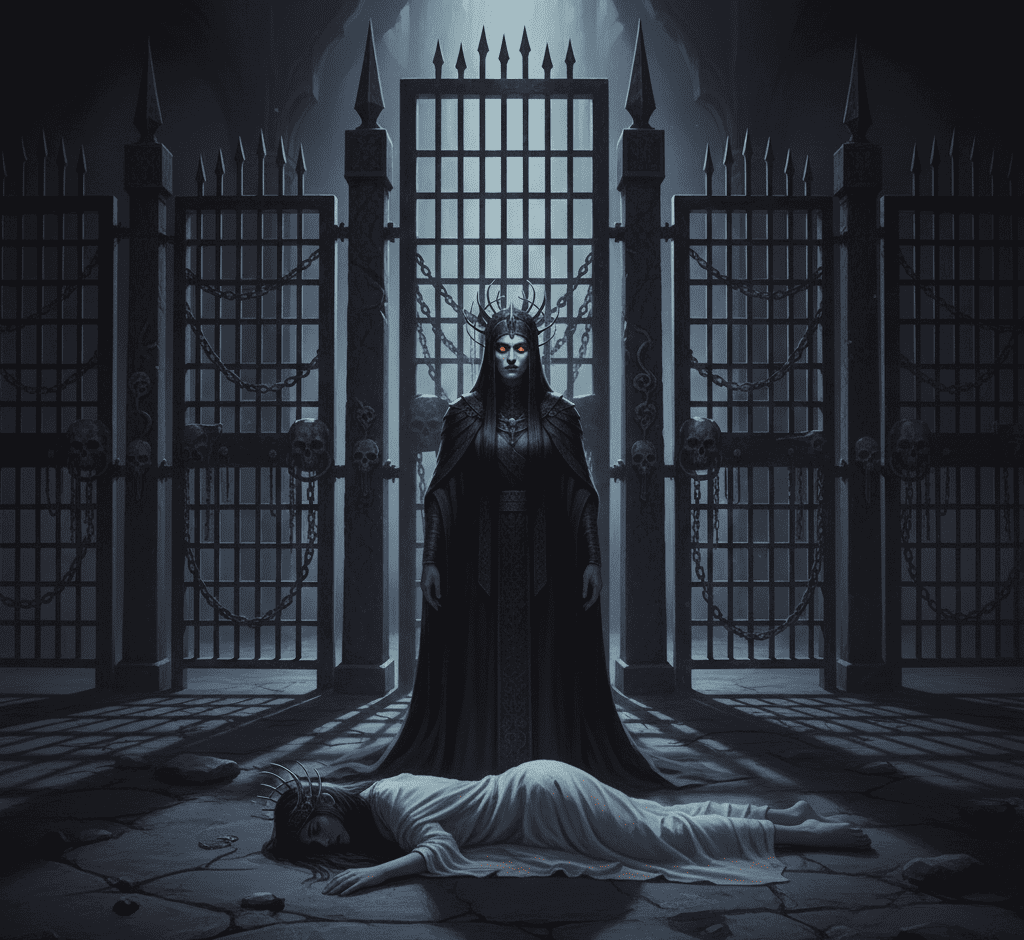
When Inanna arrived, Ereshkigal did not greet her like a beloved sister. Instead, she ordered that Inanna be stripped of her royal symbols at each gate.
This act showed that in the underworld, all power belonged to Ereshkigal. No visitor, not even a goddess as bold as Inanna, could enter as an equal.
The story becomes even more intense when Ereshkigal orders her judges to pass judgment. Inanna is struck down and turned into a lifeless figure.
Her body is hung on a hook, symbolizing that even one of the most influential goddesses could not challenge the Queen of the Dead. Ereshkigal’s authority was unquestionable.
When the gods of the heavens later tried to revive Inanna, they had to approach Ereshkigal carefully. They did not threaten her.
This part again shows her power. Even when confronted by divine forces, she could not be forced to surrender her authority.
The Human Side of a Feared Goddess
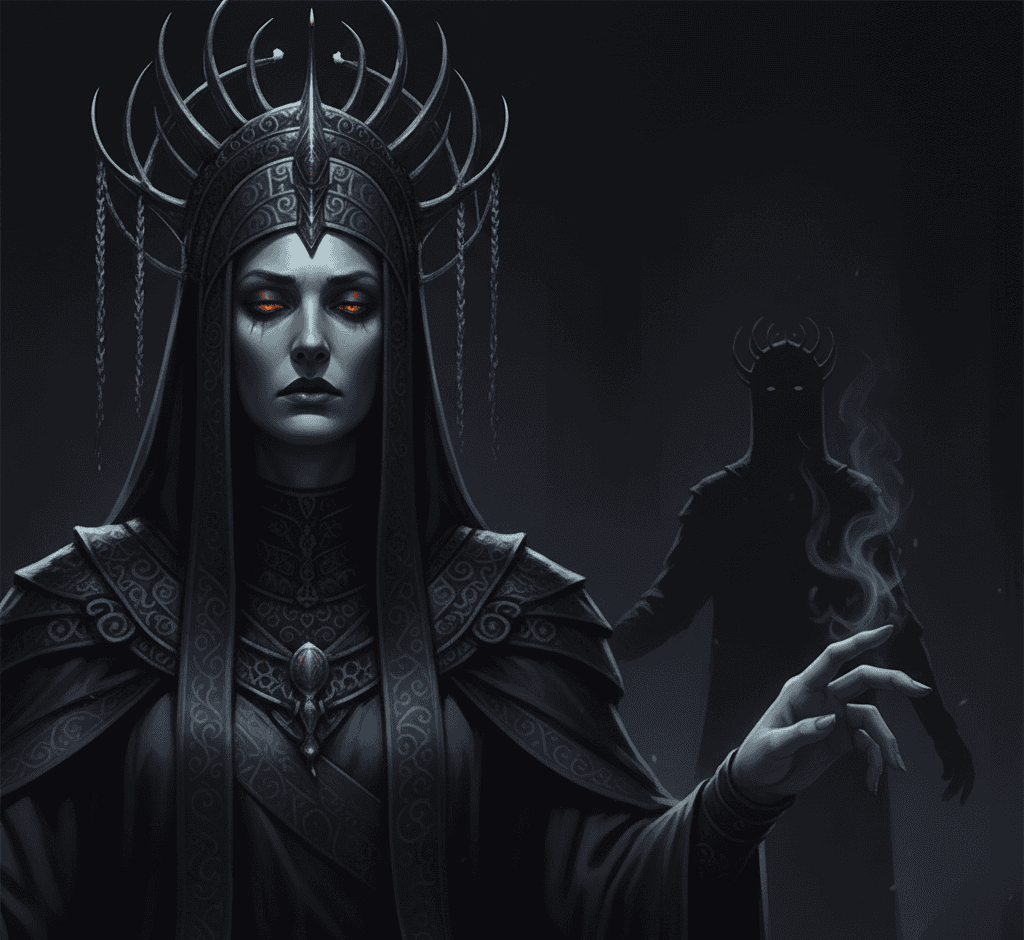
Ereshkigal was often shown as strict and unyielding, yet she was also portrayed as a goddess with complex emotions.
The story of her marriage to Nergal, the god of war and plague, reveals this human side even more clearly.
In one version of the story, Nergal visits the Great Below. At first, he disrespects Ereshkigal, but later he realizes the weight of his mistake.
When he returns, she opens her heart to him and expresses that she does not want to rule alone.
This moment surprises many readers because it shows that even the Queen of the Dead felt loneliness.
Her relationship with Nergal is sometimes described as passionate and intense. In some versions, Nergal tries to escape her realm but returns because he cannot ignore the connection he feels.
In these stories, Ereshkigal becomes more than a figure of authority. She becomes a representation of depth and complexity.
She shows that strength does not erase emotion and that power often comes with loneliness.
This combination is part of what makes her one of the most interesting goddesses in ancient mythology.
Why Her Story Still Echoes Through Time
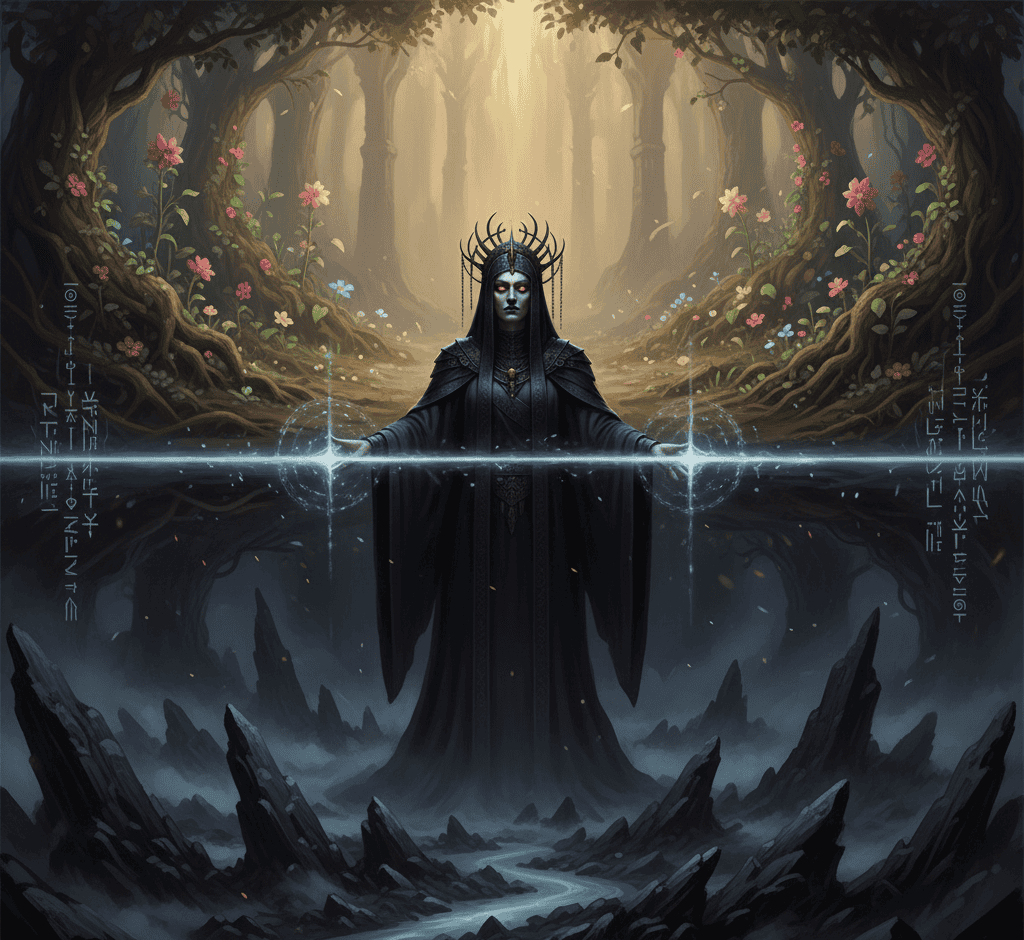
Ereshkigal remains a memorable figure because she represents something that every culture has tried to understand.
She stands at the boundary between life and death, holding the role that no other god wants.
Her realm is the destination that all people eventually face. Yet she is not simply a symbol of fear. She is a reminder that endings are part of the natural order.
Her stories teach that power does not always require movement or noise. Sometimes authority comes from presence alone.
Ereshkigal never needed to leave her throne to command respect. Her strength was quiet but absolute.
This makes her stand out among other gods who fought battles or traveled across the world. Her realm was fixed and still, yet it was one of the most important places in all creation.
Modern readers also find her compelling because she shows that even feared rulers can carry heavy emotions.
She is not only the Queen of the Dead. She is a figure who understands sorrow more deeply than anyone else.
Ereshkigal’s legacy endures because she embodies the quiet strength that comes from accepting one’s role fully.
She ruled a place that others avoided, yet she did so with unwavering resolve.
Her story lives on as one of the most striking and emotional tales from the ancient world, inviting us to understand the beauty and meaning found even in the shadows.

Ho sempre sentito una forte connessione con il Divino fin dalla mia nascita. Come autrice e mentore, la mia missione è aiutare gli altri a trovare l'amore, la felicità e la forza interiore nei momenti più bui.