
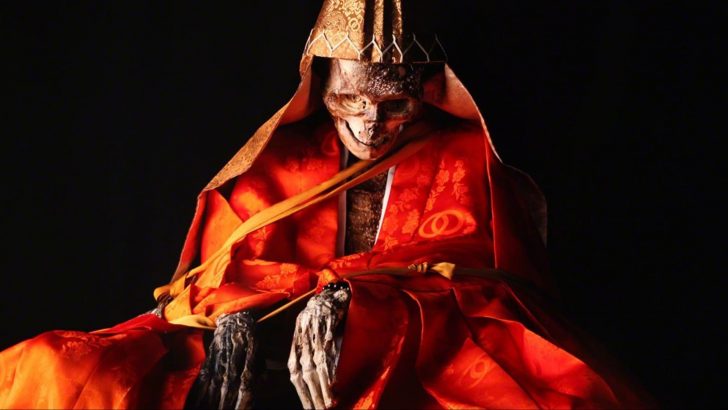
Funeral rites are some of the most fascinating cultural expressions out there.
Every step of the ritual is rich with meaning and is meant to honor the deceased.
Different cultures have their own way of dealing with death. In some, like in most of the West, it’s all in taboo and solemn silence.
In others, funerals are much more confronting.
Here are 7 rituals that you’ll struggle to comprehend!
1. Aghori Sadhus
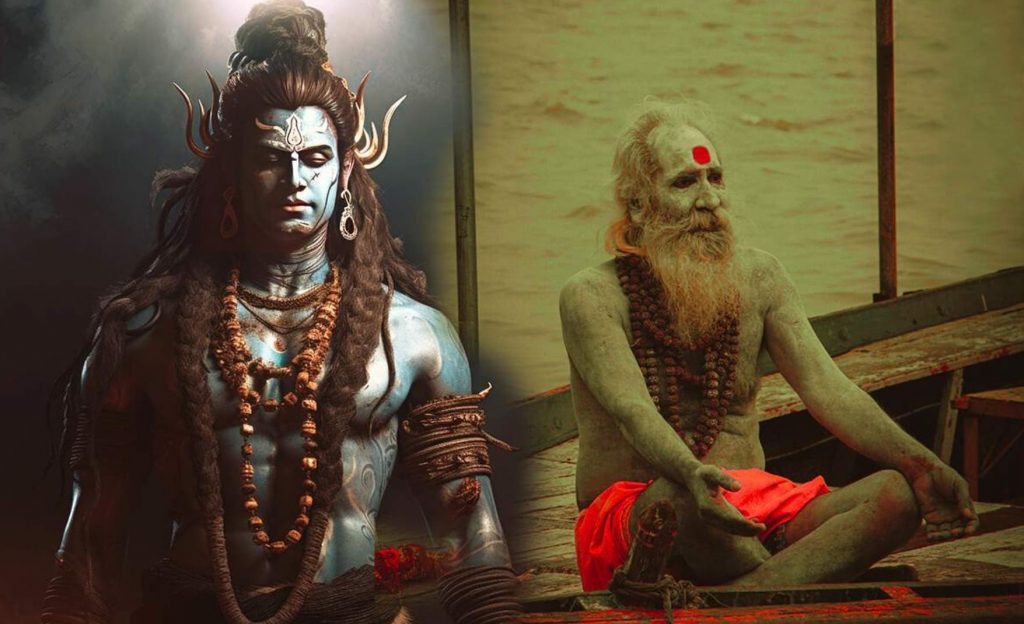
If there is one practice on the list that will leave us all baffled, it’s the Aghori Sadhus of Varanasi.
Questi Hindu ascetics believe that all things are Shiva and that nothing is truly impure. They constantly work to liberate themselves from the boundaries the ego imposes on us all.
While their practice includes ordinary spiritual activities like meditating, they also take funerals to incomprehensible lengths.
As part of the practice, these ascetics might drink from human skulls e anche consume the flesh of corpses!
With these acts, they seek to reject their instinct for disgust.
The Aghori believe that what causes ordinary people to recoil is exactly the boundary that keeps them spiritually imprisoned.
They are still practicing in 2026. Their appearance itself honors the boundary between life and death, as they cover themselves in ash and wear skulls.
2. Sky Burial
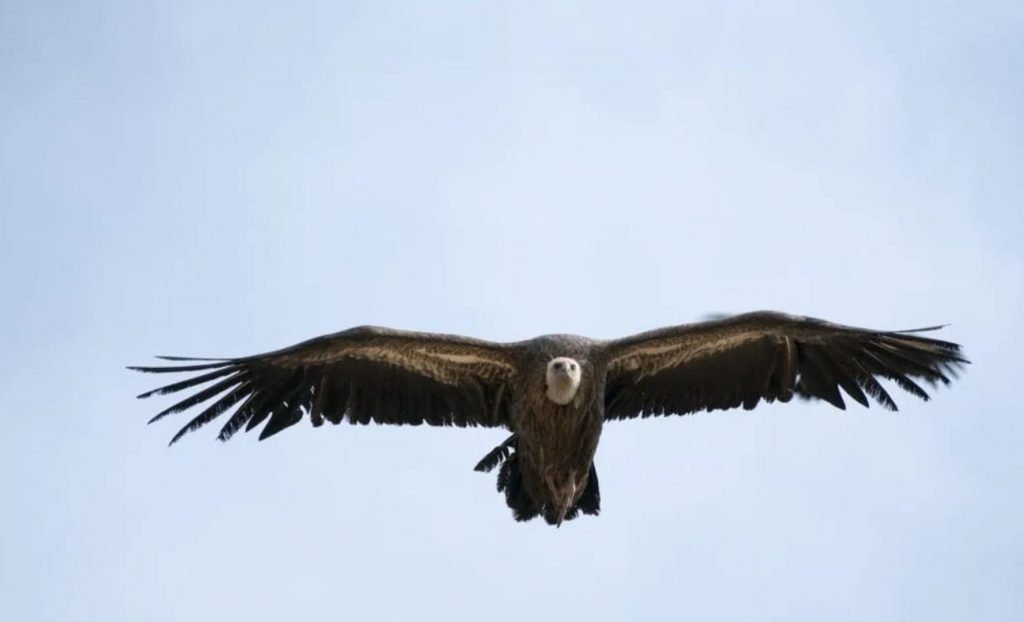
In the highest points of Tibet, where the frozen ground makes traditional funerals impossible, and wood for cremation is also scarce, monks turn to sky burial.
In sky burial, a Tibetan Buddhist monk brings the body of the deceased to a specific rock platform at dawn.
Above that location, Dakini vultures are already circling in wait. In Tibetan tradition, they’re called sky dancers.
The monk dismembers the body and feeds it to the birds.
Then, to make sure the sky burial is complete, the monk grinds the bones into a paste mixed with flour and butter tea, so the vultures can consume it all.
It’s believed that the birds carry away the flesh as something sacred.
Tibetan Buddhism teaches that the soul departs immediately after death, while the body is just a temporary vessel.
Sky burial is considered the purest way to return what was borrowed from natura.
3. Sokushinbutsu
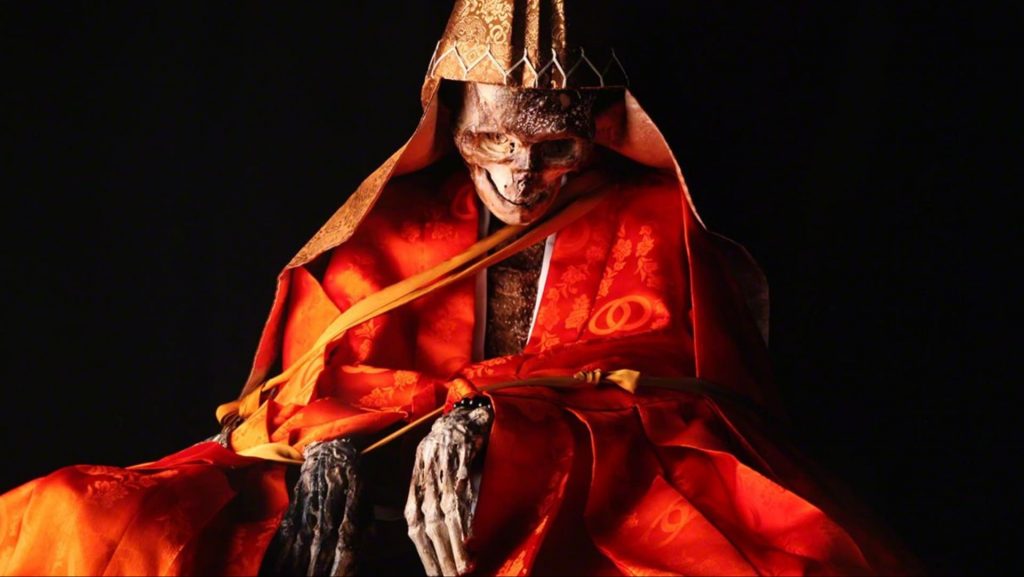
Sokushinbutsu is a ritual that challenges what the human body is capable of enduring in the name of spiritual conviction.
It was practiced by Shingon Buddhist monks in Northern Japan, between the 11th and 19th centuries.
Rather than a funeral, Sokushinbutsu was self-mummification.
The process could take years, and the monks performed it while still alive, through incomprehensible discipline.
The ritual was done in three phases.
The first lasted three years, and during that time, the monk ate only tree bark, roots, nuts, and seeds to eliminate all body fat. This prevented decay after death.
The second phase took another three years, with a similarly restricted diet, meant to remove body moisture.
Then, the monk drank the tea made from a toxic tree sap, which made the body poisonous to insects and bacteria.
Finally, the part that looks the most like a traditional funeral began with the third phase.
The monk would seal himself inside a stone tomb, with only a small tube for air and a bell that signaled he was still alive.
When the bell stopped, the tomb would be sealed permanently.
4. Yanomami
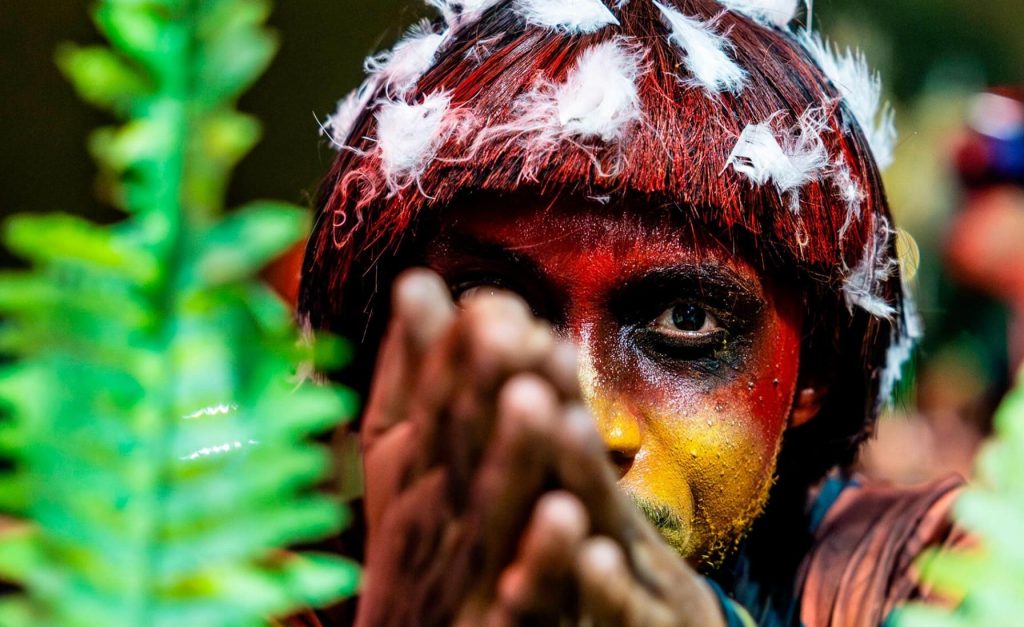
Deep in the Amazon rainforest, the Yanomami people have developed one of the most intense responses to death that history remembers!
Essi consume the ashes of their dead to keep their soul alive in the community.
The body is cremated immediately after death until all that’s left are ash and bone fragments.
Those fragments are then ground into powder and mixed into a plantain soup. Family members drink this soup together as part of the funeral.
The belief goes that the soul can’t rest if its body is left in the ground belonging to no one.
By consuming the ashes, the community literally incorporates the dead person into the living.
5. Famadihana
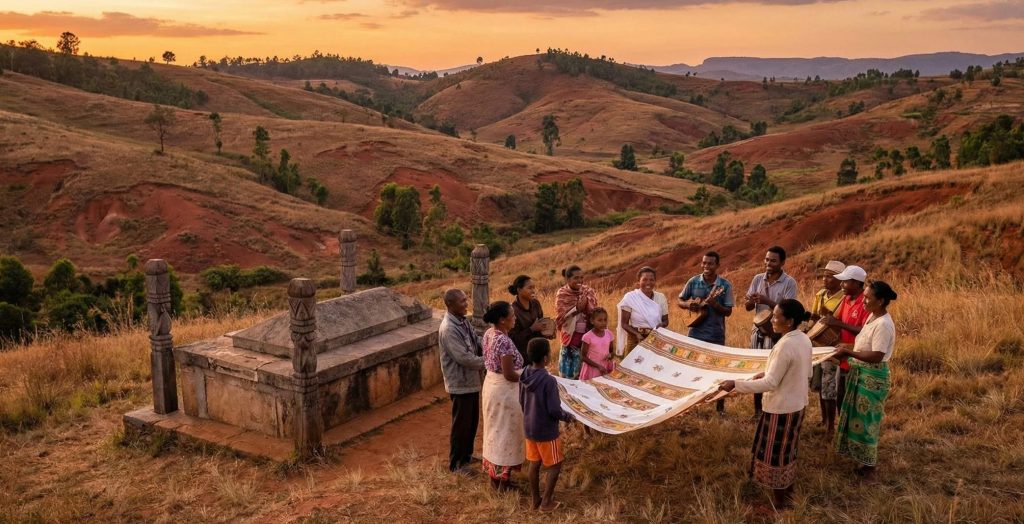
Every five to seven years in the highlands of Madagascar, the local people get to observe one of the most surreal funeral traditions in the world.
Famadihana means the turning of bones. Families gather at their ancestral tombs and remove the skeletal remains of their loved ones.
The remains are wrapped in fresh white silk, brought out into the sunlight, and danced with!
There’s live music, celebration, laughter… It’s seen as a riunione, and it can last for hours!
The dead are carried around, told family news, introduced to young children, and even given gifts.
The idea is that the dead aren’t gone, but only exist in a different shape. The living are responsible for maintaining a relationship with them and keeping them part of the family.
6. Toraja
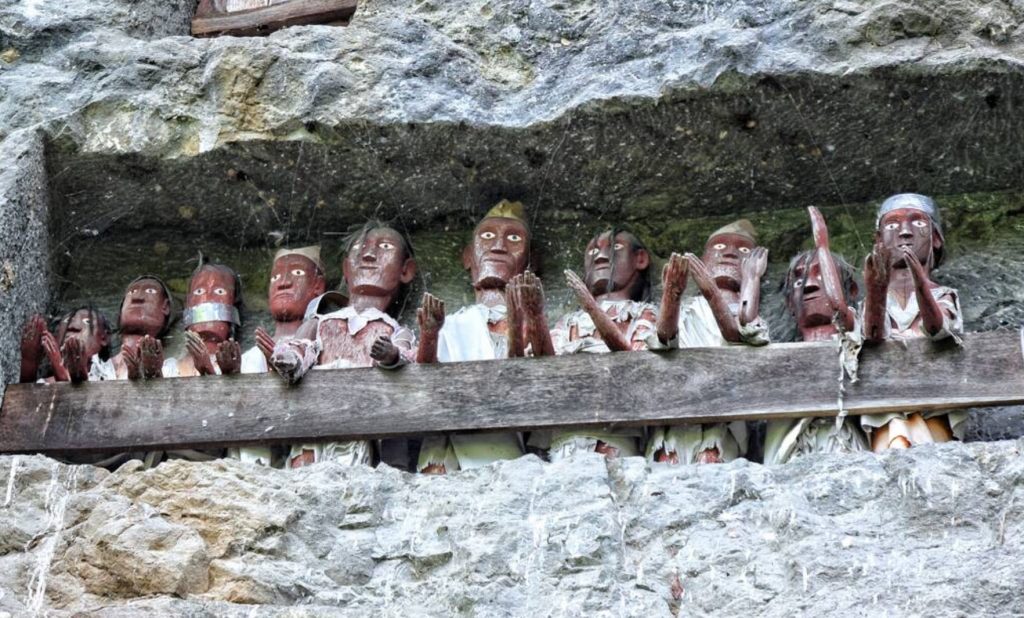
In Sulawesi, Indonesia, the Toraja people have built a unique relationship with the dead.
Their tradition requires an elaborate funeral ceremony that costs a lot of money, and sometimes, it can take people years to save up enough.
So when someone dies, their body is embalmed with formaldehyde and kept inside the family home. Sometimes, they can stay there for months or years!
During this time, the deceased is treated as someone who is just ill, so they’re fed daily, talked to, and included in family gatherings.
If the deceased smoked during their life, they’re even brought cigarettes!
Death is only acknowledged privately, while socially, everyone behaves as though they’re still alive.
When the funeral finally happens, it lasts for several days, includes hundreds of guests and animal sacrifices. People have to work for years to afford it.
The Toraja people express their love for the deceased by not rushing the farewell. Instead, they wait as long as it takes to send them off with honors.
7. Towers of Silence
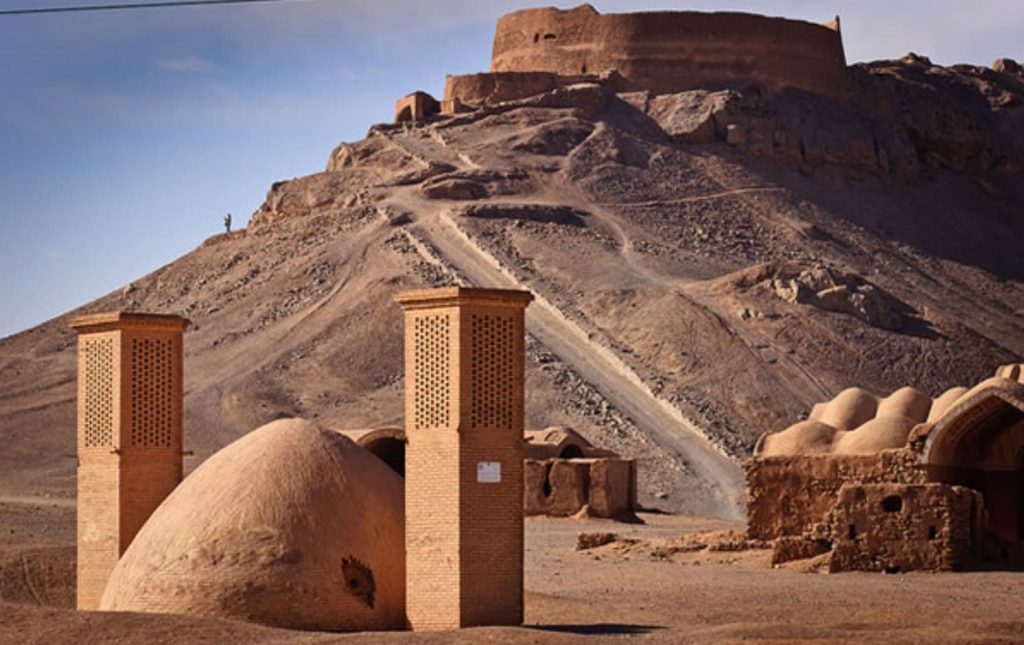
The Zoroastrian community of India and Iran developed their funeral tradition from the idea of radical purity of the elements.
This essentially means that no natural element should be polluted by a corpse. Fire is sacred, so cremation isn’t an option.
Earth is sacred and can’t be corrupted by decay. Water, also.
The only option they’re left with are the towers of silence or Dakhmas, which function much like Tibetan sky burial.
The body is brought to the tower by the chosen people, left on the stone surface in concentric rings that state the gender and age of the deceased.
Within hours, the vultures consume the remains entirely.
Eventually, the bones dry out in the sun and crumble into the pit of the tower.
The practice continues in Mumbai in 2026.

A little Aquarius, devoted to writing and embroidery. Through my writing, I hope to empower readers to align with their true selves and navigate life’s mysteries with confidence.