
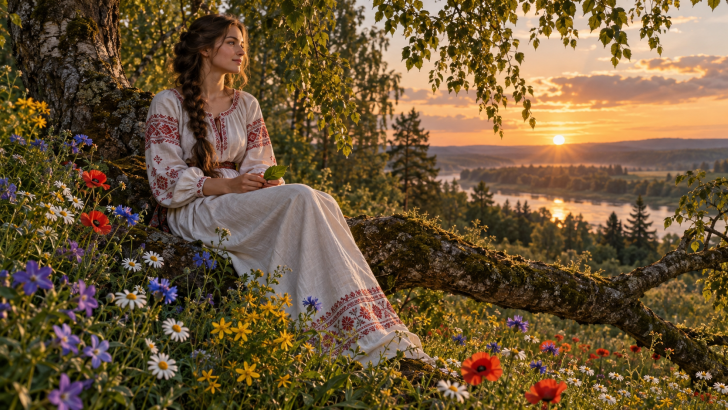
In Slavic folklore, flowers could be much more than something pretty growing in a field.
Some were placed in wreaths. Others were connected with love, marriage, protection, or midsummer celebrations.
Slavic traditions covered a huge area, so there was never one single list of “magical Slavic flowers.”
Beliefs changed between villages, countries, and time periods. Older customs also mixed with Christianity over the centuries.
Still, certain plants kept appearing in songs, legends, celebrations, and folk beliefs.
Here are eight flowers and flowering plants with some of the most interesting magical connections in Slavic folklore.
1. The Fern Flower – The Impossible Flower That Revealed Treasure
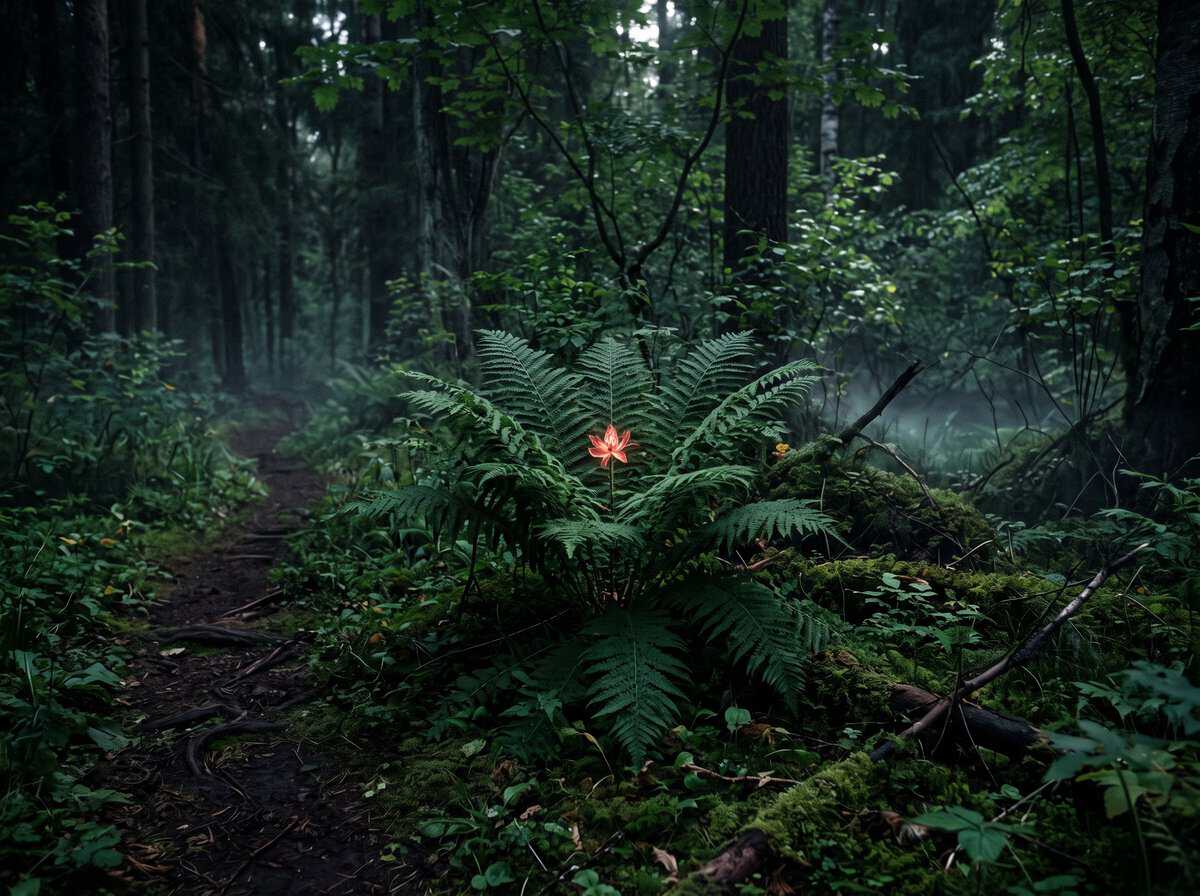
The most famous magical flower in Slavic folklore comes from a plant that cannot actually produce flowers. The fern.
According to legends found in several Slavic traditions, a mysterious fern flower appeared for a short time around the midsummer celebration known as Ivan Kupala.
Finding it was almost impossible. That was part of the magic.
Different stories gave the flower different powers. It could reveal hidden treasure, bring extraordinary luck, or allow someone to understand secrets.
But reaching it was rarely easy. Later folklore sometimes filled the forest with frightening forces trying to stop the person searching for the flower.
The story turns an ordinary fern into something completely different for one night.
Everyone knows ferns do not bloom. But on a magical midsummer night, folklore asks a much better question. What if one did?
2. Periwinkle – The Evergreen Flower of Lasting Love
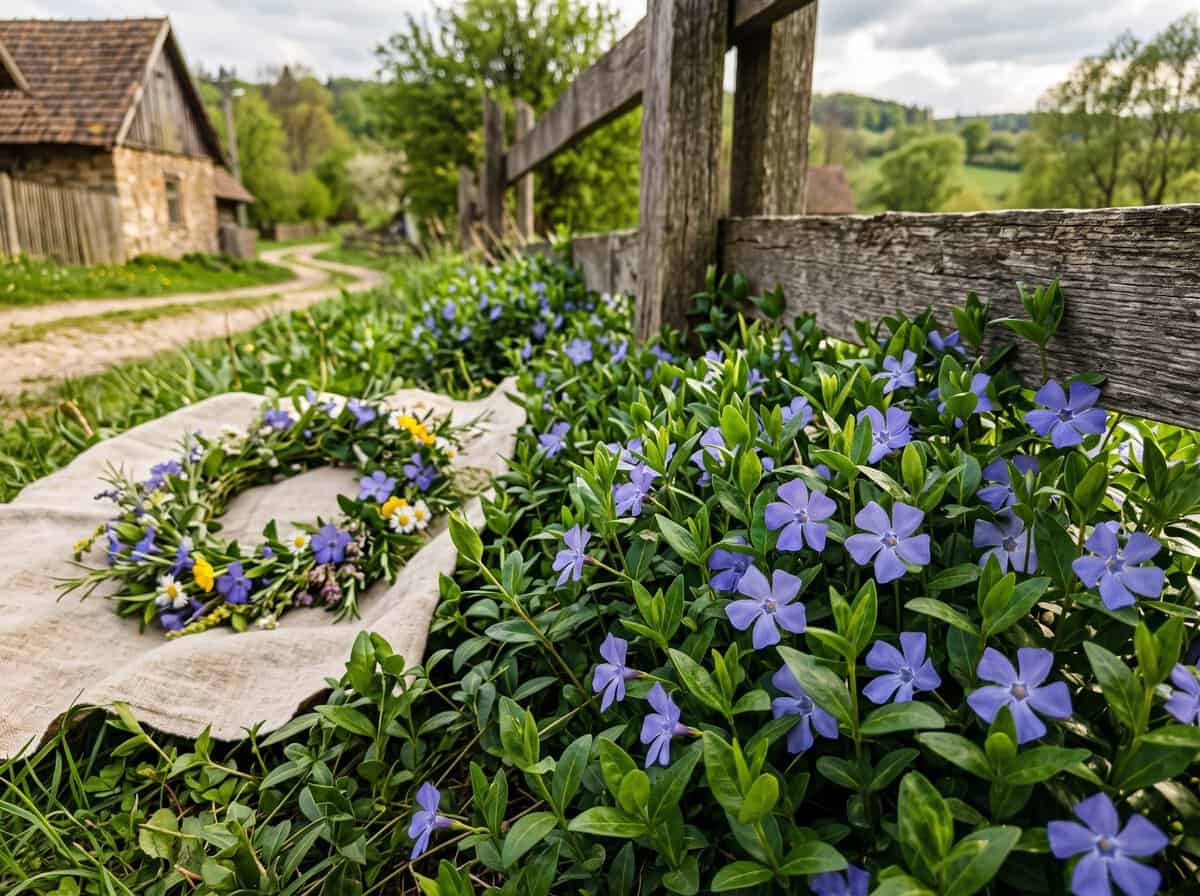
Periwinkle may be small, but it carries a lot of meaning in Slavic folk tradition. Its greatest strength is simple.
It stays green. Because of that, periwinkle became a natural symbol of lasting life, loyalty, and love that survives changing seasons.
It became especially important in wedding traditions in parts of the Slavic world, including Ukrainian folk culture.
Periwinkle could be woven into wedding wreaths and used in decorations connected with marriage.
The meaning is easy to understand. A wedding begins with the hope that love will last much longer than the celebration itself.
An evergreen plant was the perfect symbol for that wish. It did not need dramatic supernatural powers.
3. Cornflower – The Blue Flower of Youth and Love
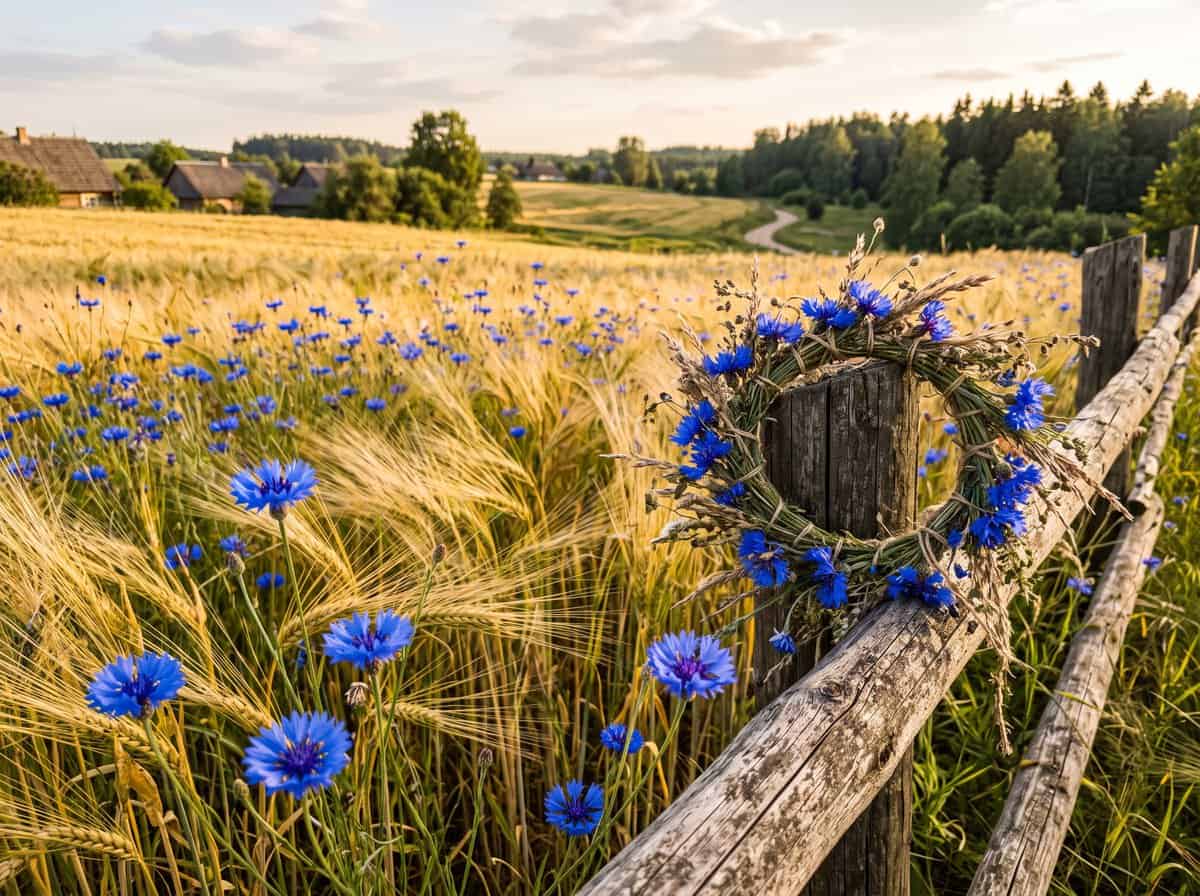
The bright blue cornflower was once a familiar sight among grain fields. That made it part of the everyday landscape for many rural communities.
But folklore rarely leaves a beautiful flower as just a flower.
Cornflowers became connected with youth, beauty, affection, and courtship in several Slavic traditions.
They could appear in songs and in wreaths made by young women. Their blue color made them especially easy to notice among golden grain.
This contrast may help explain why the flower became such a strong romantic image.
A single blue flower standing in a field is difficult to ignore. Over time, the cornflower became tied to ideas of tenderness and young love.
It is a good example of how folk symbolism often begins. People see the same flower every summer.
They sing about it. They give it meaning. Eventually, the flower becomes part of the emotional language of an entire tradition.
4. Poppy – The Flower Between Sleep and Protection
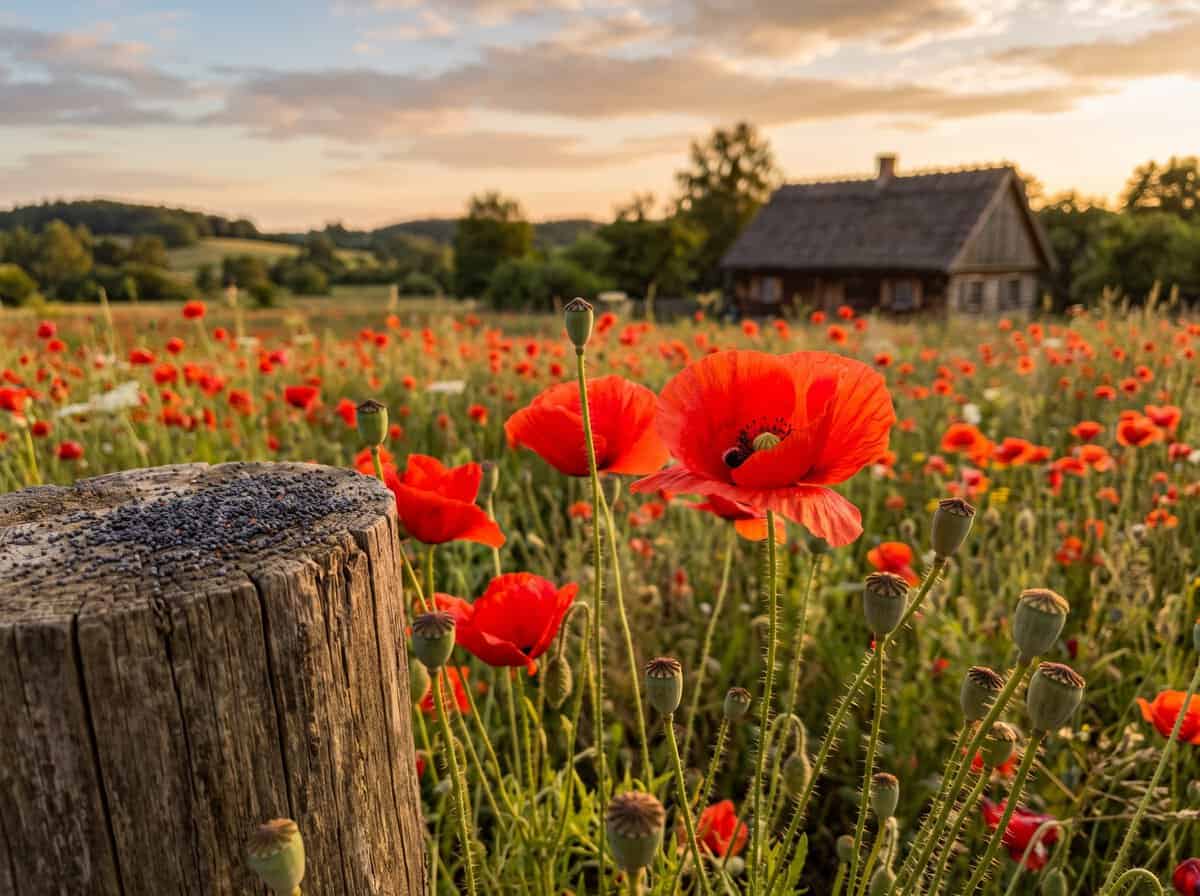
Poppies are beautiful, but they also carry associations with sleep and altered states because of the properties of certain poppy species.
In Slavic folk beliefs, poppy seeds also gained protective meanings.
One curious idea found in wider Central and Eastern European folklore was that harmful supernatural beings could be distracted by countless small objects.
Scattered seeds were sometimes believed to force such beings to stop and count them.
That made the poppy a surprisingly useful protective plant in folk imagination.
Poppies could also carry meanings connected with fertility and abundance because of the huge number of seeds contained inside a single seed head.
One plant could therefore represent several very different things. Sleep. Protection. Fertility.
Even the boundary between the ordinary and mysterious worlds. Few flowers manage to look so delicate while carrying such strange folklore.
5. Chamomile – The Little Flower of Health and Good Fortune
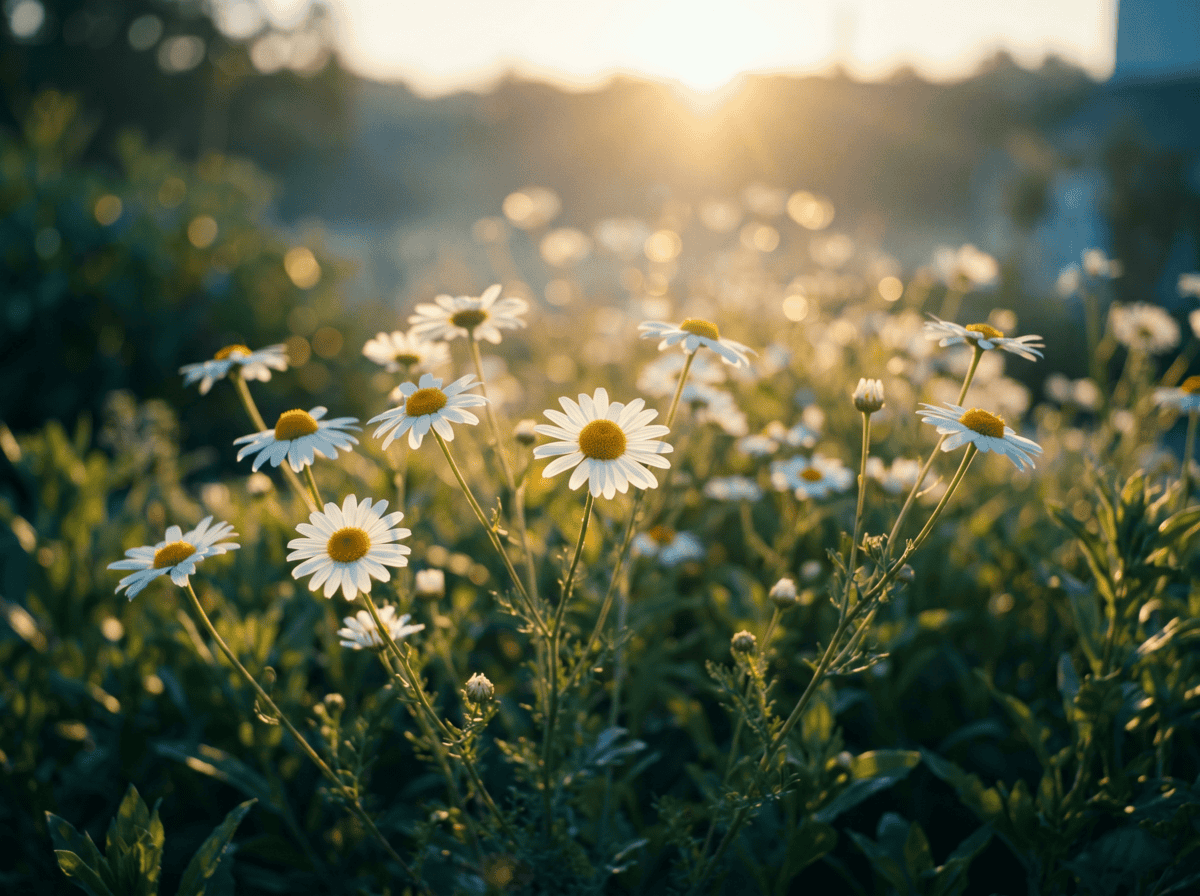
Chamomile looks almost too cheerful to be magical. Its small white petals and yellow center make it resemble a tiny sun.
For centuries, people across Europe used chamomile in everyday herbal traditions.
It also gathered symbolic meanings connected with health, protection, calm, and good fortune.
In Slavic regions, chamomile became familiar in folk culture and later gained strong associations with simplicity, nature, and affection.
Flowers such as chamomile could also become part of wreath-making and seasonal customs.
It is important not to turn every traditional medicinal plant into an ancient pagan sacred herb.
Many folk uses developed much later. Still, chamomile fits perfectly into the world of village plant traditions.
It was familiar. It grew close to people. And it was useful.
Sometimes the plants that become most loved in folklore are not rare ones. They are the little flowers people see all the time.
6. St. John’s Wort – The Midsummer Flower of Protection
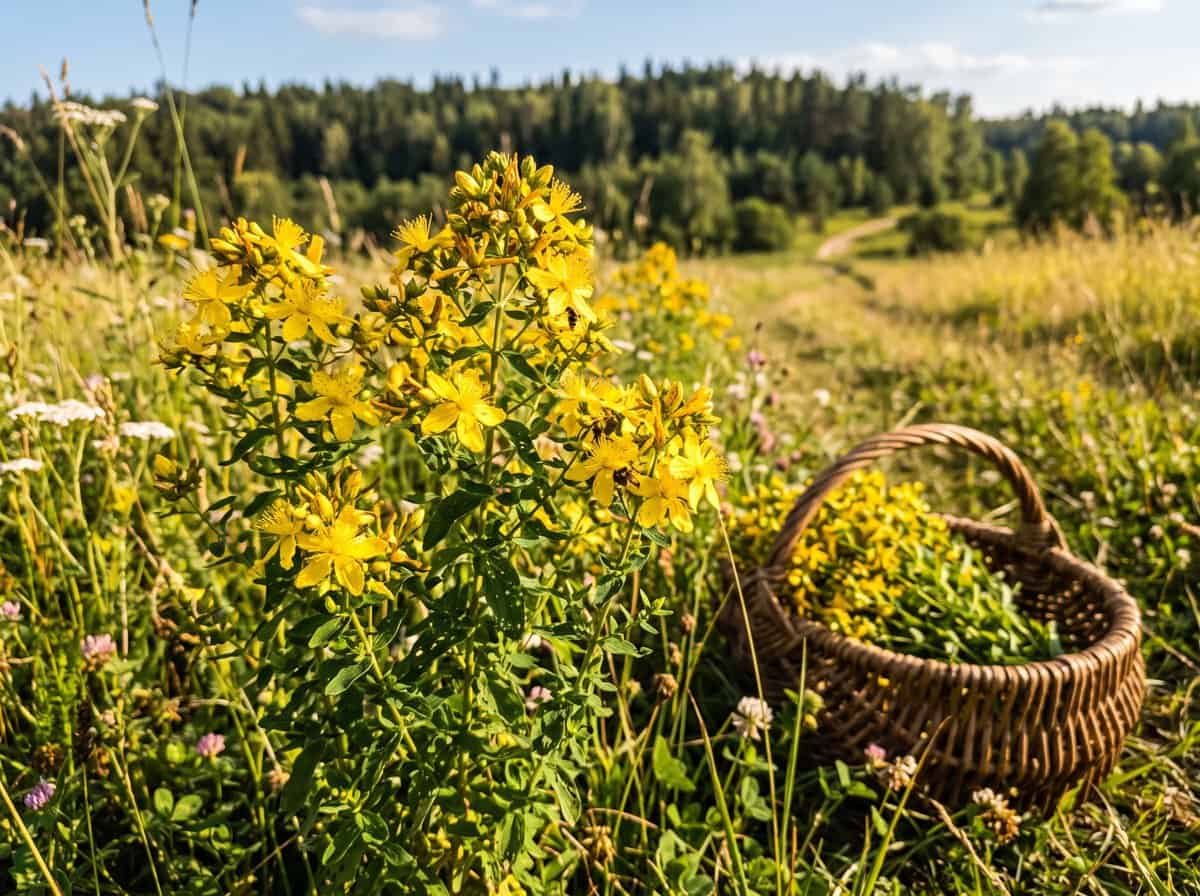
Few plants fit midsummer folklore better than St. John’s wort.
Its yellow flowers appear around the time of the summer solstice, which helped connect the plant with seasonal celebrations across Europe.
Its Christian name links it with St. John the Baptist. But around midsummer, Christian celebrations also mixed with older customs in many places.
In Slavic traditions, the period around Ivan Kupala became filled with stories about water, fire, plants, love, and unusual supernatural activity.
Herbs gathered at this time could be considered especially meaningful or powerful.
St. John’s wort became one of the plants associated with protection in European folk tradition.
Its bright yellow flowers also made it easy to connect with sunlight. This creates an interesting mixture.
A Christian saint. An old midsummer season. A yellow flowering herb.
Centuries of folk beliefs. Slavic folklore often grew from exactly these kinds of layers.
7. Daisy – The Simple Flower of Love Questions
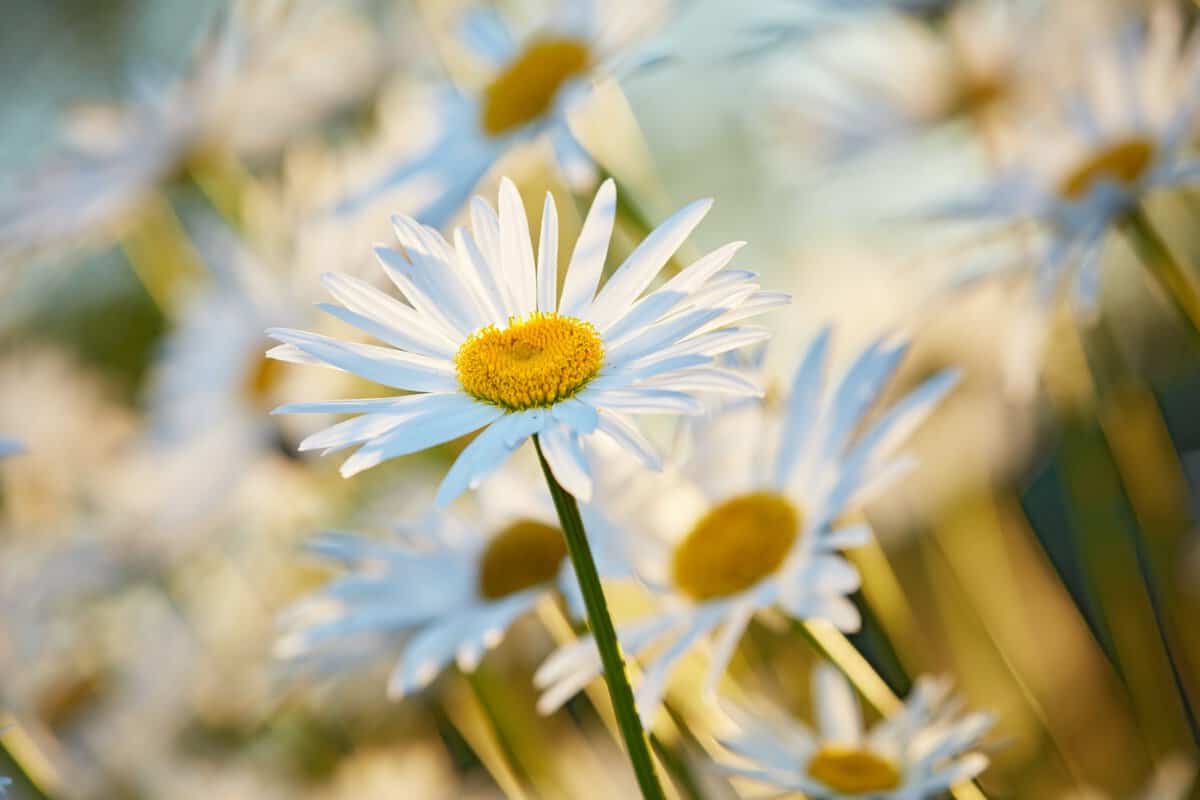
One of the most familiar flower games is also one of the simplest.
Take a daisy and remove its petals one by one while asking whether someone loves you.
Versions of this kind of flower divination became known across many European cultures, including Slavic ones.
It is hardly a serious magical ceremony. That is part of its charm.
Young people did not need complicated tools to ask questions about love. A flower growing nearby was enough.
The final petal supposedly gave the answer. Of course, the daisy cannot actually reveal another person’s feelings.
But folklore is often less interested in proving something scientifically and more interested in turning uncertainty into a little game.
And few things create more uncertainty than young love. The daisy transformed that nervous question into something playful.
One flower. A handful of petals. And an answer you secretly hoped would come out the right way.
8. Kupala Wreath Flowers – The Flowers That Carried Love Into the Water
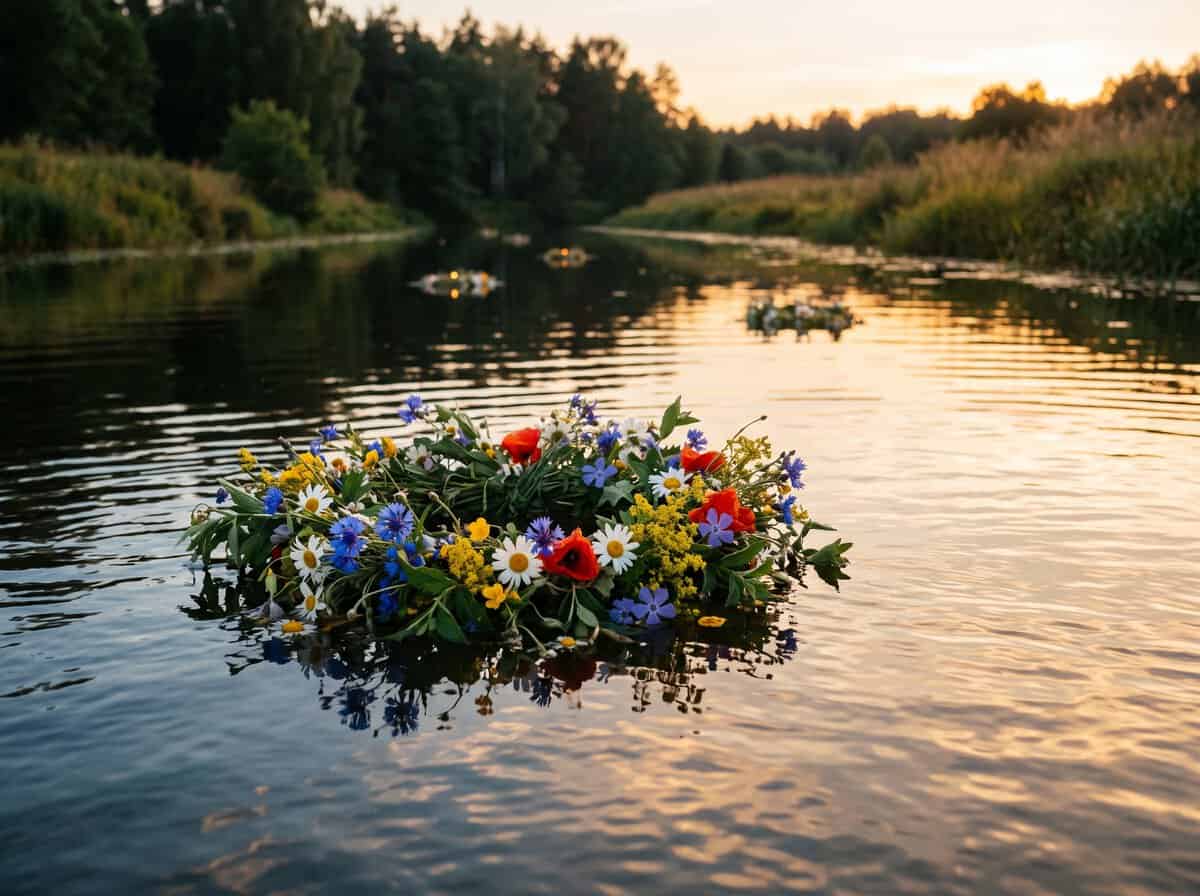
The final magical “flower” is really a whole collection of them.
During Ivan Kupala traditions in parts of the Slavic world, young women made wreaths from flowers and greenery.
These wreaths could then become part of customs connected with love and fortune.
One famous tradition involved placing a wreath on moving water and watching where it went.
Different movements could be given different meanings.
A wreath floating smoothly away might be treated as a hopeful sign about romance or marriage. Other outcomes could receive less cheerful interpretations.
In some versions, young men might try to retrieve particular wreaths. The exact customs varied greatly by region.
What makes the tradition so memorable is the image itself. Flowers gathered from the summer landscape are woven into a circle.
Then the wreath is placed on a river and allowed to travel wherever the water takes it.
For a moment, the person’s question travels with it. Perhaps that is why flower traditions lasted for so long.
Flowers do not actually predict the future. But they gave people a beautiful way to imagine what the future might hold.

Ho sempre sentito una forte connessione con il Divino fin dalla mia nascita. Come autrice e mentore, la mia missione è aiutare gli altri a trovare l'amore, la felicità e la forza interiore nei momenti più bui.