

Curses have been a central theme in myths and legends across cultures for thousands of years.
From ancient Greece to Egypt, and from Norse sagas to African folklore, curses were often seen as a way for gods, spirits, or magical forces to punish humans.
They often brought misfortune, illness, betrayal, or death, showing that supernatural forces could have real consequences.
Some curses were the result of broken promises, disrespecting the gods, or stealing sacred objects. Others were inherited across generations, creating long-lasting tragedy.
These stories warned people about the consequences of pride, greed, or disobedience.
Here are ten mythological curses that brought terrible fate and continue to inspire fear and fascination.
1. The Curse of the House of Atreus

The House of Atreus is one of the most infamous cursed families in Greek mythology.
The curse began when Tantalus, the patriarch, angered the gods by serving his son Pelops as a meal.
The gods punished Tantalus and placed a curse on his descendants, causing a cycle of murder, betrayal, and misfortune for generations.
Atreus and his brother Thyestes continued the tragic legacy with acts of revenge, including serving Thyestes’ children as food.
This curse affected kings, heroes, and even those who tried to escape it.
The stories illustrate how divine punishment could span multiple generations and serve as a warning against offending the gods.
The House of Atreus remains one of the most chilling examples of a family doomed by divine wrath.
2. The Curse of Medusa
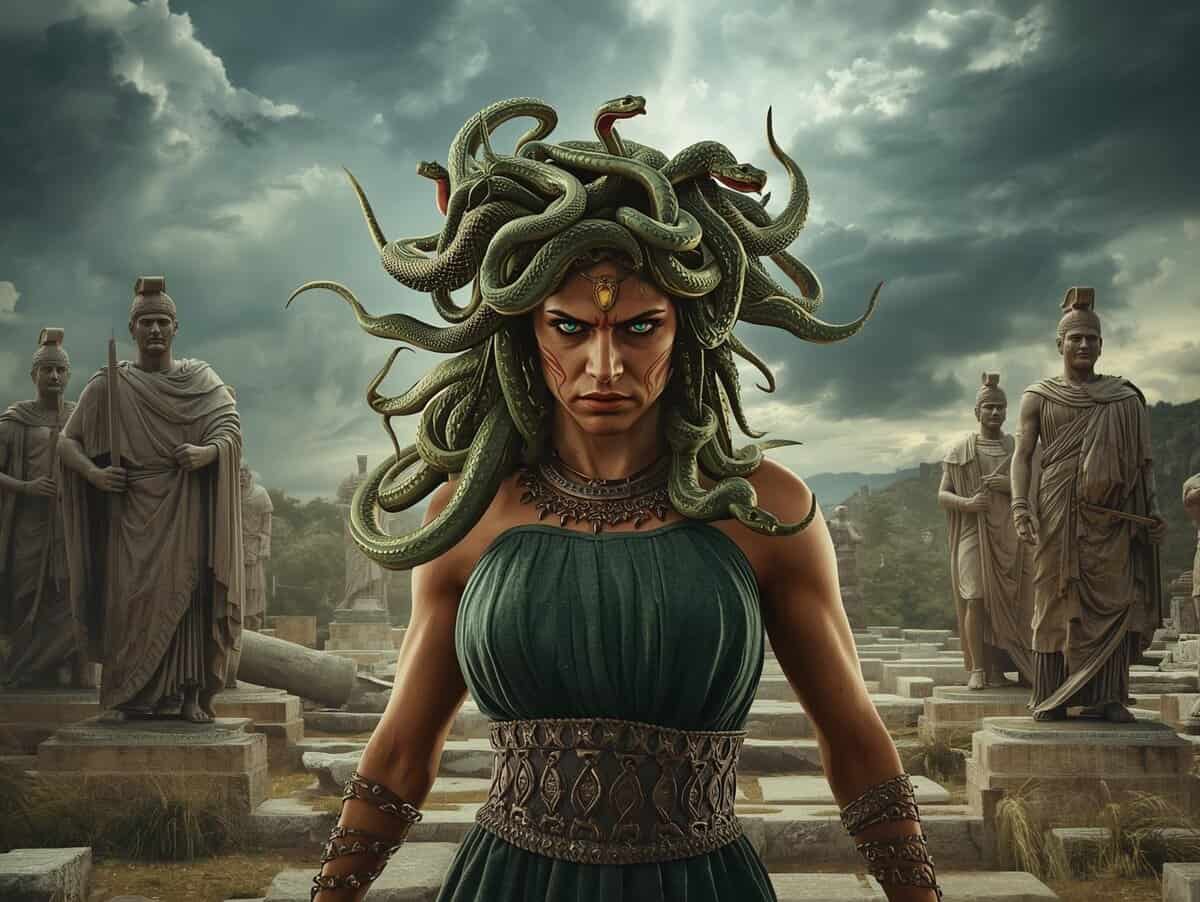
Medusa, the famous Gorgon from Greek mythology, carried a terrifying curse.
Originally a beautiful woman, she was punished by Athena after being violated by Poseidon in her temple.
Athena transformed her hair into snakes and gave her the power to turn anyone who looked at her into stone.
This curse isolated Medusa from society and ultimately led to her death at the hands of the hero Perseus.
The curse extended even beyond her life because her severed head retained its deadly power.
Medusa’s story shows how divine punishment could transform a victim into a terrifying force and serve as a reminder of the dangers of offending gods or sacred spaces.
3. The Curse of King Midas

King Midas of Phrygia is famous for his golden touch, which was both a blessing and a curse.
When granted the power to turn anything he touched into gold, Midas initially celebrated his wealth.
However, the curse quickly became apparent when food, drink, and even his beloved daughter turned to gold upon contact.
This tragic realization taught him the dangers of greed and desire. Midas begged the gods to remove the curse, which they eventually did, but the lesson remained clear.
The story illustrates how a seemingly desirable gift could become a terrible punishment, showing the destructive potential of human greed and divine retribution.
4. The Curse of Oedipus

Oedipus, the tragic king of Thebes, was the subject of a terrifying curse that shaped his life.
Before his birth, a prophecy declared that he would kill his father and marry his mother.
Despite his parents’ attempts to prevent it, the prophecy came true. Oedipus unknowingly killed his father and later married his mother, fulfilling the curse.
Once he discovered the truth, he blinded himself and went into exile. This story illustrates how curses and prophecies could dictate the fate of individuals in Greek mythology.
It also explores the theme of unavoidable destiny, showing that some curses could not be escaped no matter how hard people tried.
5. The Curse of the Necklace of Harmonia

The Necklace of Harmonia in Greek mythology was a beautiful and powerful object, but it brought misfortune to its owners.
It was given to Harmonia as a wedding gift from the gods, yet it carried a curse that caused suffering, betrayal, and death to those who possessed it.
Over generations, the necklace passed from one tragic owner to another, bringing ruin to entire families.
The curse shows how even divine gifts could be dangerous and highlights the idea that beauty and power often come with hidden consequences.
The Necklace of Harmonia remains a classic example of how cursed objects could affect multiple generations.
6. The Curse of the Sphinx

The Sphinx in Greek mythology was a mysterious creature that terrorized the city of Thebes.
It placed a riddle before travelers and devoured anyone who failed to answer correctly.
This curse brought fear and death to the people until Oedipus solved the riddle.
The curse was both the creature’s natural power and a divine punishment placed on the city.
It demonstrates how curses in mythology could combine fear, intelligence tests, and supernatural consequences.
The Sphinx became an enduring symbol of mystery, danger, and the idea that breaking a divine or magical challenge could save lives or bring disaster.
7. The Curse of the Pharaohs

Egyptian pharaohs were believed to be protected by divine magic, but disturbing their tombs could bring a terrible curse.
The most famous example is the tomb of Tutankhamun, which many believe caused the deaths of those who entered it.
Ancient inscriptions warned that robbers and desecrators would face divine punishment.
Archaeologists and explorers who visited the tomb experienced illnesses, accidents, or unexplained deaths, reinforcing the legend.
The curse of the pharaohs highlights the power of belief in divine protection and the fear of supernatural retribution, showing how curses were used to protect sacred objects and enforce respect for the dead.
8. The Curse of Cassandra

Cassandra, a princess of Troy, was cursed by Apollo after she rejected his love.
The curse allowed her to see the future accurately but ensured that no one would ever believe her predictions.
Despite knowing the fall of Troy and countless tragedies, Cassandra was powerless to prevent them.
This curse brought frustration, suffering, and isolation, showing that knowledge alone could not save her or others.
It is a powerful example of how curses in mythology could affect both the mind and social life.
Cassandra’s story continues to symbolize the torment of seeing disaster coming while being ignored.
9. The Curse of the Flying Dutchman

The legend of the Flying Dutchman tells of a ghost ship doomed to sail the oceans forever.
According to the myth, the captain defied the laws of nature or God, leading to a curse that prevented him and his crew from ever reaching land.
The ship and its crew were doomed to wander the seas eternally, appearing as a warning to sailors.
Over centuries, sailors reported seeing the spectral ship, linking it to misfortune and disaster.
The curse of the Flying Dutchman shows how maritime myths combined human error, divine punishment, and eternal suffering to create a story that terrified generations of seafarers.
10. The Curse of La Llorona

La Llorona, the Weeping Woman from Latin American folklore, is said to have cursed herself after drowning her children in a fit of grief and rage.
Condemned to wander rivers and lakes for eternity, her ghostly cries are said to bring misfortune or death to those who hear her.
This curse serves as a cautionary tale about the consequences of anger, despair, and wrongdoing.
La Llorona has become one of the most famous cursed figures in folklore, illustrating how myths can teach moral lessons while inspiring fear.
Her story shows that a single act of violence or hubris can carry consequences far beyond a lifetime.

Ho sempre sentito una forte connessione con il Divino fin dalla mia nascita. Come autrice e mentore, la mia missione è aiutare gli altri a trovare l'amore, la felicità e la forza interiore nei momenti più bui.