
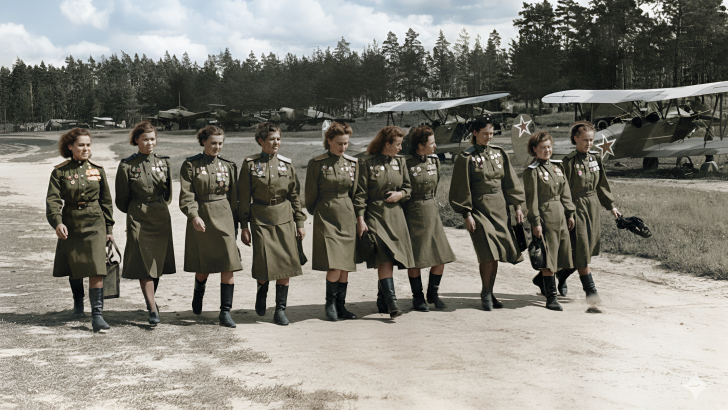
During the darkest nights of the Second World War, when the sky over Eastern Europe was filled with danger, a small group of pilots became legends.
They were young women, many barely out of their teens, flying old wooden planes through cold air and enemy fire.
German soldiers gave them a name that still echoes today, the Night Witches. These women did not rely on speed or heavy weapons.
They relied on silence, courage, and a deep sense of purpose. Their story is not only about war, but about determination and strength in a world that expected them to fail.
When people hear about the Night Witches, they often imagine fearless figures moving like shadows through the sky.
Behind that image were real women who faced fear every night and chose to fly anyway. Their story deserves to be told with respect and wonder.
How The Night Witches Were Formed

The Night Witches began as part of a bold idea during a desperate time. When Nazi forces invaded the Soviet Union, the country needed every possible advantage.
A famous aviator named Marina Raskova pushed for the creation of all-female air units.
She believed women could serve as pilots, navigators, and ground crew just as well as men. Despite strong doubt from military leaders, her idea was approved.
Several women regiments were formed, including the one that would later become known as the Night Witches.
These women came from many backgrounds. Some were students, others were factory workers, and many had never imagined themselves in combat.
Training was rushed and difficult. They learned to fly, navigate, repair planes, and survive harsh conditions in a short amount of time.
Equipment was limited, and what they received was often outdated. Their planes were simple wood and fabric biplanes, slow and poorly armed.
At first, many male soldiers mocked them. They were called names and doubted at every turn. But the women did not back down.
They trained harder and learned to use their weaknesses as strengths. Their planes were quiet and could fly low.
They could maneuver in ways faster aircraft could not. The pilots formed strong bonds, trusting each other with their lives.
What began as an experiment slowly turned into one of the most effective night bombing units of the war.
The Night Witches were no longer a joke. They were becoming a threat.
Flying On Silence Into Enemy Territory

The most terrifying part of the Night Witches’ missions was the silence. Their planes could not outrun enemy fighters or escape heavy fire.
Instead, the pilots developed a unique tactic. As they approached their targets, they would cut their engines and glide through the air. The only sound left was a whisper from the wings.
German soldiers said it sounded like a broomstick through the night, which inspired the nickname Night Witches.
Flying without engines in total darkness was extremely dangerous. The pilots had to trust their instincts and their training.
There were no modern navigation systems, only maps, compasses, and memory. The weather was often harsh, with freezing winds and poor visibility.
Anti-aircraft fire lit up the sky, and searchlights hunted for movement. If a plane were hit, there was little chance of survival.
Parachutes were rare, and the planes themselves offered almost no protection. Despite this, the women flew mission after mission.
Each crew often completed several flights in a single night. They dropped small bombs with precision, targeting supply lines, camps, and equipment.
While the damage from each flight was limited, the psychological effect was huge. The enemy never knew when the Night Witches would return.
Sleep became impossible. Fear settled in. Silence itself became a warning. The pilots learned to manage their fear together.
Before flights, they shared quiet moments, letters, and memories of home. In the air, they focused completely on the task.
On the ground, they repaired their own planes and prepared for the next night. Their courage was not loud or dramatic.
Life As A Woman In War
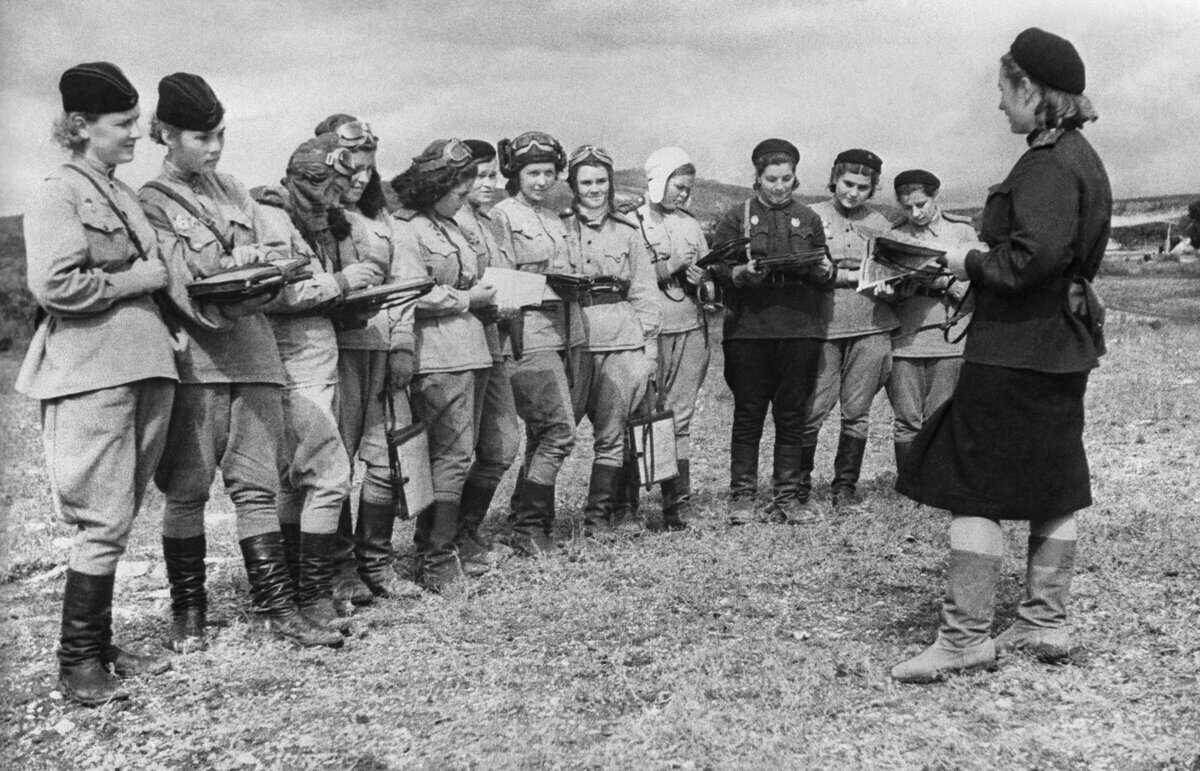
Being a pilot was only part of the challenge. The Night Witches also faced constant judgment because they were women.
Many officers did not believe they belonged in combat. Supplies were often delayed or withheld. Uniforms did not fit properly.
Some women had to wear boots several sizes too large and stuff them with rags. Despite this, they maintained discipline and pride.
Loss was a constant companion. Friends were killed in action, sometimes without warning. There was little time to grieve.
Missions continued, and the war demanded focus. The women supported each other emotionally, forming bonds that felt like family.
They shared fear, hope, and determination. These connections helped them survive not only the danger but the emotional weight of war.
The Night Witches also challenged ideas about strength. They showed that bravery did not depend on size or gender.
It depended on commitment and belief. Many of the pilots were quiet and soft-spoken off duty. In the air, they became focused and fearless.
Their dual nature confused those who expected soldiers to look and act a certain way.
Their presence also inspired others. Civilians who learned about them felt pride. Young girls saw new possibilities for themselves.
Even some skeptical officers eventually admitted their respect. By continuing to fly night after night, the Night Witches earned their place through action rather than words.
Legacy Of The Night Witches

When the war finally ended, the Night Witches had completed thousands of missions. Many received military honors, including the highest awards available at the time.
But after the war, their story slowly faded from global memory. Life moved on, and attention shifted.
Some pilots returned to ordinary lives, while others struggled to adjust after years of danger and intensity.
In recent years, interest in their story has returned. Historians, writers, and readers have begun to recognize how remarkable these women were.
Their story stands out not only because they were female pilots, but because of how they fought.
They turned silence into a weapon and fear into fuel. They proved that courage can be quiet and still change the course of history.
The Night Witches remind us that war stories are not only about generals and large battles. They are also about individuals who faced impossible odds and chose to act.
These women flew fragile planes into darkness, guided by trust and determination. They did not seek fame. They wanted to protect their homeland and each other.
Today, their legacy lives on as a symbol of resilience. They show that even in the darkest moments, bravery can rise quietly and leave a lasting mark.
The Night Witches flew in silence and fear, and in doing so, they earned a place among the most unforgettable figures of the war.

Ho sempre sentito una forte connessione con il Divino fin dalla mia nascita. Come autrice e mentore, la mia missione è aiutare gli altri a trovare l'amore, la felicità e la forza interiore nei momenti più bui.