
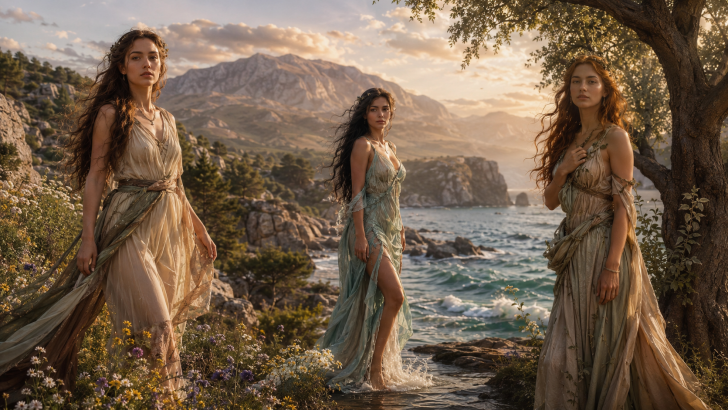
Have you noticed that some of the most important figures in Greek mythology were not gods or heroes at all?
Hidden among the famous stories of Zeus, Athena, and Heracles are the nymphs, beautiful nature spirits who lived in forests, rivers, mountains, and seas.
Although they were usually not as powerful as the Olympian gods, many of them played unforgettable roles in myths that shaped the ancient Greek world.
Some became mothers of legendary heroes. Others inspired great adventures, transformed landscapes, or influenced the lives of both gods and mortals.
Their stories continue to appear in art, literature, and mythology thousands of years later. Here are ten nymphs who changed Greek mythology.
1. Echo

Echo was an Oread, or mountain nymph, remembered for one of the saddest stories in Greek mythology.
According to the myth, she loved talking and often distracted Hera with long conversations while Zeus secretly met other nymphs.
When Hera discovered the deception, she punished Echo by taking away her ability to speak freely.
From that moment on, Echo could only repeat the final words spoken by someone else.
Later, she fell deeply in love with the handsome Narcissus, but her curse prevented her from expressing her feelings.
After he rejected her, Echo slowly faded away until only her voice remained.
Her story gave the ancient Greeks an explanation for why echoes seem to answer us from mountains and valleys.
2. Calypso

Calypso was the sea nymph who appeared in Homer’s Odyssey. She remains one of mythology’s most memorable and complex nymphs.
After Odysseus was shipwrecked, he arrived on her island of Ogygia, where she cared for him and even offered him immortality if he would stay with her forever.
Although Calypso genuinely loved Odysseus, he longed to return home to his wife Penelope. Eventually, Zeus ordered Calypso to let him leave.
Her story reminds us that even extraordinary gifts cannot replace the desire to return to the people and places we truly love.
3. Eurydice
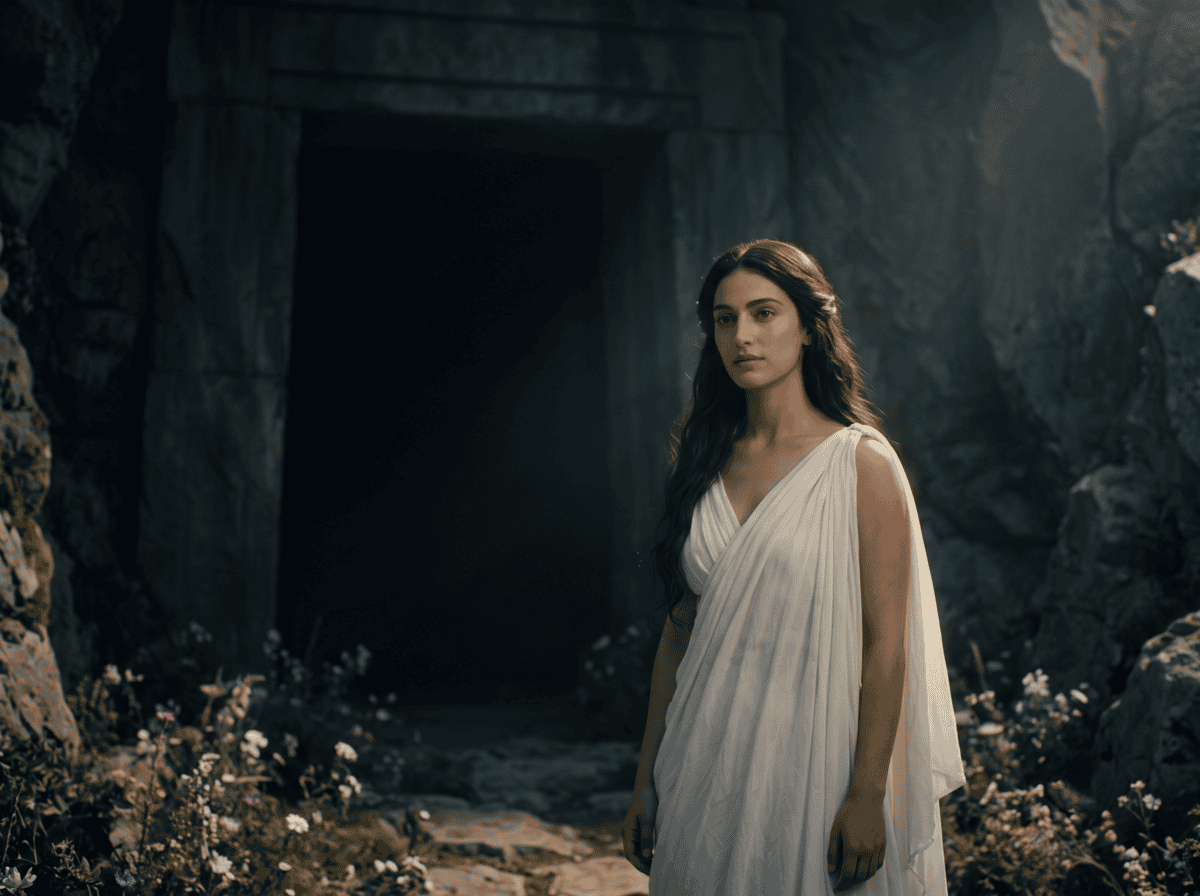
Eurydice was a beautiful nymph whose tragic love story became one of Greece’s greatest legends.
After marrying the gifted musician Orpheus, she died from a snakebite shortly afterward.
Heartbroken, Orpheus traveled to the underworld and used his music to move Hades and Persephone.
They agreed to let Eurydice return to the world of the living under one condition. Orpheus could not look back until they both reached the surface.
Just before escaping, he turned to check if she was still behind him, causing Eurydice to disappear forever.
Their story became one of mythology’s greatest tales of love and loss.
4. Thetis
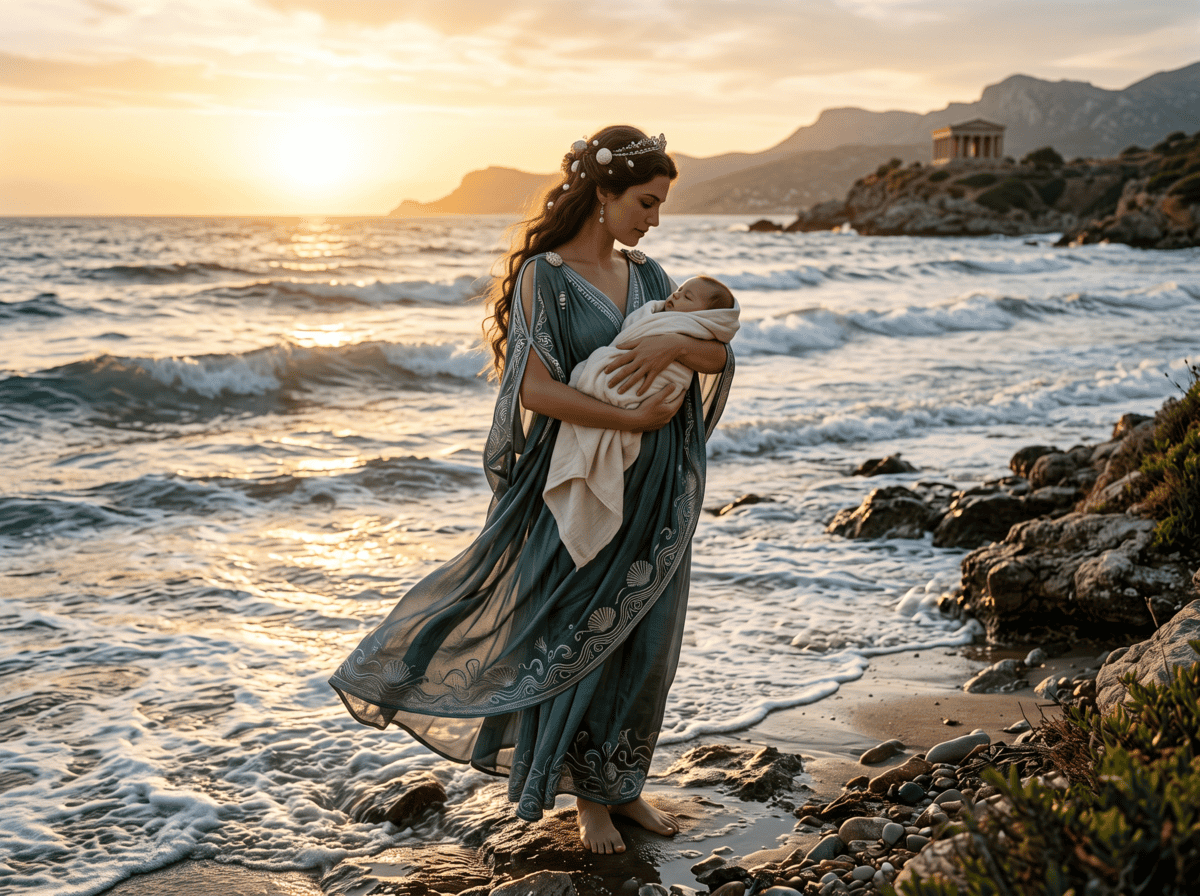
Thetis was a sea nymph whose influence reached the heart of the Trojan War. She became the mother of Achilles, the greatest Greek warrior.
Knowing that her son was destined for either a long ordinary life or a short life filled with glory, she tried to protect him from harm.
One famous tradition says she dipped Achilles into the River Styx, leaving only his heel vulnerable.
Throughout the Iliad, Thetis repeatedly appealed to Zeus to help her son.
Without Thetis, the story of Achilles and the Trojan War would have unfolded very differently.
5. Daphne

Daphne was a river nymph whose story forever connected her with the laurel tree. Apollo fell in love with Daphne after being struck by one of Cupid’s arrows.
Daphne, however, wanted only her freedom and begged the river god Peneus to rescue her. As Apollo reached her, she transformed into a laurel tree.
Although he could no longer marry her, Apollo declared the laurel sacred forever.
Victorious athletes, poets, and heroes later received laurel wreaths, making Daphne’s story one of the most influential transformation myths in Greek mythology.
6. Maia
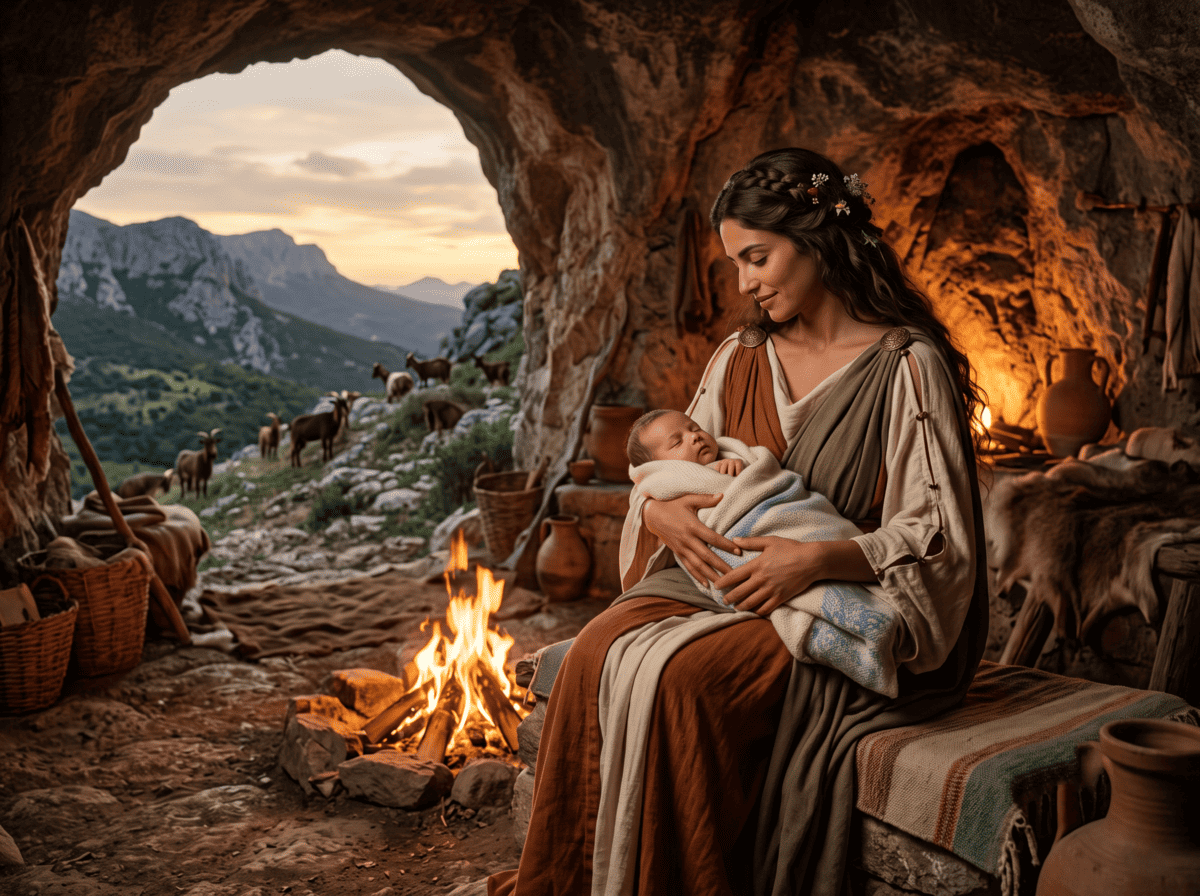
Maia was one of the seven Pleiades and the mother of Hermes. She lived quietly in a mountain cave until Zeus fell in love with her.
Their son Hermes quickly became one of the cleverest Olympian gods, famous for his speed, intelligence, and playful personality.
Even as an infant, Hermes performed astonishing feats that amazed both gods and mortals.
Although Maia rarely appears in dramatic myths herself, her importance cannot be overstated.
As the mother of one of Olympus’s most influential gods, she helped shape countless stories throughout Greek mythology.
7. Cyrene
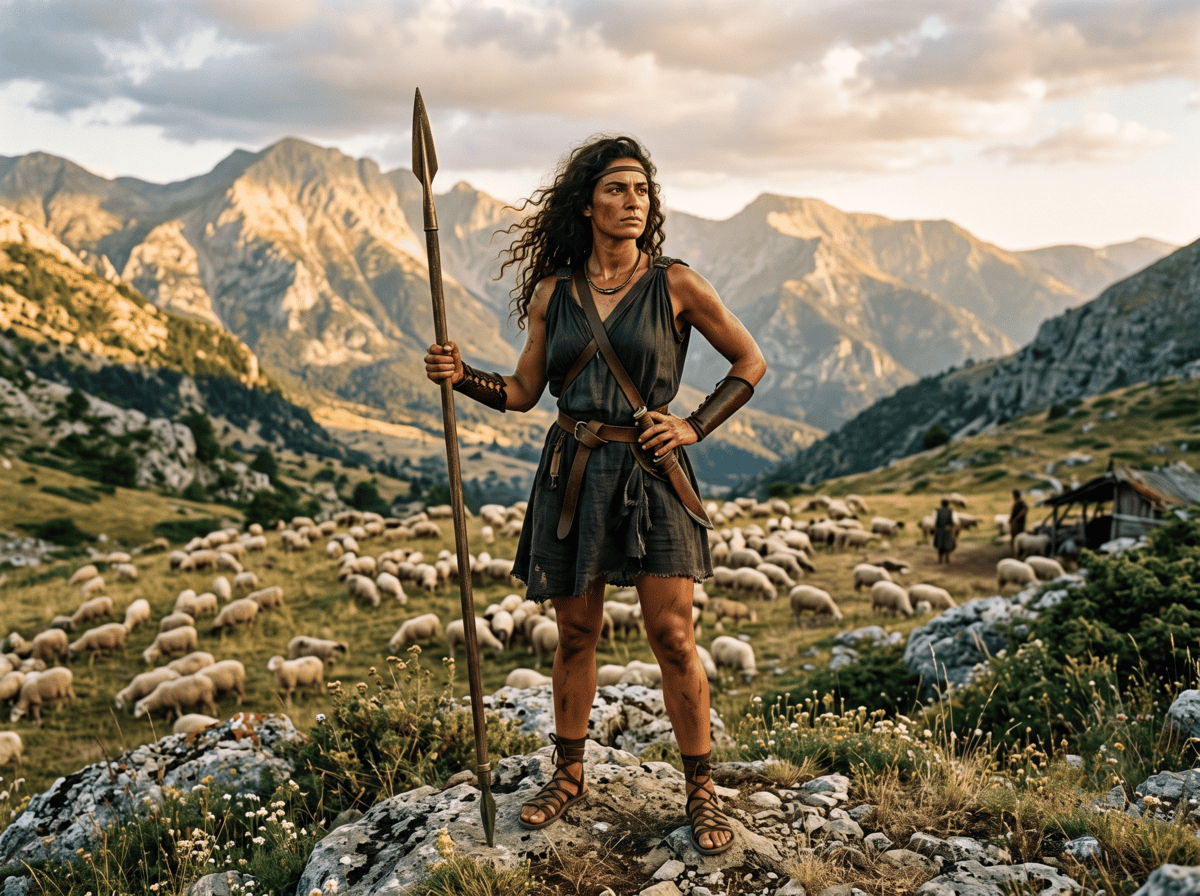
Cyrene was a fearless nymph unlike many others in Greek mythology. Instead of spending her days singing or dancing, she became famous for hunting wild animals.
One story tells how she bravely wrestled a lion with her bare hands to protect her father’s sheep.
Apollo admired her courage and carried her to North Africa, where the city of Cyrene was later named in her honor.
Their son Aristaeus became associated with beekeeping, farming, and olive cultivation.
Cyrene’s story celebrated bravery and independence, qualities not often given to female characters in ancient myths.
8. Aegina

Aegina was a river nymph whose story became linked with an entire Greek island. Her legacy survived long after the myths themselves were first told.
Zeus fell in love with her and carried her to the island that now bears her name. Their son, Aeacus, became one of Greece’s wisest and most respected kings.
After his death, Aeacus was chosen as one of the judges of the underworld because of his fairness and honesty.
Through both her son and the island named after her, Aegina left a lasting mark on Greek mythology and geography.
9. Arethusa
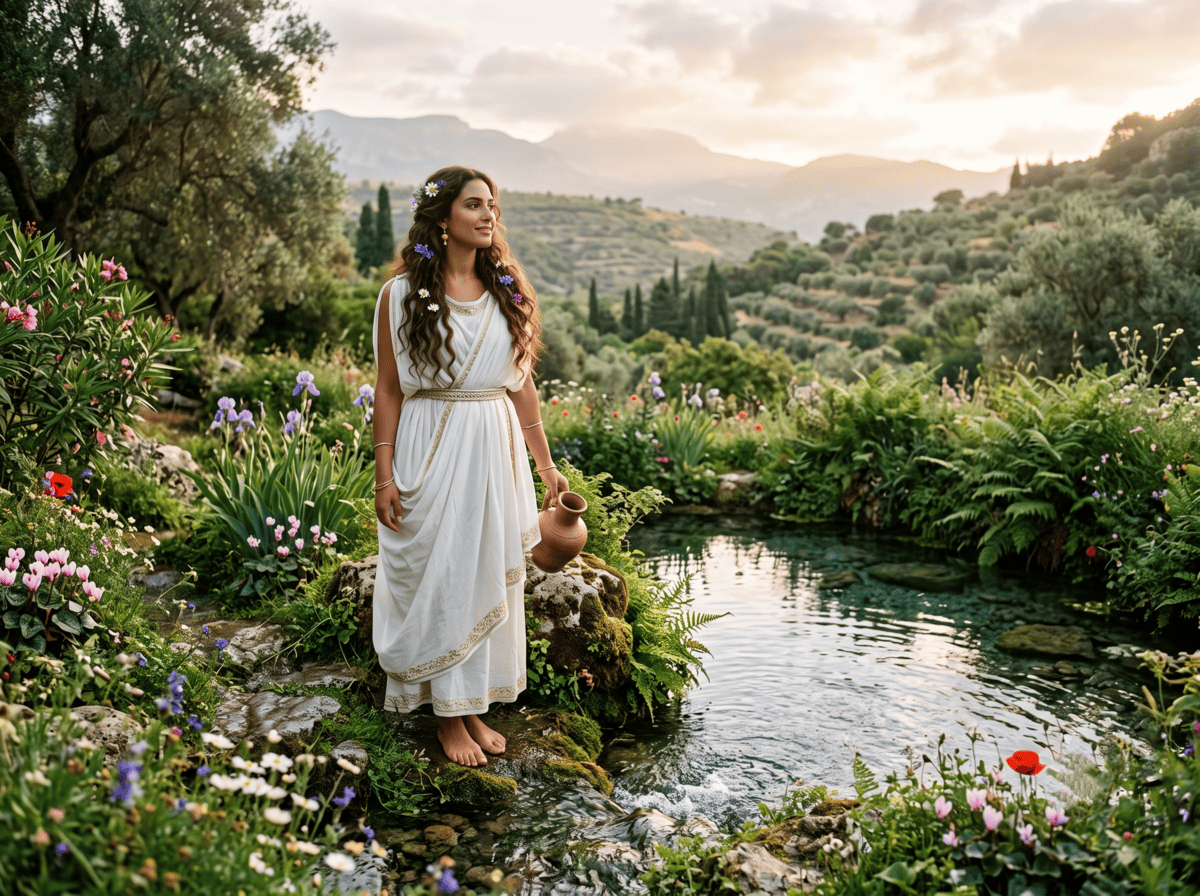
Arethusa was a nymph devoted to the goddess Artemis. While bathing in a river, she caught the attention of the river god Alpheus, who pursued her relentlessly.
Seeking escape, Arethusa prayed to Artemis for help. The goddess transformed her into a freshwater spring, allowing her to avoid capture.
According to later myths, the waters of Alpheus mysteriously flowed beneath the sea to reach Arethusa’s spring in Sicily.
This romantic legend connected rivers, geography, and mythology into one unforgettable story.
10. Amalthea
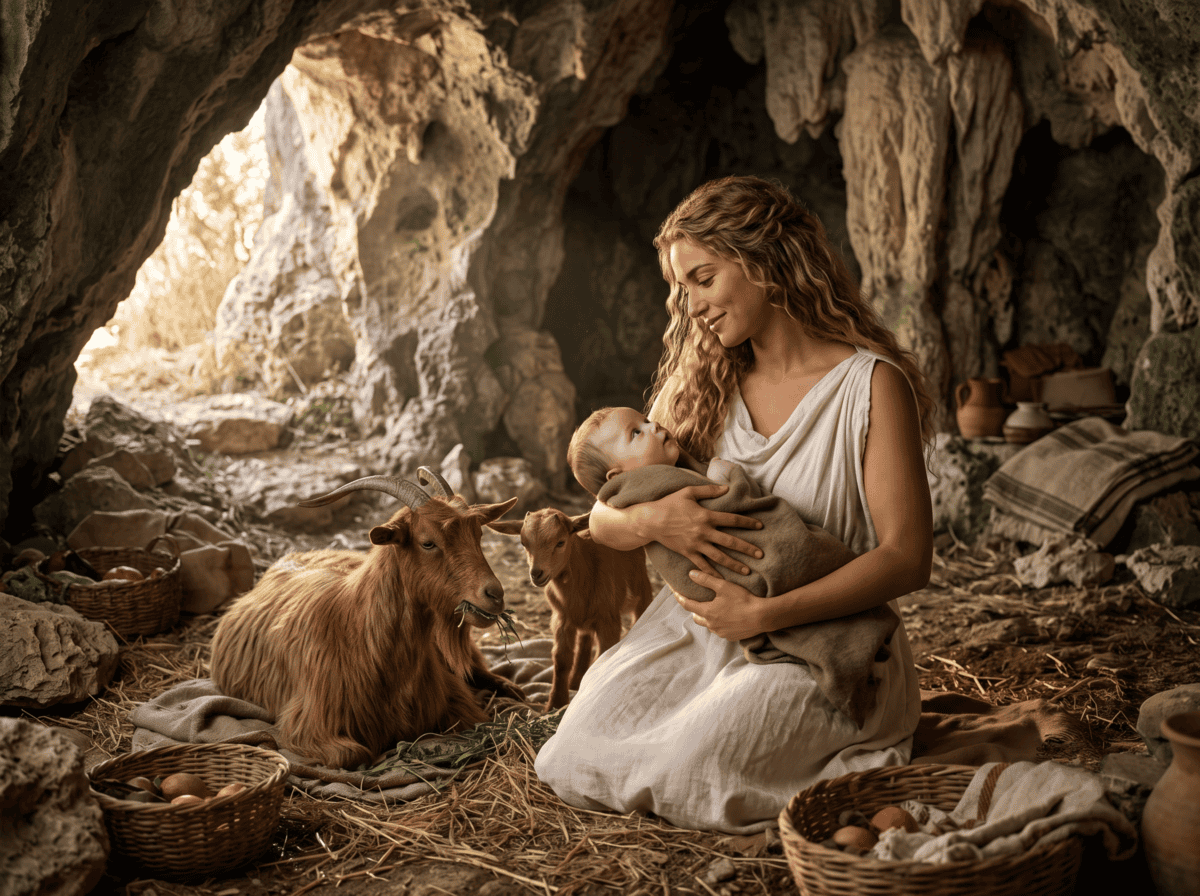
Although later traditions sometimes describe Amalthea as a goat, many ancient sources identify her as a nurturing nymph.
She cared for the infant Zeus while he hid from his father Cronus on the island of Crete.
Without her protection, Zeus might never have survived to overthrow the Titans and become king of the Olympian gods.
Some myths say the famous Cornucopia, or Horn of Plenty, came from Amalthea.
Her kindness and generosity became symbols of abundance, making her one of the quiet but essential figures behind one of Greek mythology’s greatest stories.

Ho sempre sentito una forte connessione con il Divino fin dalla mia nascita. Come autrice e mentore, la mia missione è aiutare gli altri a trovare l'amore, la felicità e la forza interiore nei momenti più bui.