
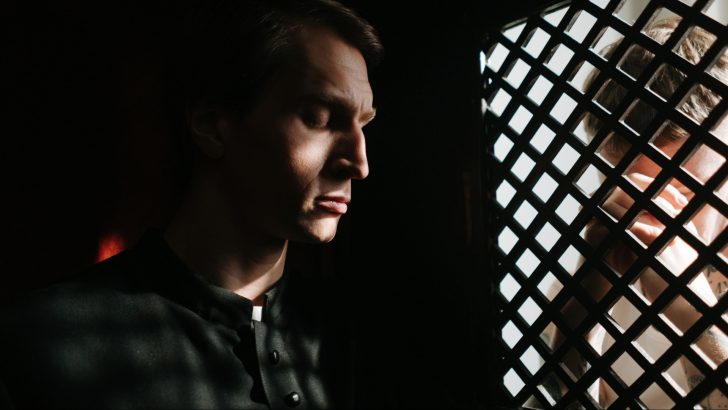
When most of us hear the word “repent,” we immediately tend to think of punishment and begging for forgiveness.
It’s almost always associated with feeling bad about past mistakes and confessing in an attempt to avoid divine punishment.
But what if that’s not exactly what it’s actually about?
What if repentance is really about something deeper – a shift in how we see ourselves and the world?
1. Metanoia

The word “repent” comes from the Greek “metanoia,” which means “change of mind.”
It has absolutely nothing to do with guilt or groveling, as we’re usually taught, but it’s simply a shift in perception.
Think of it as waking up and seeing reality clearly for the first time.
Metanoia is a mental and spiritual turning point – a decisione consapevole to see ourselves and the divine differently.
It means to let go of illusions and beliefs that no longer serve us, and become receptive to the higher truth.
When we understand it this way, repentance becomes something positive and potenziamento, rather than a self-hate ritual.
2. The Message in Matthew 4:17
The famous call to “repent, for the kingdom of heaven is at hand” can sound like a warning to feel guilty or prepare to be judged.
But in its original context, it reads more like an invitation to awaken to divine truth.
It’s a call to change your perception and see that the kingdom of heaven is already here.
It’s a reminder that divine truth is accessible to anyone, as long as they choose to see it, and not a warning to tremble in fear.
3. Luke 5:32 and the Invitation to Change

When Jesus said, “I have not come to call the righteous, but sinners to repentance,” it’s often interpreted as a call to confess our sins.
However, Christ brought new ways and new learning; so, what if this was simply an invitation to join in His ways?
What if it’s a call to stop living in separation from God, and start seeing ourselves as inherently connected to Him?
This would make “repentance” simply a change in how we see faith and God – understanding that, in His eyes, we’re already worthy.
The real message is that we were always part of divinity; we just have to remember and accept it.
4. Moving Beyond Shame and Punishment
Many spiritual traditions have long associated repentance with shame and guilt. This idea never sat right with me, as I find it counterproductive.
When we see repentance as a chance to change our perception and evolversi, it becomes empowering and loving – it becomes an expression of God’s love for us.
We’re not broken or inherently bad; we’re just learning.
Guilt doesn’t serve us, but awareness and acceptance do.
Sure, we must face our past mistakes and grow from them, but does it make sense that this is at the core of our entire faith?
5. Letting Go of Illusions

An important part of repentance is getting rid of illusions – false beliefs about God, the universe, and ourselves.
These illusions keep many people stuck in unhealthy patterns and separated from God.
Long ago, this meant renouncing pagan beliefs and accepting Jesus Christ. Nowadays, it might mean rejecting atheism e cynicism that rule the modern world.
When we change our perception, we’re able to understand better and stand firmer in our faith.
This process has little to do with us punishing ourselves.
It’s a spiritual decluttering, which allows us to live authentically.
6. Spiritual Growth

Repentance as growth means that it’s ongoing, not a one-time event. It’s a continuous process of awakening and refining our perception.
Every time we recognize a lingering doubt or limiting belief, we have the opportunity to choose God.
We might do this by becoming more conscious of His divine presence within us and around us.
This perspective helps us approach life with more kindness and optimism.
Each moment offers a new chance to wake up and choose faith, making this journey a spiritual evolution.
7. Embracing Divine Reality
Once we understand that repentance means awakening to God’s truth, everything changes.
We no longer see ourselves as these pitiful beings who are inherently faulty and need to be forgiven over and over again, but as His ultimate creation.
It means embracing the fact that the kingdom of heaven is already within us and around us, waiting to be realized.
This shift in perception can bring us peace and joy, since we’re no longer driven by shame.

A little Aquarius, devoted to writing and embroidery. Through my writing, I hope to empower readers to align with their true selves and navigate life’s mysteries with confidence.