
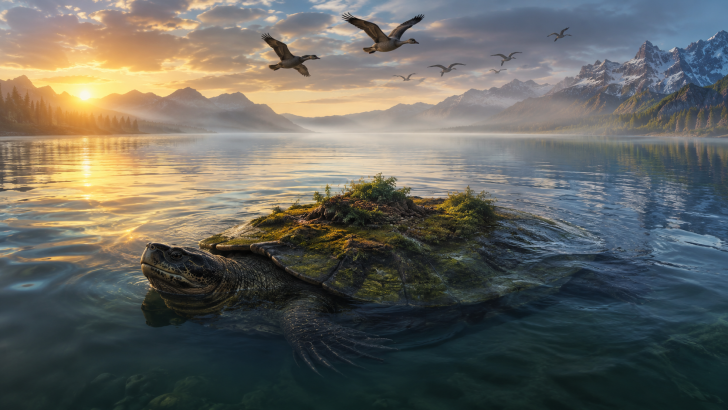
Indigenous nations across North America developed their own traditions, languages, spiritual beliefs, and creation accounts.
Some describe the world emerging from water. Others tell of people traveling upward from earlier worlds, while certain traditions begin with powerful beings shaping an unfinished earth.
Many were also traditionally passed down orally, so details can differ between storytellers and communities.
Together, they reveal several fascinating ways Indigenous peoples have understood humanity’s place within a much larger living world.
Here are five creation traditions about how the world began.
1. Haudenosaunee Tradition Tells of Sky Woman and Turtle Island
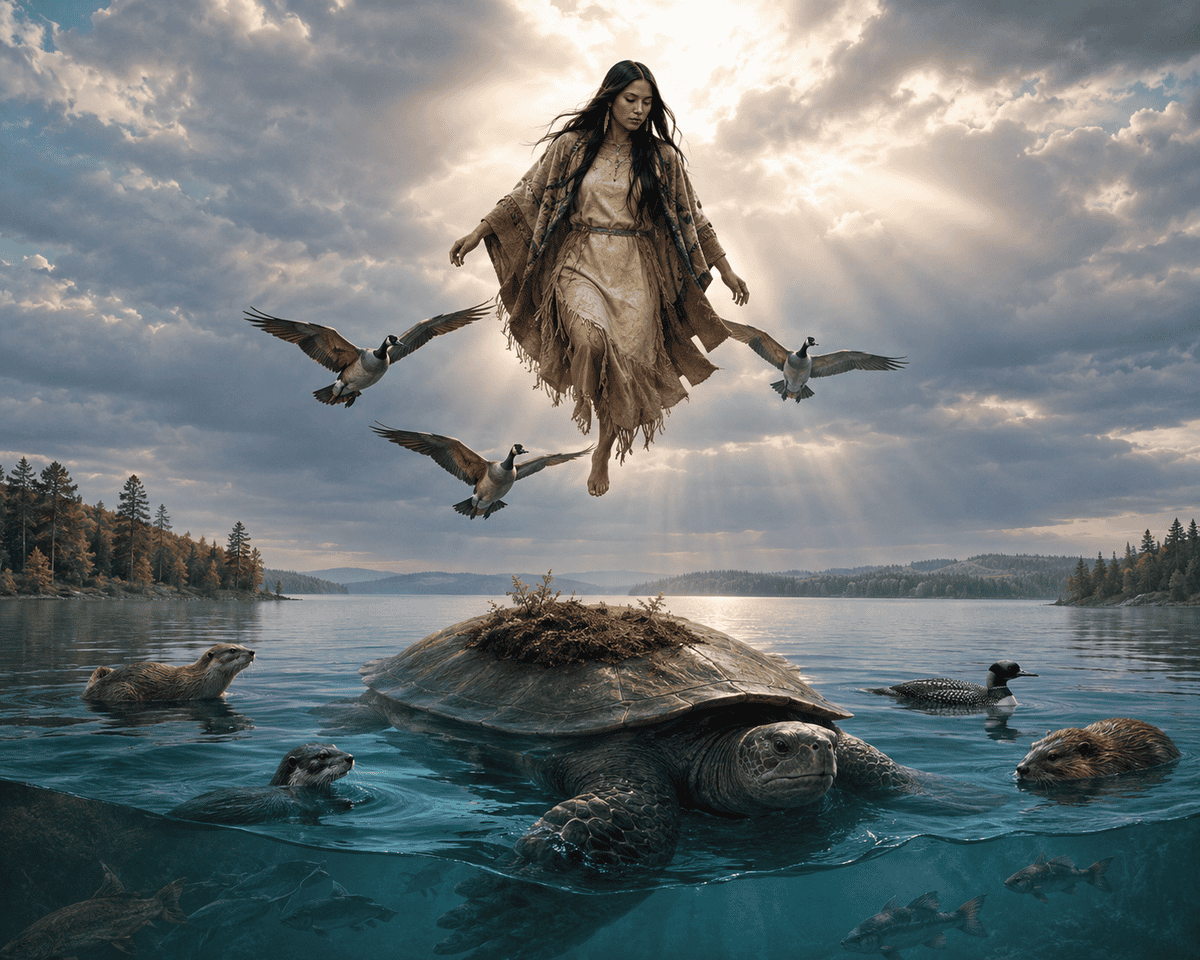
One of the best-known creation accounts comes from the Haudenosaunee peoples. The story begins not on land, but in a world above.
In different versions, a woman commonly called Sky Woman falls or descends from the Sky World toward a vast body of water below.
Animals see her falling and come together to help. Birds support her, while water animals attempt to bring earth upward from beneath the water.
Different tellings emphasize different animals, but eventually a small amount of soil is obtained.
The earth is placed upon the back of a great turtle. From this small beginning, the land grows.
This is one reason North America is sometimes called Turtle Island in Indigenous contexts.
The story is remarkable because creation happens through cooperation.
Humans do not simply receive a finished world. Animals participate in making human life possible.
2. Cherokee Tradition Describes Earth as an Island Suspended Over Water
A Cherokee creation account presents the earth as a great island surrounded by water.
In a version recorded by James Mooney, the earth hangs from the sky by cords attached at the four directions.
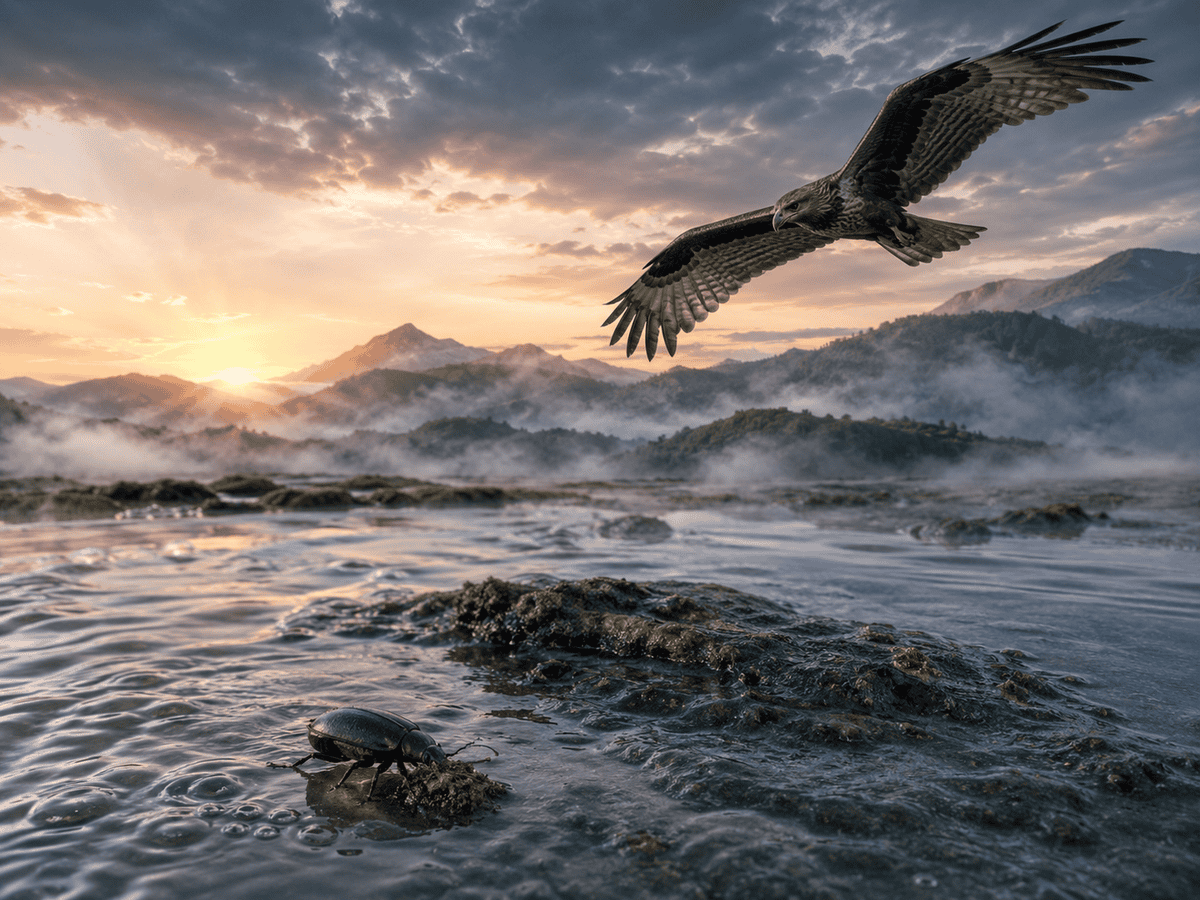
Before the land was ready, animals lived above and wondered what existed beneath the water. The Water Beetle volunteered to investigate.
It traveled downward and discovered only water at first. Eventually, it reached beneath the surface and brought up soft mud.
That mud began spreading until it formed the earth. However, the new land was initially too wet for the animals to inhabit.
The great Buzzard later flew over it. As his wings moved near the soft ground, valleys and mountains formed beneath them.
The story explains features of the landscape while showing animals actively participating in creation.
3. Diné Tradition Describes an Emergence Through Different Worlds
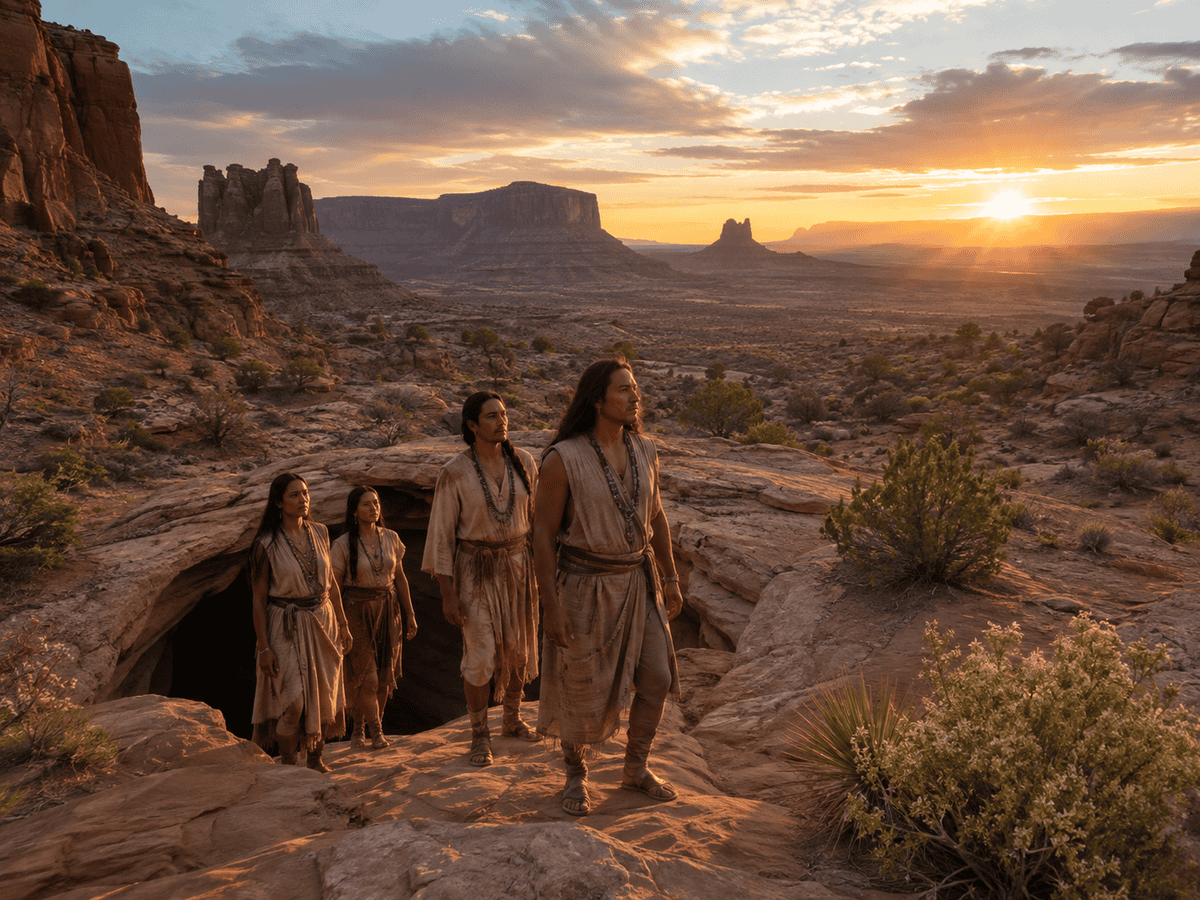
The Diné, or Navajo, creation tradition presents existence as a journey through different worlds.
Rather than describing creation as one moment when everything suddenly appears, traditional accounts tell of beings moving upward through a series of earlier worlds.
These worlds are commonly associated with different conditions, beings, and stages of development.
Conflict or imbalance contributes to movement from one world into another. Eventually, the Holy People and other beings reach the present world.
This process makes creation feel like a journey toward order. The world humans inhabit is not simply the first place to exist. It belongs to a much larger sacred history.
Balance and proper relationships become extremely important within Diné tradition.
4. Hopi Traditions Also Describe Humanity Emerging Into the Present World
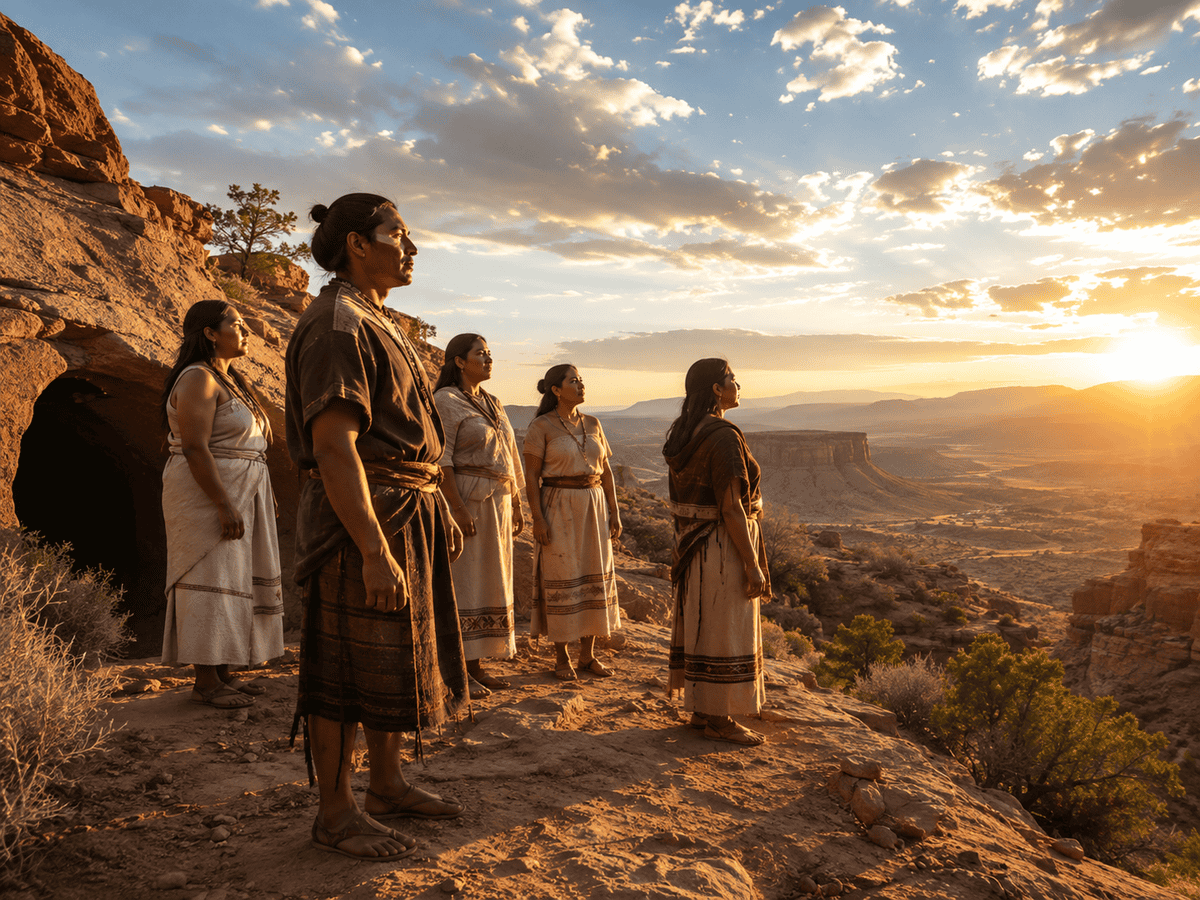
Hopi creation traditions contain complex accounts involving earlier worlds and humanity’s eventual emergence into the present one.
Details can vary, and some aspects of Hopi ceremonial knowledge are not intended to be separated from their cultural setting.
In broadly shared accounts, humanity passes through previous worlds before reaching the world people inhabit today.
These transitions are connected with moral choices, proper behavior, and the consequences of losing balance.
Creation is therefore not simply a story about the distant past. It contains lessons about how humans should behave in the present.
The world can be understood as something entrusted to people rather than something they are free to treat without responsibility.
5. Earth Diver Stories Describe Land Rising From Primordial Water
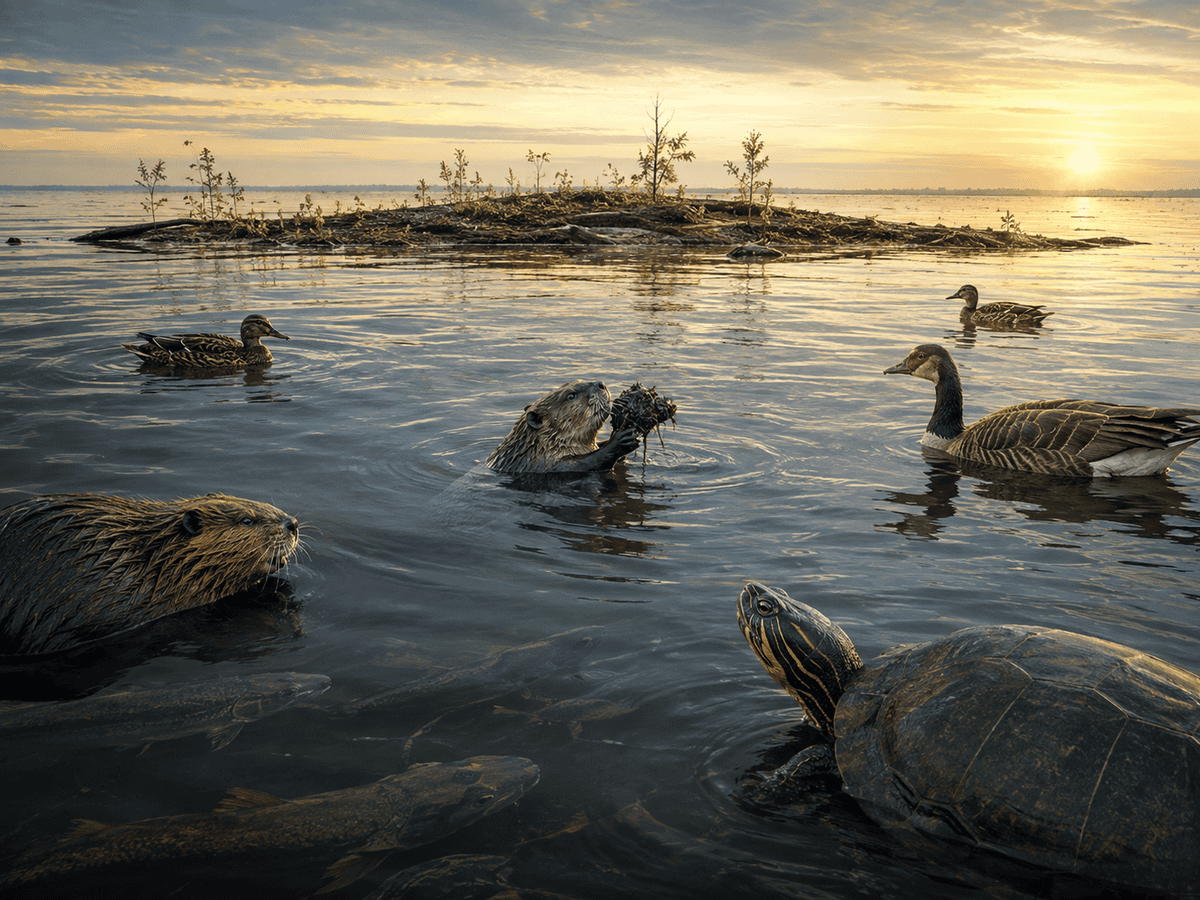
A fascinating pattern found in the traditions of several Indigenous nations is sometimes called the Earth Diver story.
These traditions are not identical, and each should be understood within the culture where it belongs.
The general pattern begins with a world covered largely or entirely by water.
Animals attempt to reach beneath the surface and recover a small amount of mud or earth. Several may fail before one succeeds.
That tiny amount of soil then becomes the beginning of a much larger landmass.
Versions of this pattern appear among different peoples, including Algonquian-speaking communities, although the characters and meanings vary considerably.
The story gives small animals extraordinary importance. The creature that helps create the world may not be the largest or strongest.
Animals, water, earth, spiritual beings, and people belong to interconnected stories.

Ho sempre sentito una forte connessione con il Divino fin dalla mia nascita. Come autrice e mentore, la mia missione è aiutare gli altri a trovare l'amore, la felicità e la forza interiore nei momenti più bui.