
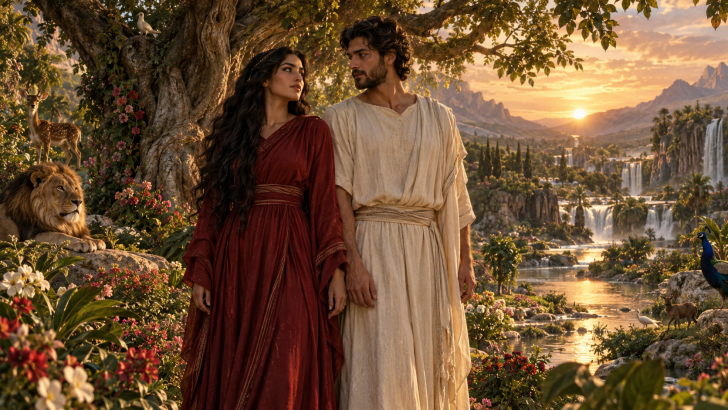
The story of Lilith as Adam’s first wife has become one of the most famous legends connected with the Garden of Eden.
But there is an important detail often lost in modern retellings: Genesis never identifies Lilith as Adam’s first wife.
The familiar story appears much later, most famously in the medieval Alphabet of Ben Sira.
In that tradition, Lilith and Adam are created from the same earth. Conflict develops between them, particularly over equality and authority.
Lilith refuses to accept Adam’s dominance, speaks a divine name, and leaves him.
Later folklore transforms Lilith in increasingly supernatural and frightening ways. But what if she had never left?
Here are five things that might have happened if Lilith had stayed with Adam.
1. Adam and Lilith Would Have Needed to Resolve Their Struggle Over Equality
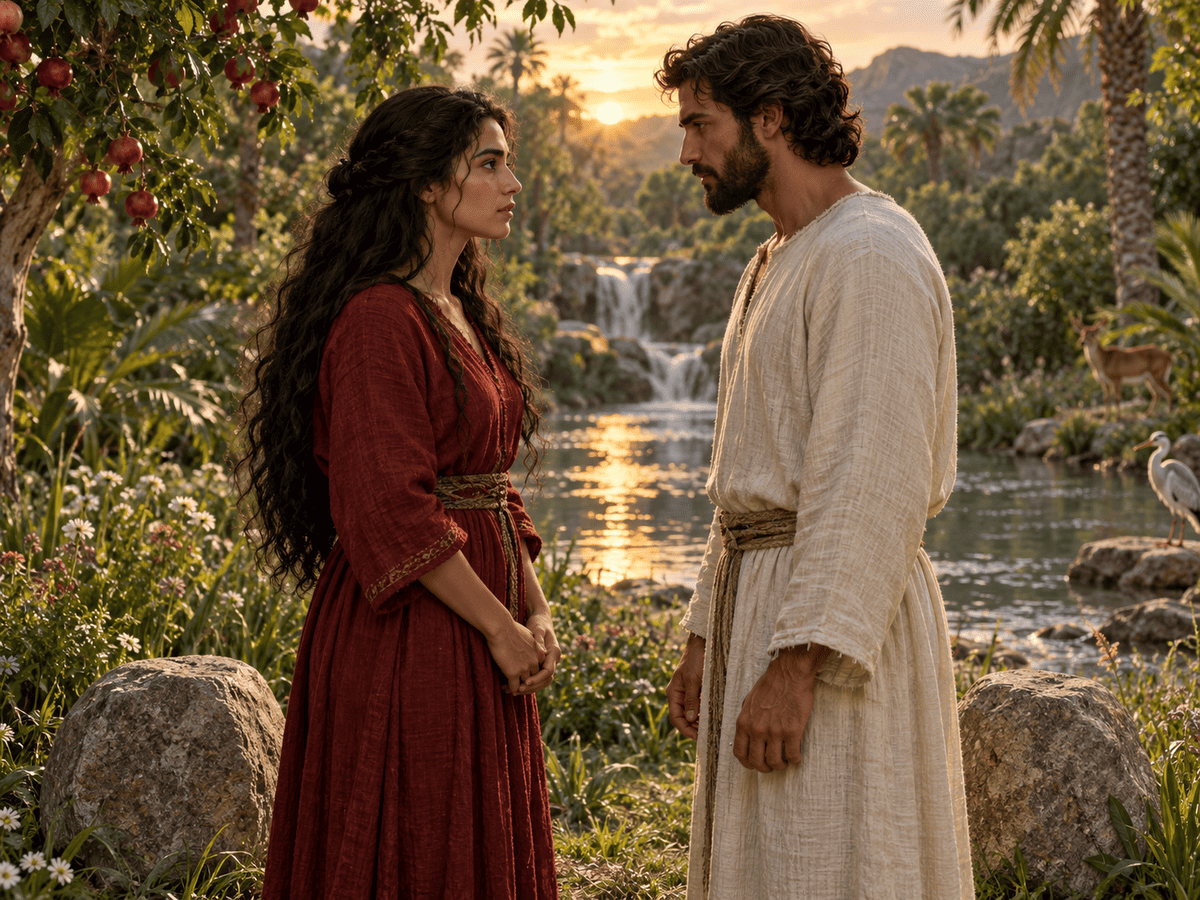
The central problem in the medieval Lilith story is not simply that she dislikes Adam. They disagree about authority.
Lilith argues that she should not be considered inferior because both were created from the earth. That detail is crucial.
Unlike the Genesis 2 story in which Eve is formed from Adam’s side, the Alphabet of Ben Sira presents Lilith and Adam as sharing the same earthly origin.
If Lilith had stayed, their disagreement would not magically disappear. Something would have to change.
Perhaps Adam would eventually recognize her demand for equality. Perhaps they would negotiate different roles.
Or perhaps their relationship would remain trapped in conflict.
If they succeeded, later storytellers might have remembered their relationship very differently.
2. The Famous Story of Eve’s Creation Might Have Developed Differently
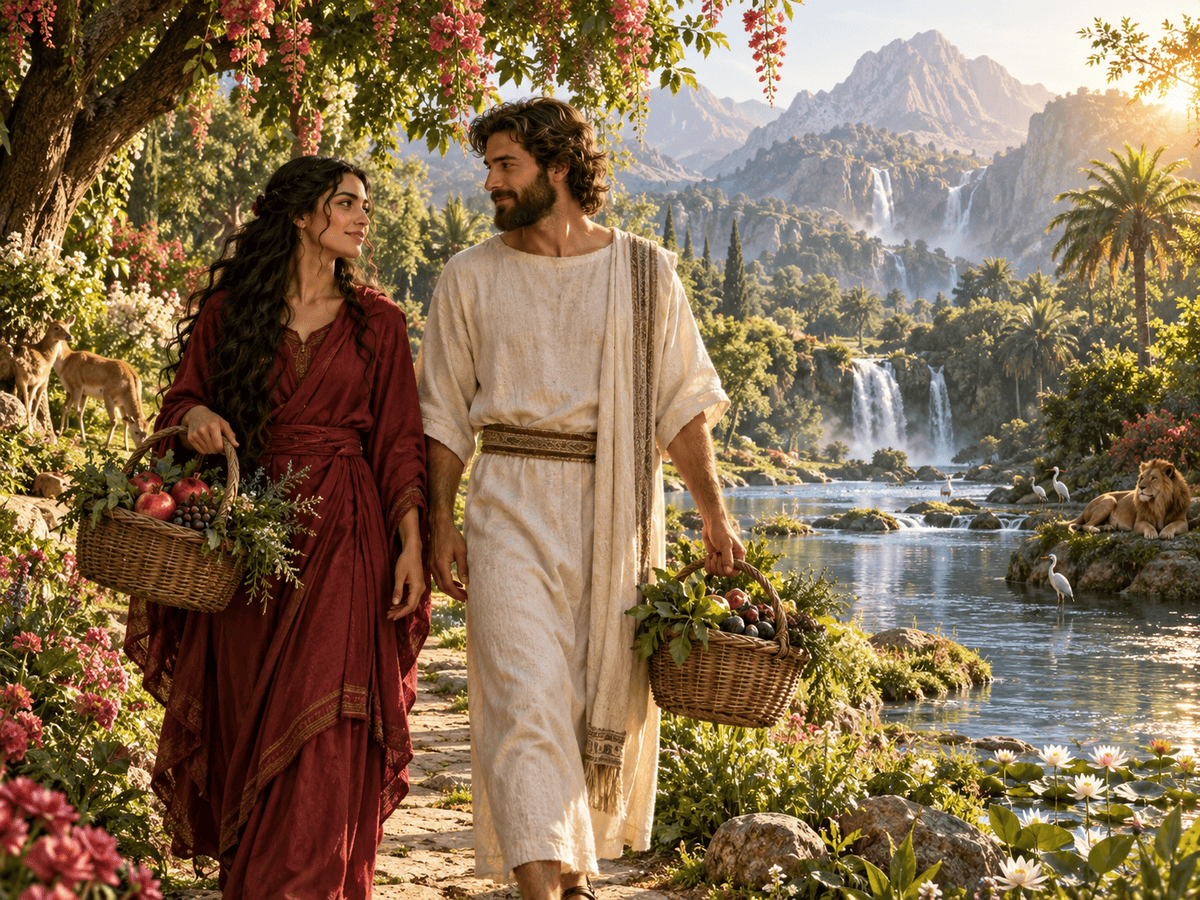
In the later legend, Lilith’s departure creates a vacancy beside Adam. Eve then becomes Adam’s companion.
This creates an obvious question. Would Eve ever have been created if Lilith stayed?
Within the actual Genesis narrative, of course, Lilith does not appear in this role at all. Genesis presents Eve as Adam’s first and only named female companion in Eden.
But within the later folklore that inserts Lilith before Eve, Lilith staying could completely change Eve’s place in the expanded story.
Perhaps there would be no second woman. Perhaps later storytellers would have invented another explanation for Eve.
Or perhaps Lilith and Eve would somehow have existed simultaneously, creating an entirely different collection of legends.
A single change to Lilith’s decision could therefore remove one of the basic assumptions of the later “first wife” tradition.
If the first relationship survives, there is no obvious narrative reason for a replacement.
3. Lilith Might Never Have Become Such a Dark Figure in Later Folklore

Lilith’s later reputation is dramatically different from the image of a woman simply arguing with Adam.
Traditions surrounding Lilith developed across many centuries and cannot be reduced to one medieval story.
The name and related supernatural traditions have connections with much older ideas about dangerous night beings, while later Jewish folklore increasingly developed Lilith as a threatening supernatural figure.
The Alphabet of Ben Sira added the memorable story connecting her directly with Adam.
If the fictional Lilith of that story had remained in Eden, however, one major explanation for her transformation would disappear.
She would never become the rebellious former companion who leaves Adam behind.
Instead, storytellers might have developed her as an Edenic mother, wife, protector, or powerful female ancestor.
This would not automatically erase all older traditions surrounding Lilith-like beings.
Those traditions have a much more complicated history.
But the popular image of Lilith as Adam’s rejected or rebellious first wife could have looked completely different.
She might have been remembered less as the woman who left paradise and more as the woman who demanded a different kind of life within it.
4. The Temptation in Eden Could Have Become a Completely Different Story

If we combine the later Lilith legend with the Genesis story as a creative thought experiment, another enormous question appears.
Who would encounter the serpent? Genesis 3 centers on the serpent’s conversation with Eve.
The serpent questions God’s command, Eve eats the forbidden fruit, and she gives some to Adam.
But if Eve were never created because Lilith remained Adam’s companion, that sequence could not happen exactly as written.
Perhaps the serpent would approach Lilith instead. Her response would be impossible to predict.
A woman willing to challenge Adam would not necessarily challenge God in the same way. Refusing human authority and refusing divine authority are two completely different decisions.
Perhaps she would reject the serpent. Perhaps Adam would be tempted first. Perhaps both would refuse.
Or perhaps the Fall would still happen through an entirely different sequence of choices.
The interesting point is that Lilith staying would not merely change a relationship.
Within this imagined combination of traditions, it could change the most famous temptation story in Western religious culture.
5. Lilith Could Have Become a Symbol of Partnership Instead of Rebellion

Today, Lilith has acquired meanings far beyond her medieval folklore.
Modern literature, art, spirituality, and popular culture frequently reinterpret her as a symbol of independence, female autonomy, refusal to submit, and resistance to unequal power.
Much of that symbolism depends on one decisive action. She leaves.
But imagine a version where Lilith stays without surrendering the equality she demanded. That creates a very different symbol.
Instead of representing freedom through departure, she might represent the possibility of changing an unequal relationship from within.
Adam would also have to change. If he continued demanding submission while Lilith remained equally determined to refuse it, staying would accomplish very little.
Their relationship could simply become permanently hostile. For the alternative story to have a genuinely different ending, both characters would need to learn something.
Lilith would stay. Adam would accept that staying did not mean submission.
Their shared creation from the earth could then become the foundation of their partnership rather than the source of their argument.
The most famous line of the legend would no longer be that Lilith left Adam.
It might instead become that neither had to stand beneath the other.

I always felt a strong connection to the Divine since my birth. As an author and mentor, my mission is to help others find love, happiness, and inner strength in the darkest of times.