
Long before blue came in a tube, one shade began as stone pulled from a distant mountain.
By the time it reached an artist’s hand, it could cost more than gold.
Then painters laid it across the Virgin Mary’s mantle—and a luxury became an identity.
1. The Blue Began Inside a Mountain
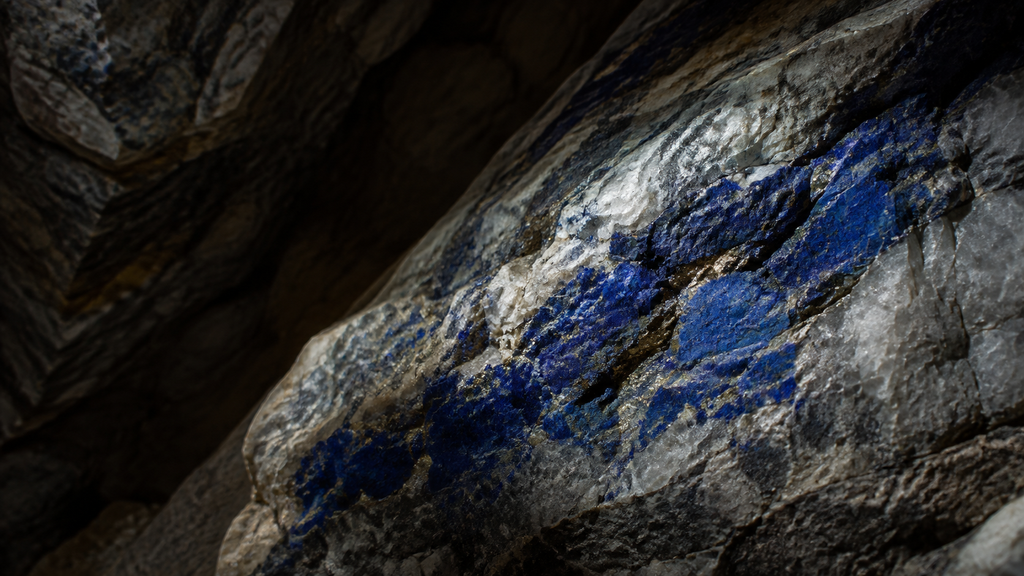
Ultramarine began inside lapis lazuli, a deep-blue rock threaded with white calcite and occasional flashes of golden pyrite.
For centuries, Europe’s finest lapis came from the mountains of Badakhshan in present-day Afghanistan.
The Sar-i Sang deposits had already been supplying the ancient world long before Renaissance painters began dreaming about the stone.
And the journey was enormous.
Miners extracted it from a harsh, isolated landscape. Merchants then carried it west through trading networks that had existed in one form or another for thousands of years.
The stone crossed cultures before it ever reached an Italian workshop.
By then, every fragment carried distance inside its price. A painter was buying a piece of a mountain that had traveled farther than almost anything else on their worktable.
2. Europe Called It “Beyond the Sea”
Medieval Europe already had ways to make blue. But nothing looked quite like the color hidden inside good lapis lazuli.
The richest ultramarine held an intense depth. It also resisted fading remarkably well, allowing a painted robe or manuscript page to keep its brilliance for centuries.
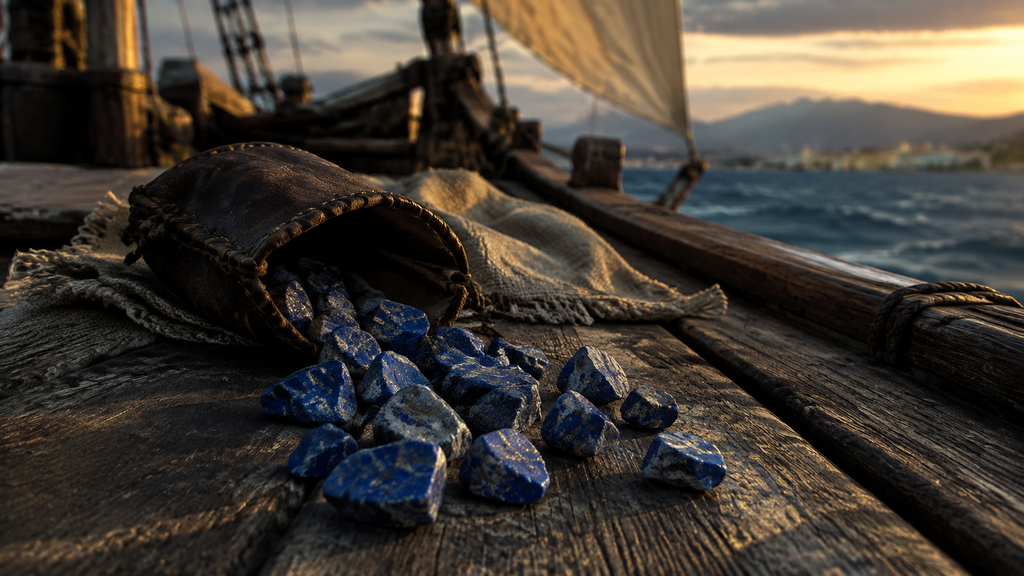
Its name revealed its foreignness. Ultramarinus meant “beyond the sea,” a reference to the enormous distance separating European painters from the stone’s source.
But not every piece of lapis produced the same result.
The bluest stone contained plenty of lazurite, the mineral responsible for that extraordinary color.
Too much pale calcite weakened it. Pyrite gave the raw rock its glitter, but painters didn’t want golden specks scattered through Mary’s robe.
So the stone that arrived in Europe still wasn’t ready.
Getting it across the world had been difficult. Getting pure blue out of it was another problem entirely.
3. Grinding the Stone Wasn’t Enough
Take a piece of lapis lazuli and grind it directly, and the result can look disappointingly gray.
The blue particles remain mixed with everything else inside the rock. And the finer the whole stone is crushed, the more those pale minerals smother the color everyone paid to see.
Pigment makers needed to separate the blue.
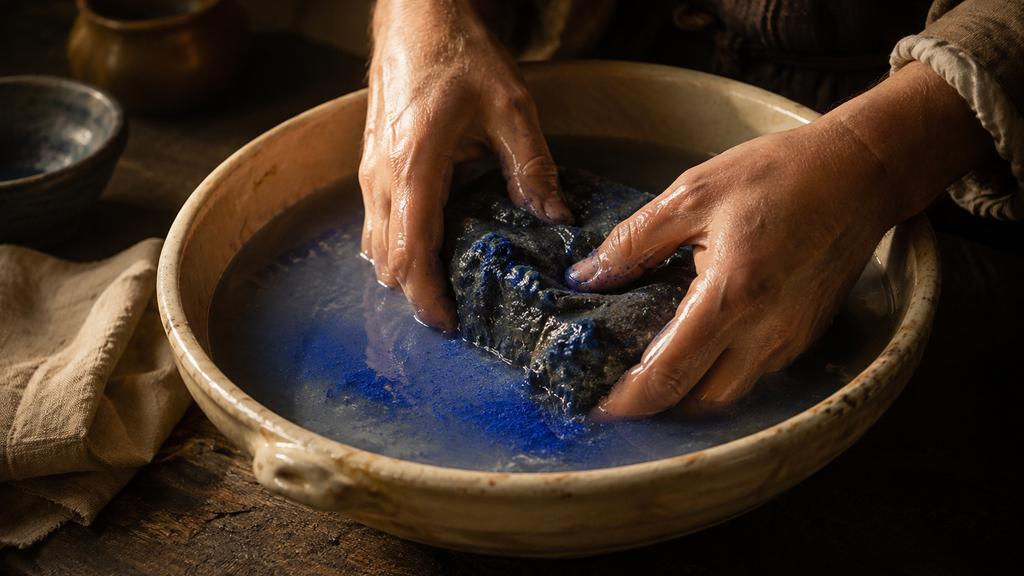
A process recorded by the Italian artist Cennino Cennini began by reducing the lapis to a very fine powder. That powder was worked into a sticky mass held together with beeswax and resin.
Then came the strange part.
The lump was kneaded in an alkaline solution until blue particles slowly escaped into the water. The first extraction produced the most vivid pigment. Later rounds released weaker shades.
Modern researchers recreating Cennini’s ultramarine recipe have shown just how involved that separation was.
A great deal of expensive stone went in. Only a small amount of perfect blue came out.
4. The Finest Blue Could Outprice Gold
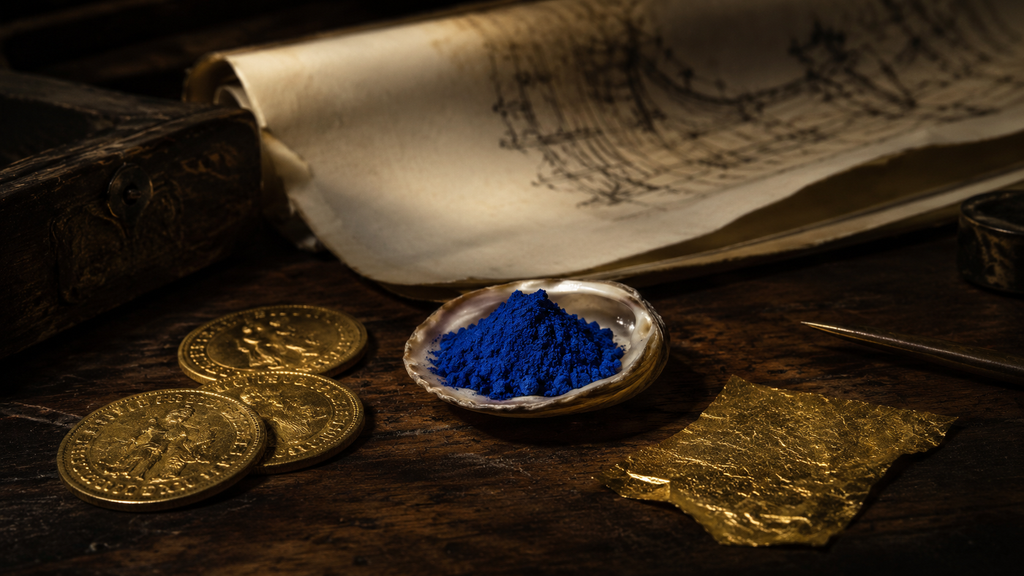
The claim sounds exaggerated. It isn’t.
The best natural ultramarine could be worth more than gold. Lesser extractions cost less, but the strongest blue existed in a financial world of its own.
Patrons often paid for it separately. Contracts could specify how much ultramarine had to appear and which quality the artist was expected to use.
That changed the act of painting.
An artist couldn’t casually cover half a panel in the pigment and hope nobody noticed the bill.
Cheaper blue often formed the lower layers, while precious ultramarine went on top where its brilliance had the greatest effect.
And contracts really did reach into the picture. Leonardo’s second version of The Virgin of the Rocks received an ultramarine layer in its sky because the original agreement specifically called for it.
Ultramarine was sometimes a negotiated expense, not just an artistic decision.
5. Mary Didn’t Always Wear Blue
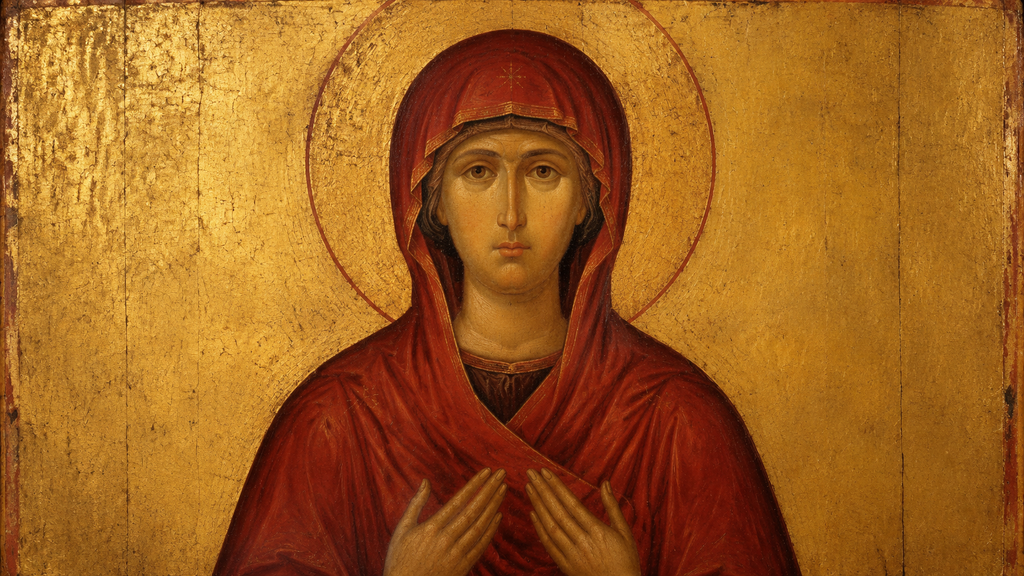
Nothing in the Bible tells painters to dress Mary in blue.
Early Christian and Byzantine artists gave her garments in different colors.
Some traditions favored deep red or imperial purple. A thirteenth-century Egyptian icon now at the Met even shows the Virgin in a green-red robe.
And Western painters weren’t perfectly consistent, either. Mary appears in white, gold, red, and earthier shades across European art.
Her blue mantle didn’t arrive through one official decision. The association gathered strength slowly.
As devotion to Mary expanded during the Middle Ages, artists needed ways to make her instantly recognizable and visibly important.
Blue already carried thoughts of the sky and heaven, but its material value added something even more concrete.
Put the most expensive color in the painting around Mary, and nobody had to ask who mattered most.
6. Then the Color Became an Offering
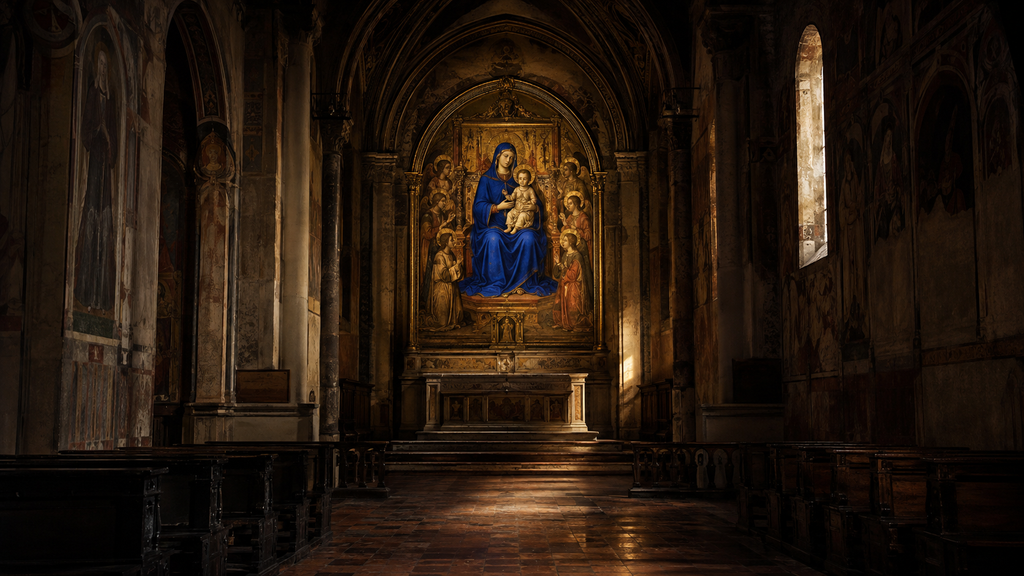
Painting Mary in ultramarine wasn’t just a symbolic gesture. It was an expensive one.
A patron commissioning an altarpiece for a church could honor her through the quality of the material itself. The blue announced that nothing cheap had been placed around the sacred figure.
And once enough artists repeated the choice, ultramarine began doing another kind of work.
It identified Mary.
Viewers could recognize that deep mantle from across a dim church. The color framed her face, surrounded the Christ Child, and pulled her forward from a field of gold.
Over time, the association began feeding itself.
Mary received the finest blue because she held the highest status. Then blue became sacred because generations of viewers had seen it wrapped around Mary.
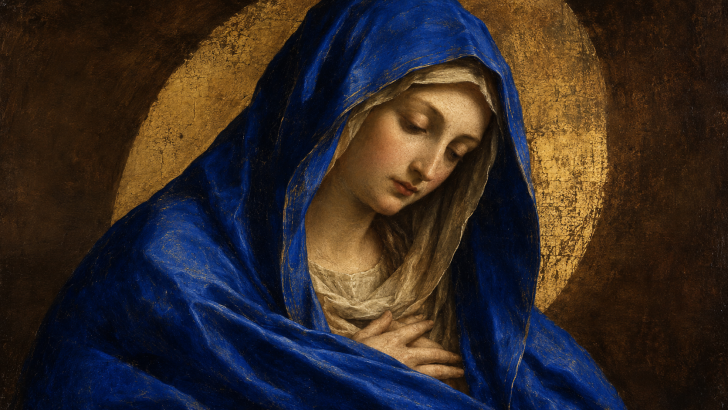
One of the purest surviving expressions appears in Sassoferrato’s seventeenth-century The Virgin in Prayer. Her enormous blue mantle nearly becomes the painting.
7. The Price Fell, but the Meaning Stayed
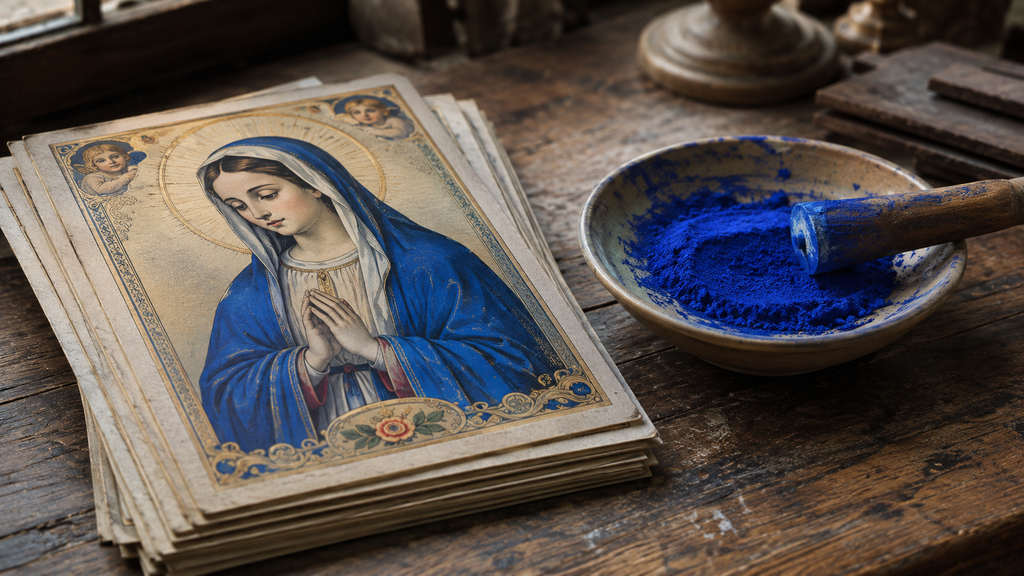
For centuries, people searched for a cheaper way to make that blue.
Then chemistry finally caught up with the mountain.
In 1828, Jean-Baptiste Guimet received a French prize for producing synthetic ultramarine. His version delivered a remarkably similar color without requiring lapis lazuli to cross half the world.
The new pigment cost a fraction of the natural one. Painters finally gained an affordable balance of warm and cool colors.
Ultramarine finally entered ordinary paintboxes. But Mary kept wearing it.
By then, the connection had outgrown the economics that created it.
Blue no longer proved that a patron had sacrificed a fortune, yet centuries of paintings had already fixed the color in cultural memory.
And even now, one glimpse of a deep blue mantle can tell you who you’re looking at before you see the halo, the child, or even her face.
