
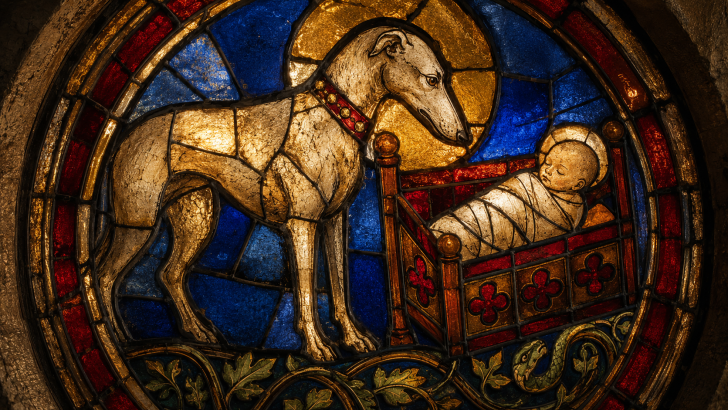
In the countryside north of Lyon, medieval families once carried sick children to a wooded shrine dedicated to Saint Guinefort.
There was one major problem from the Church’s point of view. Guinefort wasn’t a recognized saint. According to the story behind the devotion, he was a greyhound.
A Dominican friar found the cult around the middle of the thirteenth century and tried to wipe it out. But the dog’s reputation proved harder to destroy.
1. The Unknown Saint Turned Out to Be a Dog
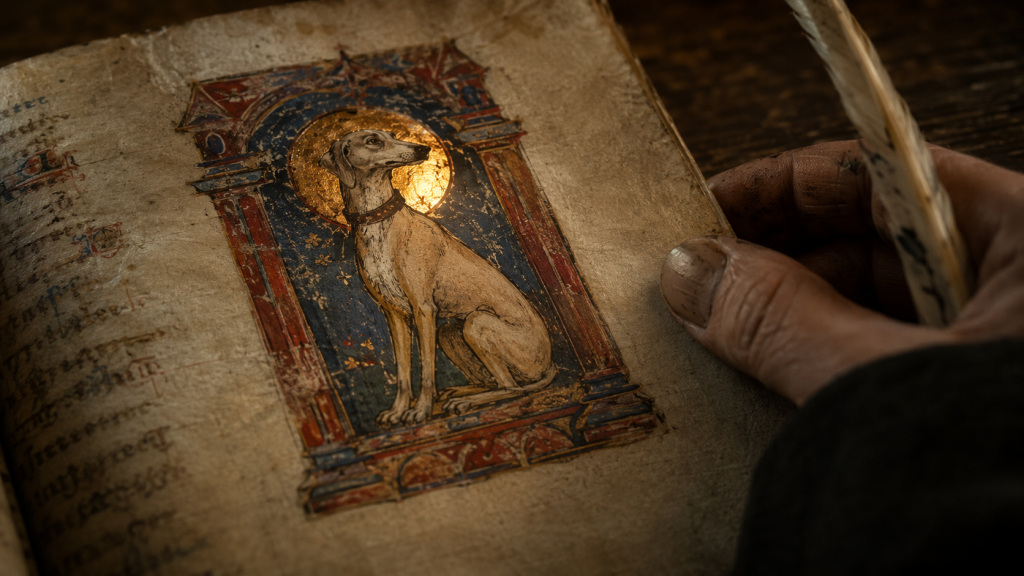
Stephen of Bourbon first heard Guinefort’s name while preaching and hearing confessions in the diocese of Lyon. Several women admitted taking their children to Saint Guinefort.
Stephen assumed they meant a holy man he hadn’t encountered before. But after asking around, he learned that their saint was supposedly a greyhound.
He included the case in a collection of exempla, short stories that preachers used in sermons. It’s the earliest detailed record of the devotion.
It’s also openly hostile. Almost everything we know about the medieval cult passed through a man who wanted it stopped.
Even so, his report shows that families sought Guinefort’s help when their children were ill.
2. The Legend Begins Beside an Overturned Cradle

According to the legend Stephen recorded, Guinefort lived on the lands of the lord of Villars in the Dombes region.
One day, the parents and nurse left an infant alone in a cradle when a large snake entered the house. The greyhound attacked it beneath the cradle, and in the struggle the bed was knocked over.
Guinefort killed the snake, but the fight left blood across the room and around his mouth.
When the nurse returned first, she assumed the dog had killed the child, and the mother reached the same conclusion.
By the time the father arrived, he drew his sword and killed Guinefort without checking the cradle.
Only afterward did the family discover the baby alive and sleeping, with the dead snake nearby.
The story says they threw Guinefort’s body into a well and covered it with stones, planting trees nearby. Stephen later presented the castle’s ruin as divine punishment.
No evidence confirms these events, of course. Similar tales of a loyal animal wrongly killed after saving a child circulated long before Stephen wrote about Guinefort.
3. His Supposed Grave Became a Healing Place
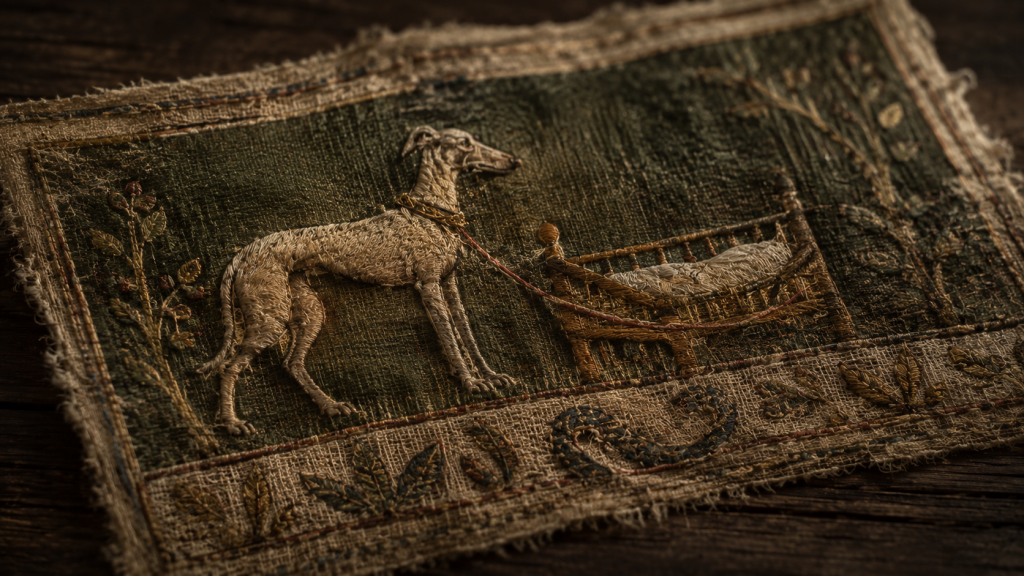
In Stephen’s version, local people heard about the greyhound’s bravery and began visiting his burial place, drawn by the story of the dog who had died protecting a child.
They honored him as a martyr and asked for help with illness. A legend centered on a rescued baby made Guinefort a natural protector of sick children.
In this way, he became a folk saint, shaped entirely through local devotion, even though the Catholic Church never canonized him.
That distinction may not have mattered much to the families who visited. People trusted his power, and formal approval was not what gave the shrine its importance.
Historian Jean-Claude Schmitt has suggested that an older tale about a loyal animal became attached to the name of an established saint, with local healing customs gradually giving the story its enduring, practical role.
4. Mothers Carried Sick Children Into the Wood
Stephen’s description of the healing rite is detailed, although it comes through his disapproving account.
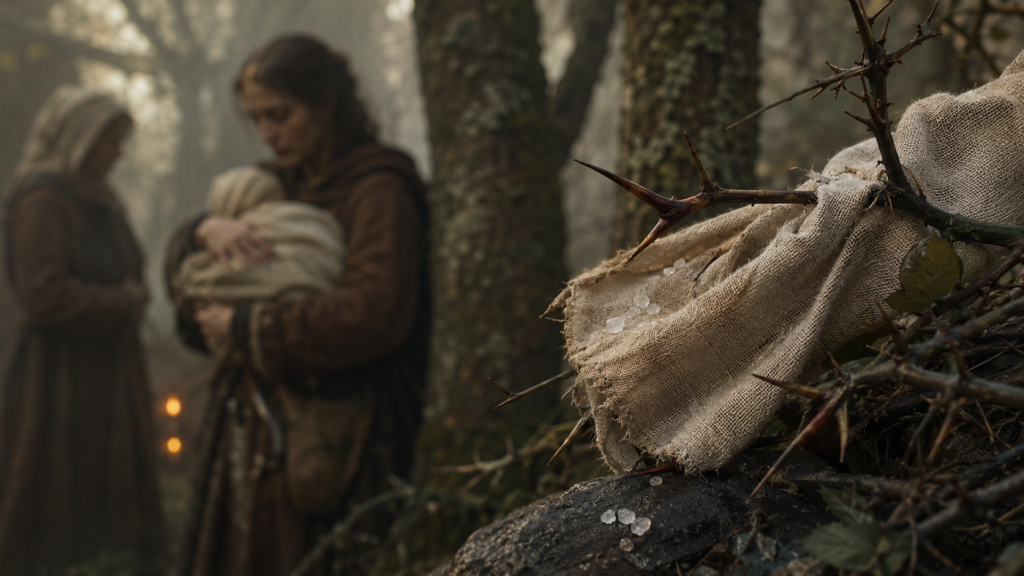
He wrote that mothers consulted an older woman who knew the ceremony. At the grove, they offered salt and left the child’s clothing on thorny bushes.
The baby was passed nine times through an opening between two tree trunks.
Stephen said the women called upon beings in the wood to take back a weak child they believed belonged to them and return the healthy child who had been taken away.
That resembles the medieval belief in changelings. A child who became very sick or failed to develop might be understood as a substitute left by supernatural beings.
Stephen then described the baby being placed on straw near two burning candles while the mother moved out of sight.
A surviving child was reportedly taken to the nearby Chalaronne River and immersed nine times.
He claimed that some children were burned by the candles and repeated a story about a wolf approaching one child. Those accusations partly relied on what others told him.
The risks are clear. So is the desperation behind the journey. These women brought seriously ill children to a protector whose legend promised that a threatened baby could survive.
5. Stephen Saw a Threat to Christian Order
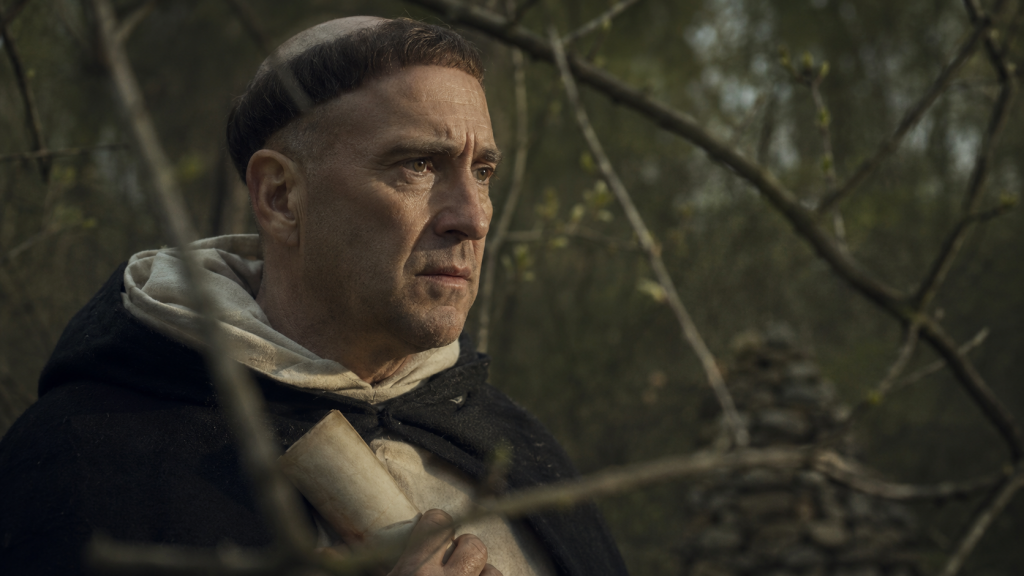
Stephen was a Dominican preacher who also investigated heresy. Once he understood who Guinefort was, he saw the devotion as an insult to God.
In his telling, the women had been deceived by the Devil. He called the supernatural beings in the ritual demons and treated the grove as a center of dangerous error.
His account was written to instruct other preachers, and that purpose shaped how he told the story.
Sermon material required a clear error to condemn and a firm religious response to correct it.
Even so, the document offers a rare glimpse of a practice that left no written record of its own. It shows women seeking healing through Guinefort, though Stephen’s explanation of their beliefs must be treated with caution.
Church officials expected saints to be formally approved Christian figures, but the families around the grove recognized Guinefort through his story and the cures they believed he provided.
6. He Dug Up the Bones and Burned the Grove
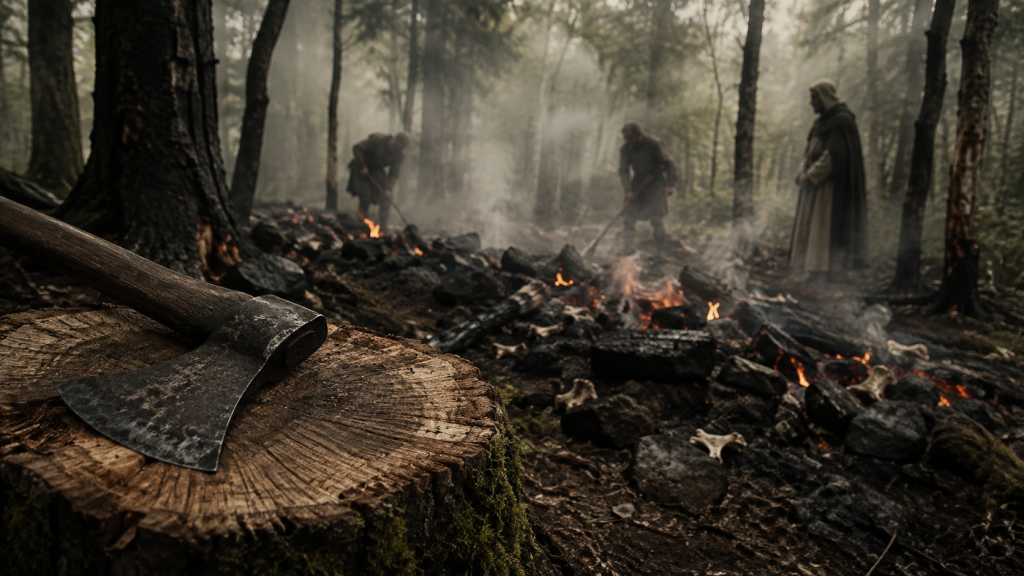
Stephen didn’t limit his response to a sermon.
He went to the site and gathered local people. After preaching against the practice, he had the supposed remains of the dog dug up. The surrounding trees were cut down, then the wood and bones were burned.
Stephen also persuaded the local lords to issue an order against future visits. Anyone who returned risked having their property seized and sold.
The grave gave Guinefort a resting place, while the trees shaped the ceremony. Destroying them broke the story’s connection with the landscape.
Stephen recorded the episode as a successful suppression, but his account can’t tell us how the community responded after he left or how quickly people returned.
7. The Devotion Returned in a Different Form

Evidence from later centuries is scattered, and Guinefort’s story does not survive as a single continuous record.
Still, the fragments that remain suggest a devotion that never fully disappeared.
A document from 1632 mentions a chapel called Saint Guy le Fort in the region associated with the cult.
By 1826, a local cleric was reporting that mothers were still bringing sick children to Guinefort for help.
Later investigators also found that villagers continued to identify Guinefort as a dog. Accounts describe branches tied together as part of healing rituals, along with children’s clothing left in the surrounding woods.
When Jean-Claude Schmitt visited in the 1970s, local testimony even recalled a woman active in the 1930s who lit candles for others and made pilgrimages on their behalf.
While oral memory cannot confirm an unbroken medieval tradition, it does show that Guinefort remained embedded in the region’s religious imagination.
In the end, the greyhound’s appeal was simple. He offered hope to parents facing illnesses they could not control. His story began with a child found alive when everyone expected the worst.
The trees were cut down and the bones were burned. But Guinefort’s name stayed.
