
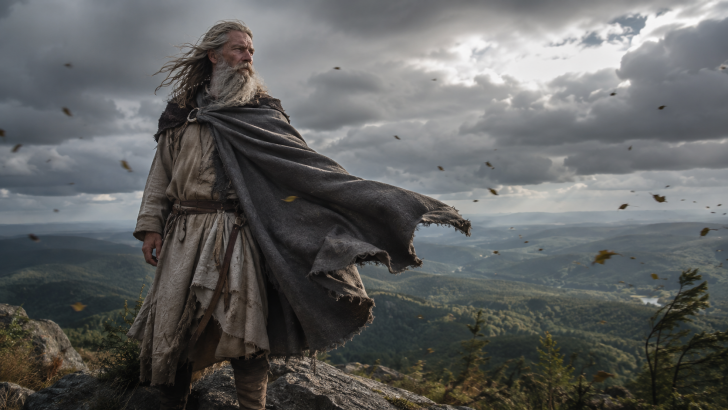
Some Slavic gods left behind stories filled with battles, rivalries, and dramatic adventures. Stribog left something much more mysterious.
Known primarily from a small number of medieval sources, Stribog was an important deity among the East Slavs.
He is usually connected with winds, air, and the forces moving across the sky. Yet the surviving evidence tells us surprisingly little about what his worshippers actually believed about him.
But was Stribog simply a wind god? Did he control storms? What did his unusual name originally mean?
And why was he important enough for Prince Vladimir to place his idol among the major gods of Kyiv?
Much of the answer has disappeared with the pre-Christian religion that once honored him.
Here are eight mysteries about Stribog, the Slavic god of winds.
1. What Did Stribog’s Name Originally Mean?
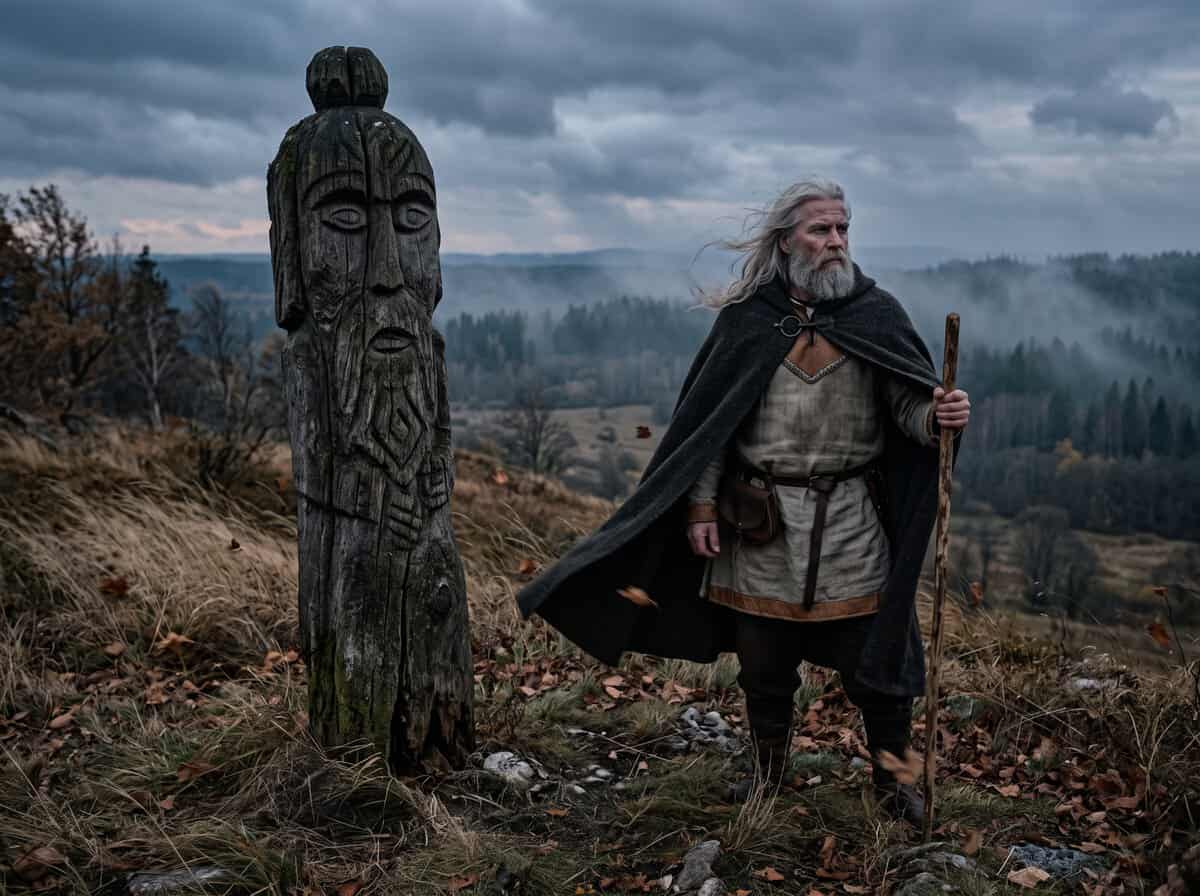
Even Stribog’s name presents a mystery. Scholars have proposed several explanations for its origin, but there is no universally accepted interpretation.
The second part, “bog,” clearly resembles the Slavic word for god. The first part is considerably more difficult to explain.
Various theories have attempted to connect the name with ideas involving spreading, distribution, wealth, inheritance, or even foreign linguistic influences.
This uncertainty matters because divine names often preserve clues about a god’s original function.
Perun’s name, for example, is commonly connected with striking and thunder. Stribog gives scholars a much harder puzzle.
Perhaps his name once described a particular aspect of wind or atmospheric power that later disappeared from memory.
2. Was Stribog Really the God of All Winds?

Stribog is commonly introduced today as the Slavic god of wind. That description has good historical support, but the surviving sources do not provide a detailed explanation.
The strongest clue appears in The Tale of Igor’s Campaign, a medieval East Slavic poem.
During a description of dangerous winds blowing from the sea, the winds are poetically called the “grandchildren of Stribog.”
This remarkable phrase suggests a family relationship between the deity and the winds.
Stribog may therefore have been imagined as an ancestor or ruler of atmospheric forces rather than simply as one personification of wind.
If individual winds were his descendants, perhaps different directions and types of weather were understood as members of a larger supernatural family.
Unfortunately, no surviving Slavic myth explains this family tree. We are left with one mysterious phrase and many unanswered questions.
3. Why Was Stribog Important Enough to Have an Idol in Kyiv?
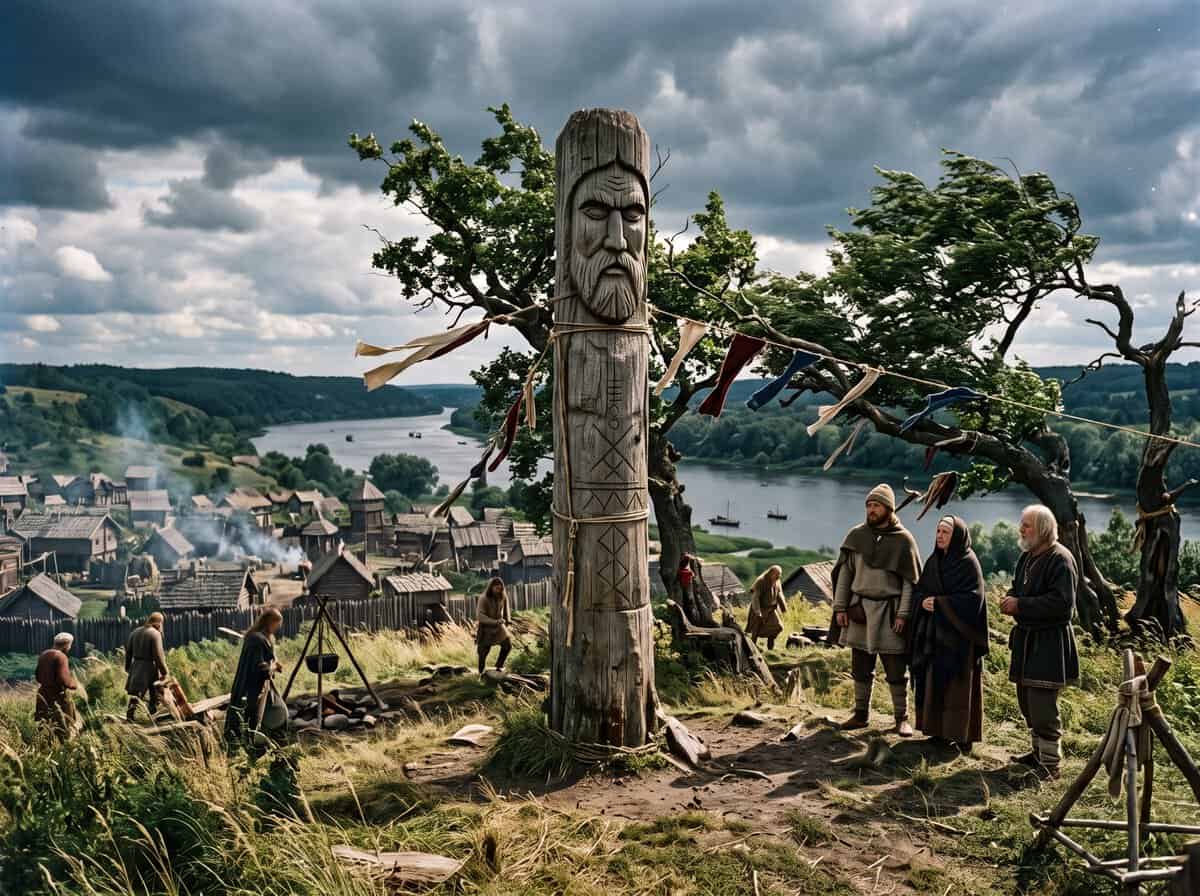
Stribog may be obscure today, but he was apparently important enough to receive official recognition in medieval Kyiv.
According to the Primary Chronicle, Prince Vladimir established idols of several gods on a hill outside his palace in 980.
The list includes Perun, Khors, Dazhbog, Stribog, Simargl, and Mokosh. This is extremely significant.
Vladimir appears to have been creating or reinforcing an important public cult involving several major divine figures.
Perun clearly held a particularly prominent position, but Stribog’s inclusion demonstrates that he was not simply an insignificant local wind spirit.
Why was he so important? Wind affected travel, agriculture, weather, fires, and warfare.
For a society dependent upon the natural environment, controlling or understanding such a force would have been enormously meaningful.
4. Were Storms Caused by Stribog or Perun?
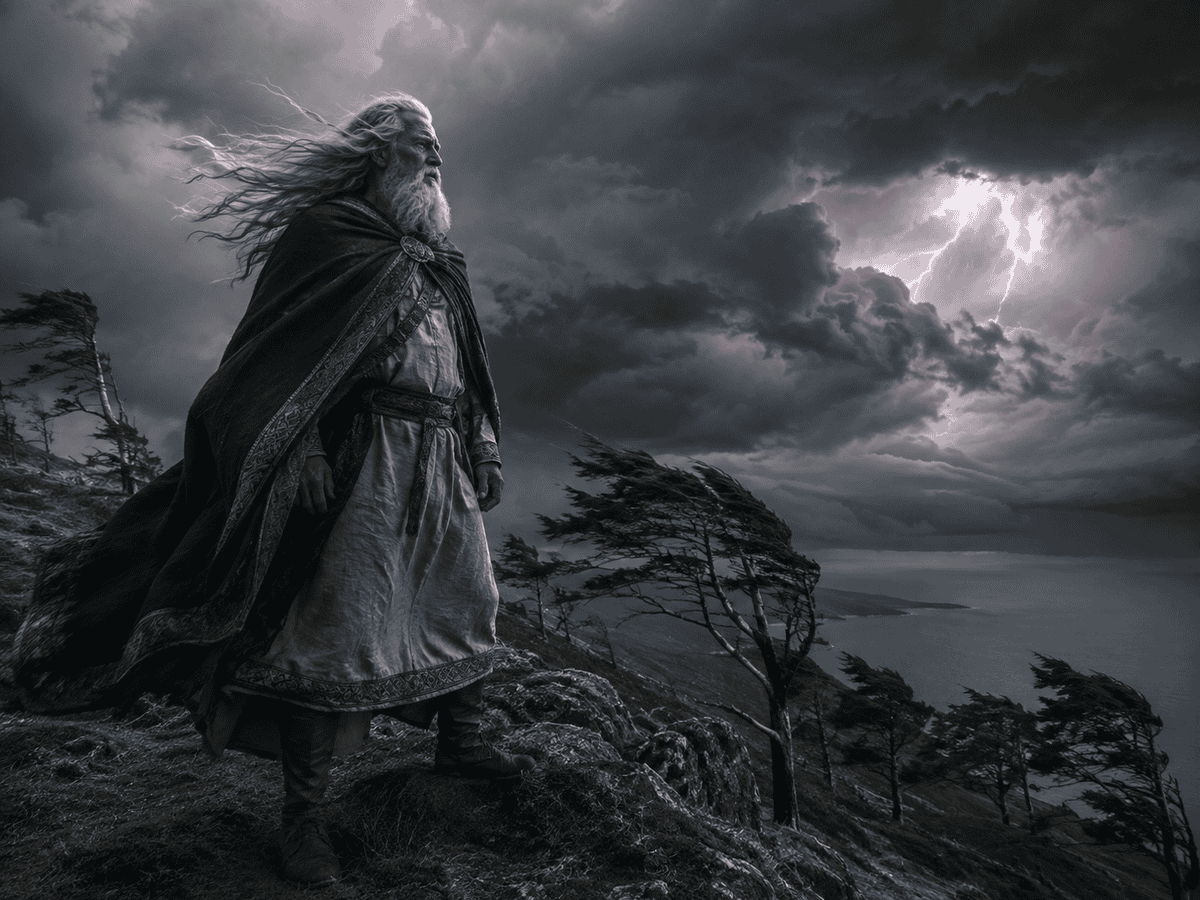
This creates one of the most interesting mysteries in Slavic mythology. If Stribog controlled the winds, what happened during thunderstorms?
Perun was the great god of thunder and lightning. His power belonged to the stormy heavens.
Stribog was associated with wind. Naturally, the two forces frequently arrive together.
Did ancient Slavs imagine Perun and Stribog cooperating during storms? Did each god control a separate part of the weather?
Could powerful winds have belonged to Stribog while thunder and lightning belonged specifically to Perun? No surviving myth provides a clear answer.
Modern retellings sometimes create elaborate relationships between the two gods, but these should not be mistaken for securely preserved ancient stories.
The uncertainty reminds us how incomplete our knowledge of Slavic mythology really is.
5. Were Different Winds Imagined as Stribog’s Descendants?
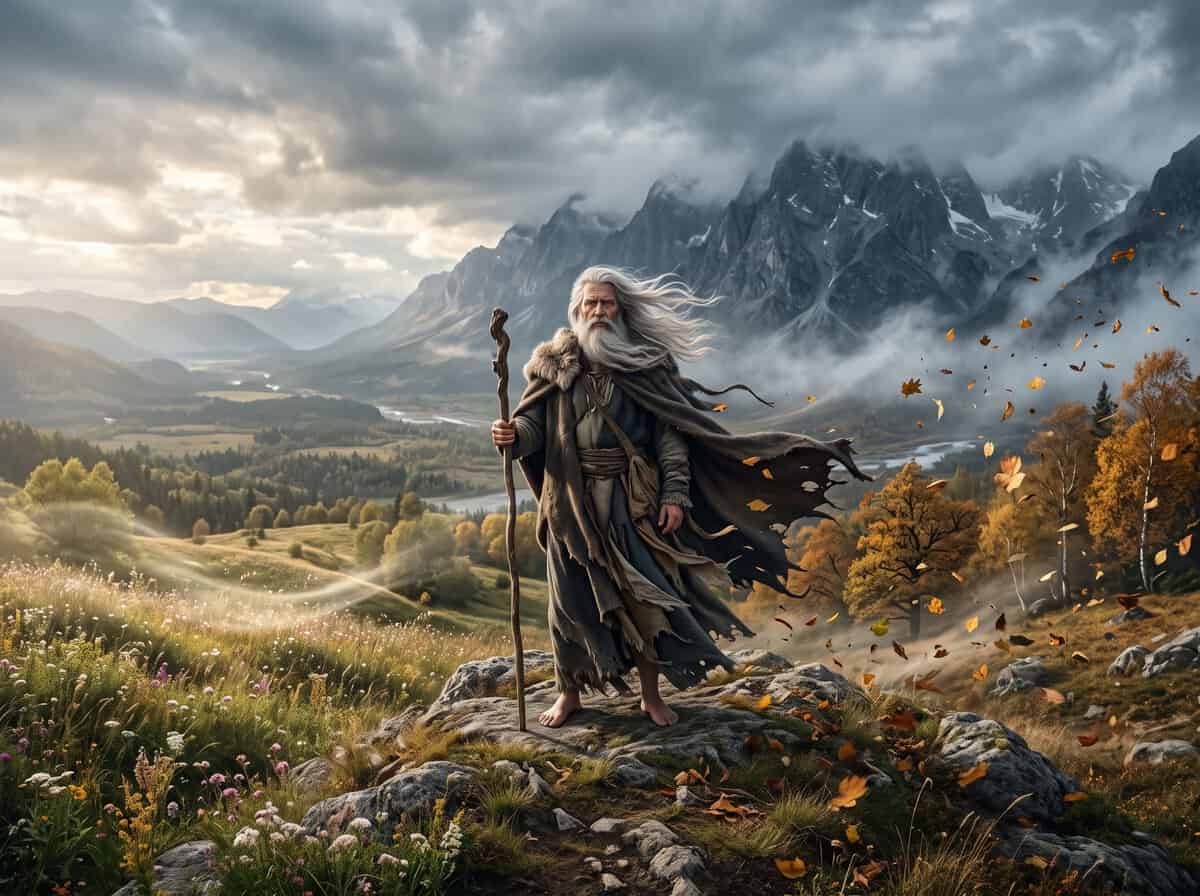
The description of winds as Stribog’s grandchildren raises an intriguing possibility.
Perhaps the ancient Slavs distinguished between winds according to direction, season, strength, or effect and imagined them as separate supernatural forces.
This would make sense in everyday life. A warm summer breeze was very different from a freezing winter wind.
A helpful wind could move a vessel. A violent one could damage crops, spread fire, or make travel dangerous.
People who depended closely on weather would notice these differences.
The poetic reference to Stribog’s grandchildren may preserve a fragment of a much larger tradition in which individual winds possessed identities of their own.
6. Was Stribog a Generous God or a Dangerous One?

Wind has no single personality. Sometimes it brings relief on a hot day. Sometimes it carries rain clouds toward thirsty fields.
At other times, it destroys buildings, damages crops, makes winter temperatures feel unbearable, or turns a small fire into a disaster.
Stribog may therefore have represented a divine force that could neither be described as simply benevolent nor hostile.
In The Tale of Igor’s Campaign, the winds associated with Stribog are dangerous. They blow arrows toward Igor’s warriors, contributing to the threatening atmosphere of battle.
Yet this does not necessarily mean Stribog himself was considered evil. Ancient gods connected with nature often represented forces that could both help and harm humans.
People could not command the wind. They could only adapt to it. Stribog’s mysterious character may therefore reflect the unpredictable force he represented.
7. What Happened to Stribog After Christianization?
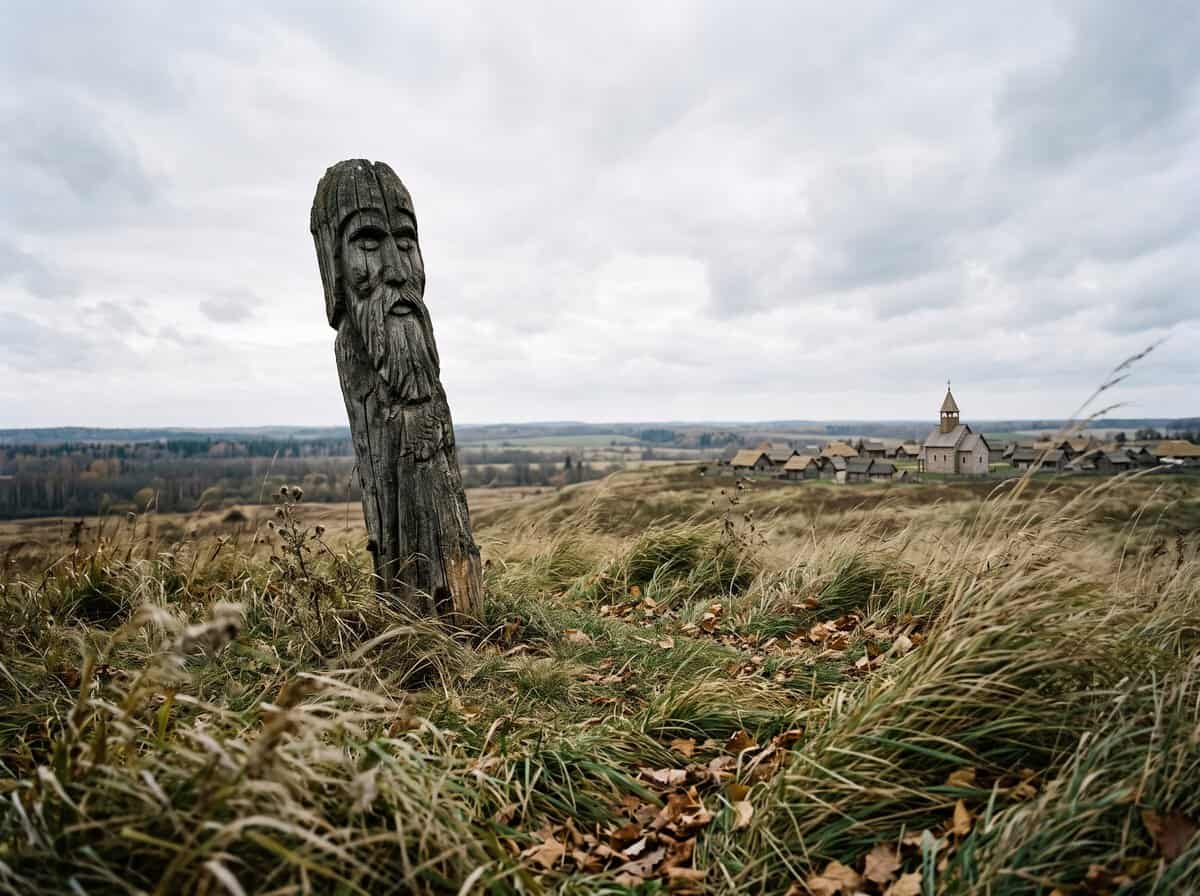
Only a few years after Vladimir established the famous idols in Kyiv, the religious landscape changed dramatically.
Vladimir converted to Christianity in 988 and ordered the removal of pagan idols.
Perun’s destruction receives particularly dramatic attention in the Primary Chronicle. Stribog’s individual fate is not described with the same detail.
His official cult disappeared from the written record, but older beliefs about wind did not simply vanish overnight.
Across Slavic regions, folklore continued to treat winds, storms, whirlwinds, and other weather phenomena as mysterious forces.
Christian beliefs also mixed with older customs over generations.
It is tempting to identify every later wind tradition as a survival of Stribog’s worship, but the evidence does not allow such a simple conclusion.
8. Did Stribog Once Have Myths That Are Completely Lost?
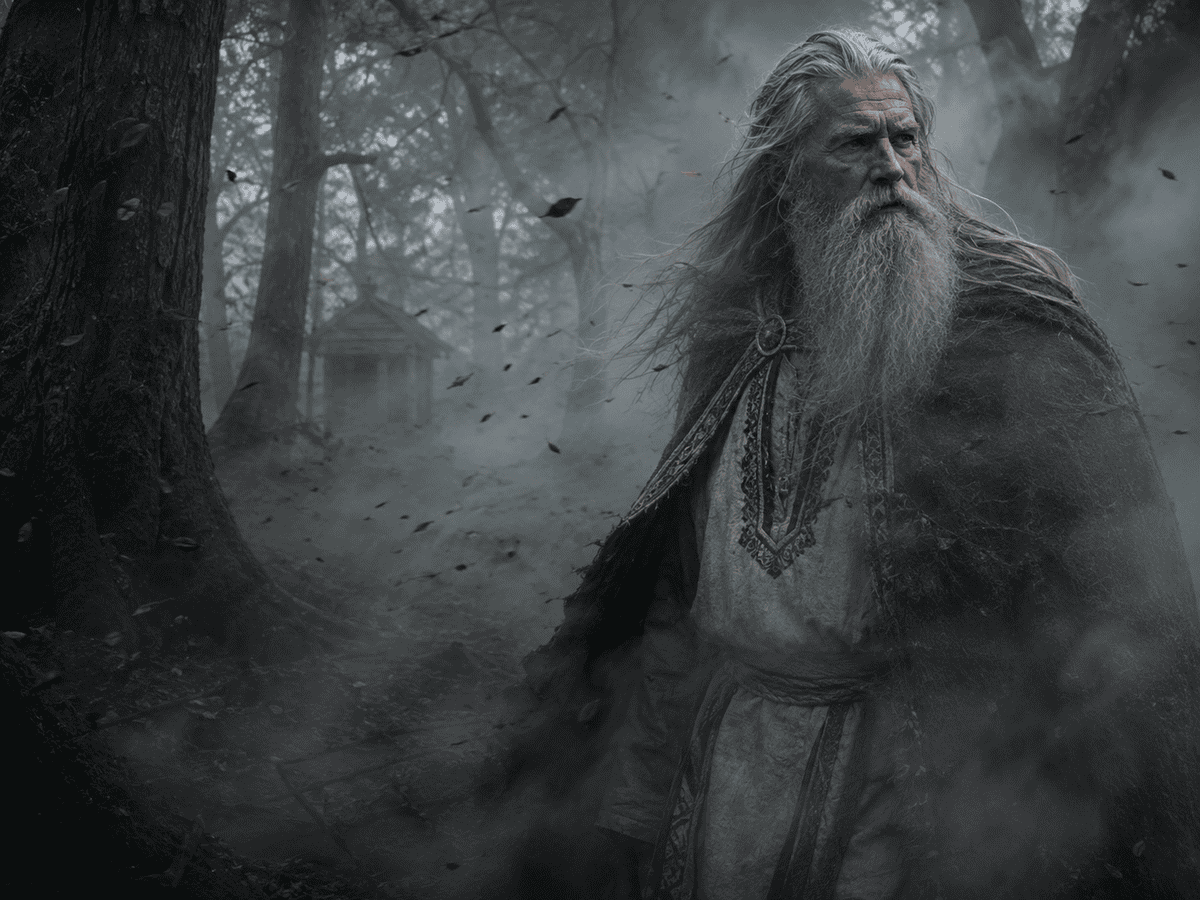
Stribog was important enough to receive an idol in Vladimir’s pantheon and memorable enough to appear in one of the most famous works of medieval East Slavic literature.
Yet no complete surviving myth tells his story. We do not know how people imagined his appearance.
We do not know whether he had a divine partner. We do not know the identities of the beings who supposedly made the winds his “grandchildren.”
We do not even know exactly how people worshipped him. This absence does not necessarily mean such traditions never existed.
Pre-Christian Slavic religion was transmitted largely through oral culture, and Christianization dramatically changed the preservation of older religious material.
Stribog may once have appeared in stories, songs, prayers, and seasonal traditions that were never written down. Today, only fragments remain.

I always felt a strong connection to the Divine since my birth. As an author and mentor, my mission is to help others find love, happiness, and inner strength in the darkest of times.