
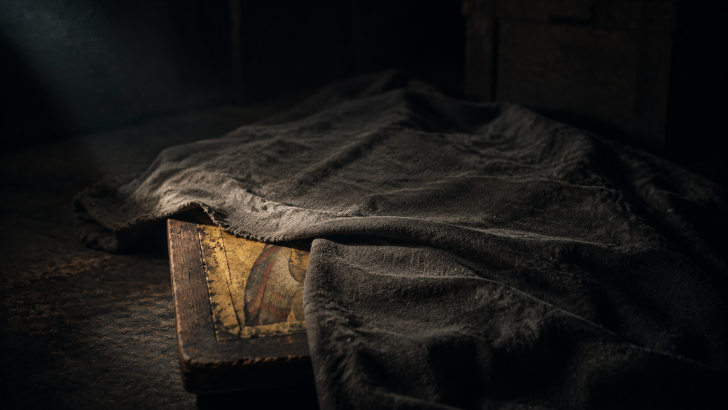
In 2022, a small religious painting arrived at an auction house in England. It had been inherited, little was known about it, and no one expected it to attract much attention.
But this wasn’t an ordinary old painting. It was a medieval panel stolen from York Art Gallery 44 years earlier.
And someone at the auction house was about to recognize it.
1. It Was Once Part of a Larger Altarpiece
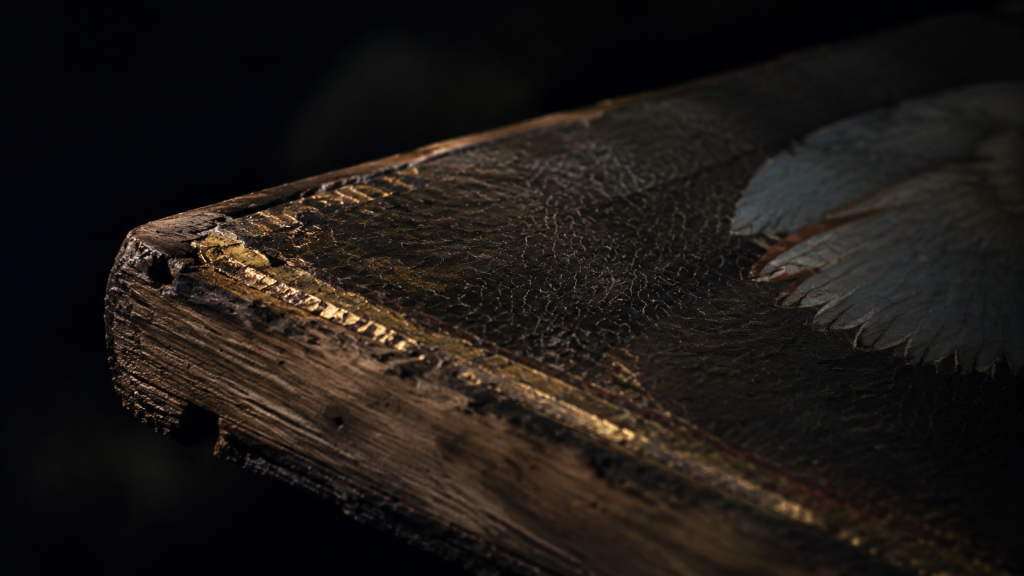
The panel was made in Nuremberg, Germany, sometime during the second half of the 15th century.
It’s usually dated to around 1480 and attributed to the Nuremberg School, though some researchers believe it may have been painted slightly earlier.
It has also been linked to the workshop of Hans Pleydenwurff, one of Nuremberg’s more important painters at the time.
Since several artists often worked together in medieval workshops, it can be difficult to identify exactly who painted a particular piece.
The panel is painted on both sides. It was probably once part of an altarpiece inside a church, possibly as a small wing attached to the lower section.
These wings could be opened and closed, allowing people to see different images at different times.
Most of the original altarpiece is now lost or separated. This panel is one of the parts that survived.
2. Gabriel Appears on the Darker Side
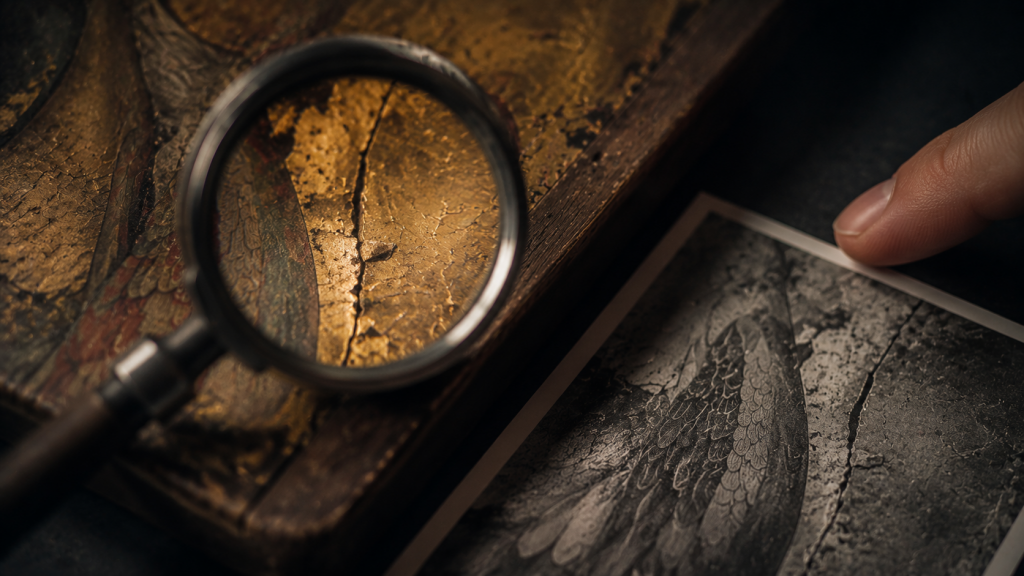
Although the panel is often described as the Angel Gabriel painting, Gabriel is only one of six religious figures shown on it.
One side of the panel has a glowing gold background. Three bishop saints stand closely together, each identified through the objects they carry.
St. Nicholas holds a book with three golden balls. Another bishop is probably St. Servatius, who carries a key.
The identity of the third figure is less certain. He has sometimes been described as St. Augustine, though scholars still debate who he is.
The other side has a darker background. It shows St. Lawrence holding the gridiron connected to his martyrdom. St. Sebald, the patron saint of Nuremberg, is shown holding a small model of his church.
Gabriel appears at the edge of the panel holding a banner with part of his greeting to the Virgin Mary.
In the story of the Annunciation, Gabriel arrives with unexpected news. He tells Mary that she will give birth to Jesus. Mary would probably have appeared on another panel placed beside this one, completing the scene.
That missing part gives Gabriel’s image an unfinished feeling. He’s still holding his message, but the person meant to receive it is no longer there.
3. It Arrived in York With a Companion
The panel appeared in art sales in London during the first half of the 20th century. It was later bought by Francis Dennis Lycett Green, who donated many works to York Art Gallery.
During the 1950s, he gave the gallery this panel and another one that looked very similar. Both were painted on two sides, were the same size, and had matching frames. They also seemed to have been produced by the same workshop.
For years, the gallery treated them as a pair.
Later research raised some questions about their original connection. They may have come from two different altarpieces made by the same artists. Their full history is still uncertain, especially once you go back beyond the first known sales.
Either way, they became part of the same collection in York and remained there for more than 20 years.
Then, in 1979, one of them vanished.
4. Someone Took It From the Gallery
The panel depicting Gabriel disappeared from York Art Gallery on November 13, 1979.
Very little is known about what happened. Accounts suggest that someone simply removed it from the wall during a quiet day at the gallery and carried it away.
No thief was publicly identified, and there was no clear explanation for how the theft was carried out.
Nobody knew where the panel had gone. It may have been sold soon after the theft or kept in a private home for years. There’s no confirmed record of where it was stored or how many times it changed hands.
The second panel remained at York Art Gallery. It became a reminder of the missing work, but it would also become the clue that eventually brought it back.
For 44 years, however, there was no sign of Gabriel.
5. It Turned Up in an Ordinary Home
In 2022, Duke’s Auctions examined the contents of a house near Southampton. The house contained a double-sided religious panel that the owner had inherited from her father.
The woman who owned it had inherited it from her father. She didn’t know where he had bought it, and nothing suggested that either of them knew it had been stolen.
The auction house later said that her father may have purchased it at a market, shop, or earlier auction.
At first, the panel wasn’t recognized as the missing medieval work. It was listed as a “15th-century style” fragment of an altar screen, possibly from Nuremberg.
The auction estimate was between £200 and £400.
That description suggests the auction house initially believed it might be a later object made to look medieval. The woman who inherited it had no reason to question that assessment.
Before the auction took place, however, a member of the Duke’s team noticed its connection to York Art Gallery.
6. The Panel Left in York Helped Identify It
While researching the artwork, a member of the Duke’s team spotted its similarity to the panel still held by York Art Gallery.
The size, format, painted figures, and overall style appeared to match. The connection was strong enough for the auction house to stop the sale and investigate further.
The auction house then contacted the Art Loss Register. This organization keeps records of stolen and missing art and helps identify works that appear on the art market.
Its specialists compared the auction piece with the information recorded after the 1979 theft.
They confirmed that it was the same work.
The woman who had inherited it wasn’t accused of being involved in the theft. There was also no evidence that her father had known where it came from.
Had this connection been missed, the painting might have entered another private collection. Its identity could have remained hidden for many more years.
7. The Woman Who Inherited It Gave It Back
After learning that the panel had been stolen, the woman agreed to return it to York Art Gallery. She didn’t request any payment, and the gallery didn’t have to take legal action to recover it.
The panel returned to York in 2023.
The gallery said it would be examined and conserved before being displayed with the related panel that had remained in the collection.
After 44 years apart, the two related works could finally be seen together again.
Some parts of the mystery remain unsolved. We still don’t know who took the panel in 1979. We don’t know where it spent the following decades or exactly how it came into the possession of the woman’s father.
But the painting itself is no longer missing.
What is known is that the panel eventually reached the woman’s father and was later inherited by her. When she tried to sell it, the auction house recognized it and checked the records.
And at the edge of the painting, Gabriel still holds his banner. The messenger vanished for 44 years, but in the end, he found his way back.
