
We all love a good eclipse nowadays. When we can, we gather in parks to marvel at the spectacle overhead. We’ll slip on those funny paper glasses and maybe sip a themed drink or two.
But for ancient astrologers, an eclipse was a terrifying crack in the normal order of the sky. The lights that governed time, kingship, seasons, and life itself suddenly went dark.
And when the heavens behaved strangely like that, astrologers believed something on Earth was about to change too—something monumental and often deeply unsettling.
1. The Disruption of Cosmic Order
Ancient civilizations viewed the night sky as a perfect, predictable clockwork system. The Sun rose, the Moon changed shape, planets followed their paths, and seasons came and went as expected. This made the universe feel ordered, even when life on Earth was anything but.
During a lunar eclipse, the familiar Moon might slowly turn dark or take on a deeply unsettling reddish color. To someone back then, it looked like one of the sky’s great anchors was being attacked by a foreign force or being swallowed.
Not every celestial anomaly was interpreted as divine wrath. Still, the temporary loss of the Sun or Moon suggested the usual balance of the universe had been broken. Natural law was disrupted, leaving humanity exposed to chaotic forces beyond control.
And that mattered because the sky wasn’t viewed as separate from everyday life. Every celestial event was read as a sign directly tied to conditions on Earth. As above, so below.
In ancient Mesopotamia, eclipses were part of a massive, complex system of omens used to anticipate natural events and political changes alike.
The real fear didn’t just come from the darkness itself—it came from the dread that the darkness was carrying a warning from the gods.
2. Omens Specifically Targeted Kings and Empires
One of the biggest differences between ancient and modern astrology is that early eclipse interpretation wasn’t personal.
In places like ancient Mesopotamia and Babylon, individual horoscopes didn’t really exist yet. Astrological readings were reserved almost exclusively for the king, the royal family, the state, war, harvests, and the survival of political order.
In Mesopotamian astrology, the king stood at the symbolic center of the kingdom. A threat against him was a threat against everyone. So, certain solar and lunar eclipses were read as warnings that the ruler might be killed, overthrown, or struck by divine judgment.
The details mattered, of course. Astrologers studied the month, time, duration, shadow direction, and which other planets were visible. They recorded these patterns on clay tablets, like the famous Enuma Anu Enlil.
One surviving omen, for instance, links a solar eclipse on a specific date directly to the threat of a king being killed by his own servants.
Royal astrologers had a heavy responsibility, and their readings influenced major decisions, state ceremonies, and the king’s safety.
Whenever the Sun darkened, astrologers kept one eye on the sky—and the other on the throne.
3. They Believed an Eclipse Could Target a Specific Land
Ancient astrologers didn’t always believe an eclipse threatened the entire world equally. Systems were developed—intricate ones—to figure out which country, city, ruler, or population might receive its effects.
Visibility was important. Mesopotamian astrologers mapped the sky into geographic zones and closely watched how the shadow moved. The part of the Moon or Sun that darkened first, along with the direction from which the shadow entered, helped them decide which land was supposedly in danger.
Centuries later, Claudius Ptolemy laid out an even more detailed system in his Tetrabiblos. He tied the zodiac sign of an eclipse directly to the specific nations and cities ruled by that sign, giving special weight to the places where the event could actually be seen.
It wasn’t just bad luck in the air. An astrologer might conclude that one particular kingdom faced war, another faced crop failure, or a certain ruler was entering a dangerous period.
The technical math behind it was complex, but to this ancient world, it felt as though the heavens were picking targets.
4. The Darkness Was Linked With Real-World Disaster
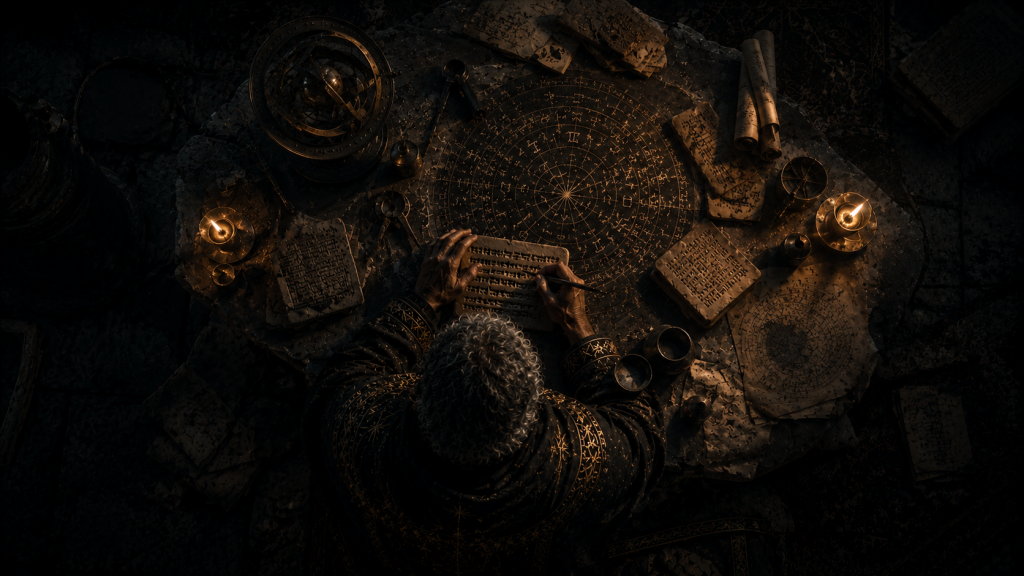
Ancient eclipse omens tell us exactly what kept early societies awake at night: invading armies, famine, and plague.
These weren’t abstract spiritual worries—they were existential threats that could, and often did, collapse whole empires in a single season. That’s what gave an eclipse its ominous weight.
Scholars built these omen catalogs by connecting dots over time. If a lunar eclipse coincided with a royal assassination, scribes wrote it down. Over centuries, those collective memories grew into reference archives mapping sky patterns directly to earthly tragedy.
It wasn’t modern science, of course. No one was running controlled experiments to test hypotheses. They lived in a world where unusual sky events were inherently loaded with meaning.
Yet astrologers weren’t just guessing. Babylonian scholars became sharp at tracking lunar cycles and pinpointing eclipse windows. But predicting the darkness didn’t neutralize it.
Knowing the sky would darken simply bought the royal court time to scramble. They could run divinations, perform rituals, or figure out who the gods were targeting. But it never erased the fear.
By Ptolemy’s era, astrologers were even timing the fallout. He suggested a solar eclipse’s duration translated to years of consequences, while a lunar eclipse dealt in months.
The shadow itself might pass in minutes, but the fear it left behind stretched far into the future.
5. Some Kings Tried to Trick the Omen
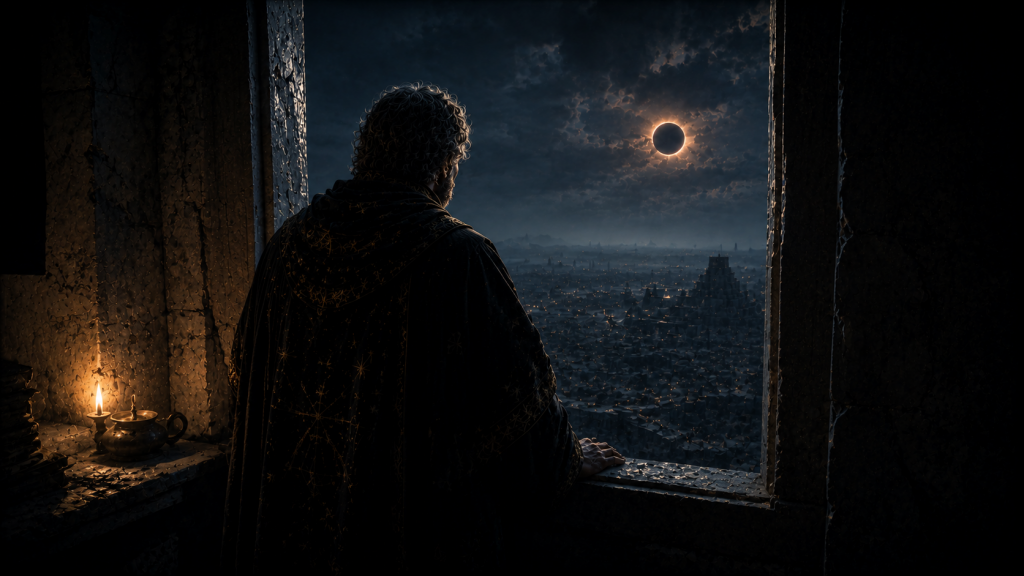
The fear surrounding eclipses sometimes pushed royal courts to extraordinary extremes.
In ancient Assyria and Babylonia, a particularly dangerous omen could trigger the substitute king ritual. The real king would temporarily step away from his throne, handing the crown off to someone else to act as a decoy.
The real king could be given a different identity and kept away from public view while priests performed protective rituals. The substitute wore royal clothing, received royal treatment, and occupied the dangerous position until the period associated with the omen had passed.
This was, at its core, a deadly serious attempt to trick fate.
In documented versions of the ritual, the substitute and his temporary queen were executed, ensuring the divine death sentence was carried out so the real king could safely come out of hiding.
To ancient astrologers, an eclipse was a terrifying break in cosmic protection. Omens could be investigated, negotiated, and sometimes ritually diverted. But when the sky went dark, no one could really look away.
