
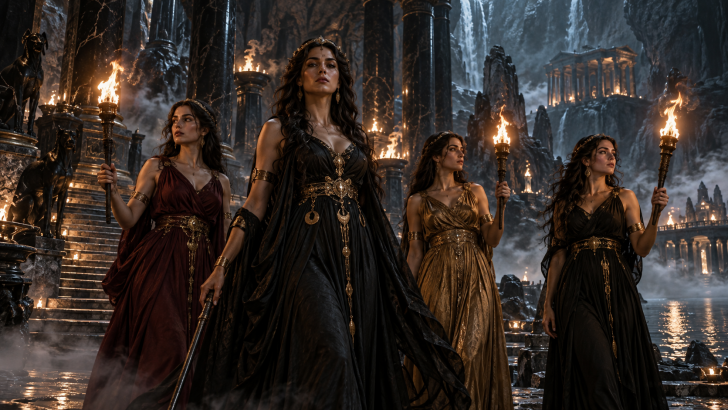
Deep beneath the earth, where sunlight never reaches and the rivers of the dead flow through endless darkness, mysterious female spirits carry burning torches through the shadows.
They are the Lampades, the torch-bearing nymphs of the Greek Underworld.
Unlike the gentle nymphs who inhabit forests, rivers, and flowering meadows, the Lampades belong to the mysterious realm of Hades.
Their flames illuminate forgotten passages, shadowy caverns, and the paths traveled by supernatural beings.
They are especially connected with Hecate, the powerful goddess of witchcraft, crossroads, ghosts, and the night.
Ancient traditions describe these nymphs as companions of the goddess, carrying torches as she moves through the darkness.
Their association with the Underworld gives them an unsettling reputation.
A torch usually represents guidance and safety. But in the hands of the Lampades, its light can also suggest danger, secrets, and the mysteries that separate the living from the dead.
Although surviving Greek mythology preserves few individual stories about these elusive nymphs, their connection with Hecate and the Underworld has inspired a fascinating world of dark legends.
Here are eight mysteries and legends surrounding the Lampades, the torch-bearing nymphs of the Greek Underworld.
1. The Lampades Were the Mysterious Torchbearers of Hecate
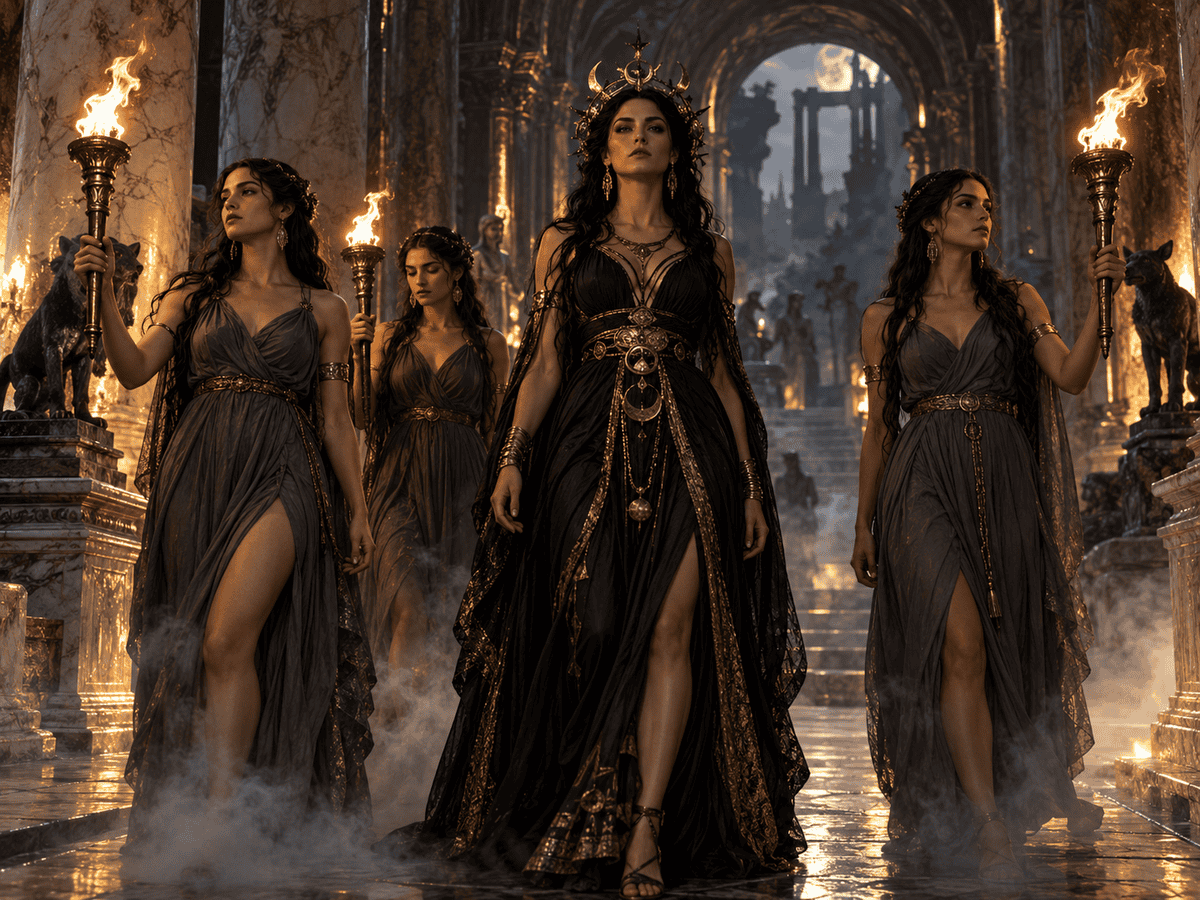
The Lampades are best known for their connection with Hecate, one of the most mysterious goddesses in Greek mythology.
Hecate was associated with magic, crossroads, spirits, and the boundaries between different worlds.
She could move through places that ordinary mortals feared entering.
Dark roads, lonely crossroads, and the entrances to the Underworld all belonged to her mysterious domain.
The Lampades were among the supernatural attendants associated with her presence.
Their name comes from the Greek word connected with torches, reflecting their most recognizable feature.
They carried flames through the darkness. This made them companions for a goddess who frequently appeared holding torches herself.
Nel Homeric Hymn to Demeter, Hecate hears Persephone’s cries during her abduction and later approaches Demeter carrying a light.
Although the Lampades are not named in that episode, the image of Hecate moving through darkness with a torch helps explain their association with her.
The nymphs represent the mysterious lights that accompany the goddess into places hidden from ordinary sight.
Their flames do not belong to the cheerful celebrations of Olympus.
They illuminate a world of secrets, spirits, and ancient divine powers.
2. Their Torches Were Connected With the Darkness of the Underworld
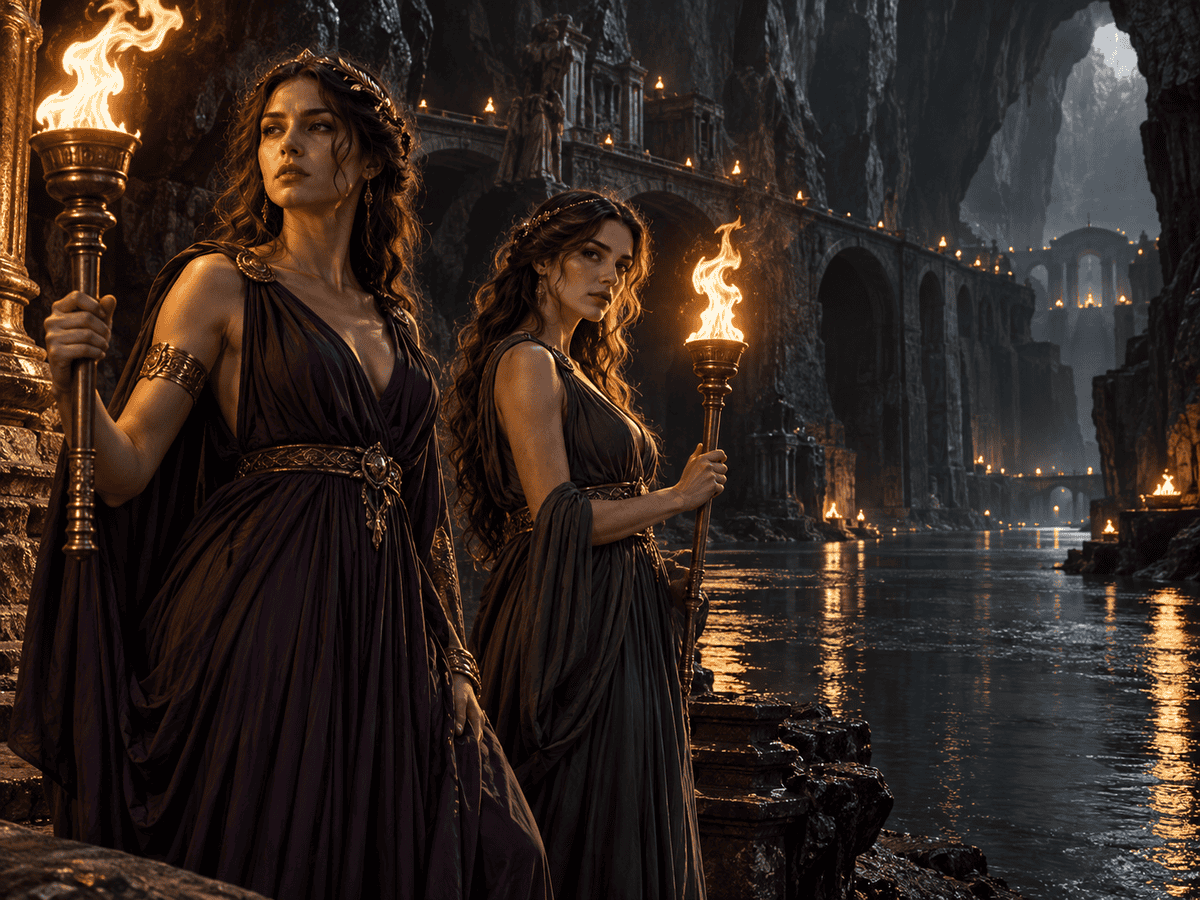
The Greek Underworld was not simply a place where the dead gathered.
It contained rivers, mysterious landscapes, guarded entrances, and regions associated with judgment and punishment.
For the living, entering this realm was an extraordinary and dangerous journey.
The Lampades belong naturally to this shadowy environment.
Their torches distinguish them from many other nymphs in Greek mythology.
Naiads were associated with freshwater. Dryads belonged to trees and forests.
The Lampades, however, were linked with the darkness beneath the earth.
Their flames suggest the presence of supernatural guidance.
In later imaginative portrayals, they move through underground passages and illuminate paths that would otherwise remain invisible.
This image has a darker meaning as well. A light in the Underworld does not necessarily promise a return to the surface.
It may reveal a passage leading deeper into the realm of the dead. The Lampades therefore represent a strange contradiction.
They carry light, but their home is darkness. They offer illumination, yet the world surrounding them remains mysterious.
Their torches suggest that even in the deepest shadows, certain divine beings know exactly where they are going.
3. They Were Associated With the Mysterious Processions of Hecate
Hecate was not a goddess who traveled only through magnificent temples or peaceful gardens.
Her presence was associated with crossroads, night journeys, and places where the boundaries between worlds seemed uncertain.
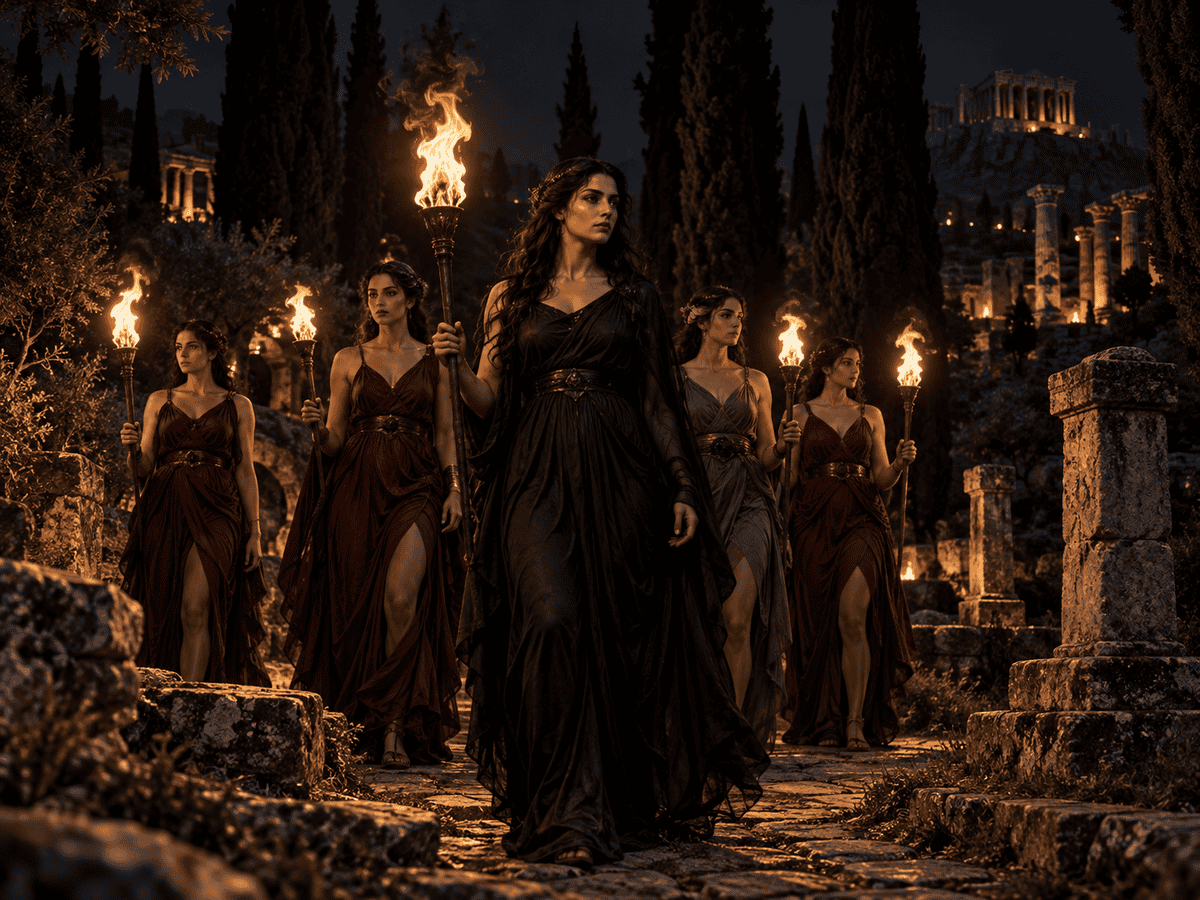
The Lampades became fitting companions for these mysterious movements. Imagine a lonely road beneath a moonless sky.
The countryside is silent. Then distant torchlight appears between the trees.
The flames move together, suggesting a procession approaching through the darkness.
Such an image reflects the atmosphere surrounding Hecate and her supernatural attendants.
Later folklore and modern mythological storytelling often imagine the Lampades accompanying the goddess during nighttime journeys.
Their lights mark her passage through hidden places. This also reflects the importance of torches in ancient Greek life.
Flames were used in ceremonies, processions, and celebrations honoring various deities.
For Hecate, however, the torch carried a particularly mysterious meaning.
It represented her ability to move between darkness and light. The Lampades extend that symbolism.
They are not ordinary servants carrying household lamps.
They belong to a goddess whose power reaches places beyond the familiar world.
Their procession evokes the frightening beauty of a divine presence moving through the night.
4. The Lampades Were Linked With the Boundaries Between Life and Death
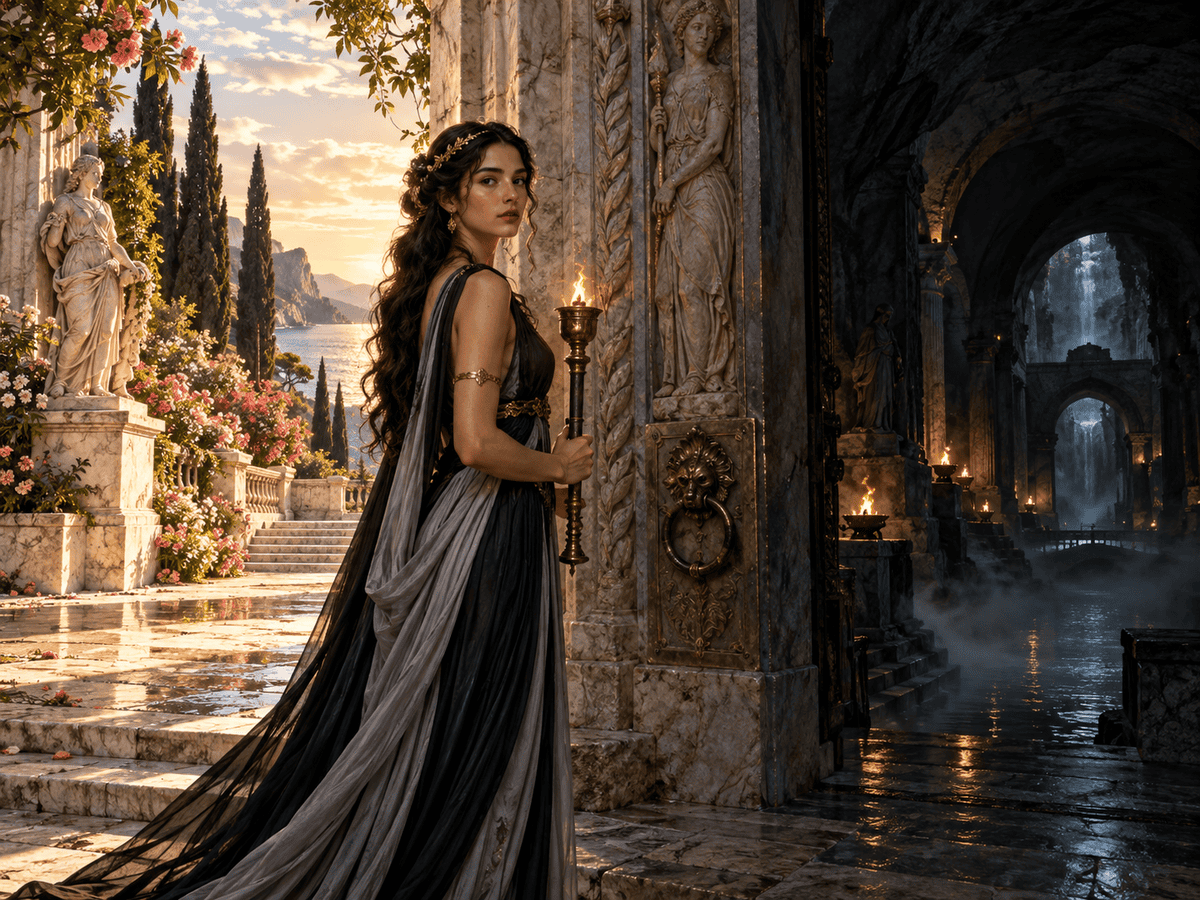
One of Hecate’s most important qualities was her connection with boundaries.
She stood at crossroads, entrances, and places where different paths met.
She was also associated with the Underworld and the spirits of the dead.
The Lampades share this mysterious atmosphere through their role as her companions.
Their torches make them natural symbols of passage.
A flame can reveal a doorway. It can mark a path. And it can guide someone through an unfamiliar place.
In the context of the Underworld, these meanings become especially powerful.
Greek mythology frequently describes the boundary between life and death as difficult to cross.
Orpheus entered the realm of Hades in search of Eurydice.
Heracles descended into the Underworld during his famous labors.
Odysseus approached the world of the dead to seek knowledge from the prophet Tiresias.
Such journeys were extraordinary because ordinary mortals did not freely travel between the two realms.
The Lampades belong to the supernatural world surrounding these boundaries.
Their light represents knowledge of hidden passages.
They remind us that the ancient Greeks imagined certain divine beings as familiar with places humans could only fear or wonder about.
5. Their Flames Became Associated With Madness and Terror
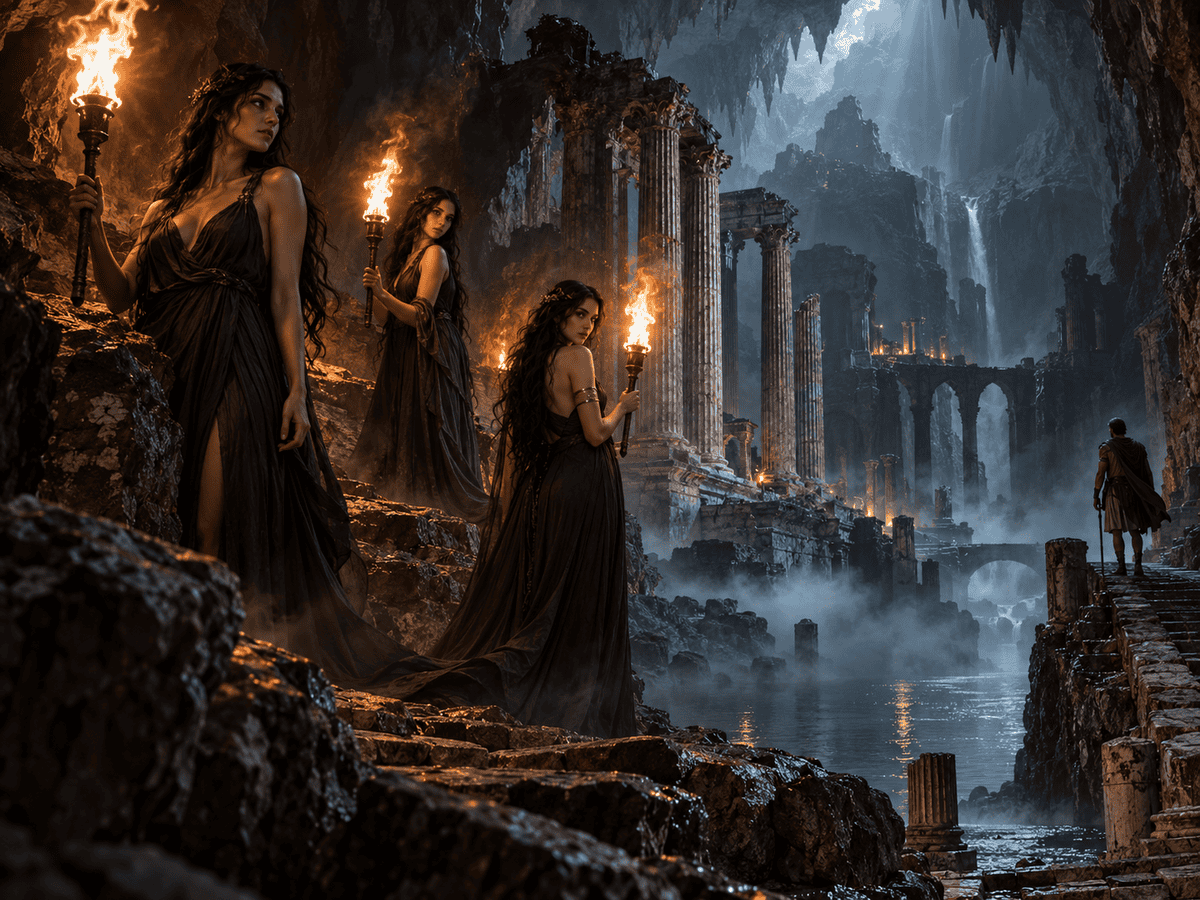
One of the darkest ideas surrounding the Lampades is the belief that their torchlight could overwhelm the minds of those who encountered them.
In later mythological descriptions and modern retellings, their flames are sometimes portrayed as capable of driving mortals into confusion or madness.
This frightening power fits the supernatural atmosphere surrounding Hecate.
The goddess was associated with ghosts, mysterious nighttime experiences, and forces that ordinary people struggled to understand.
The Lampades’ flames therefore became more than simple sources of light.
They could represent the terror of witnessing something forbidden or incomprehensible.
Imagine a traveler following a distant glow through an unfamiliar landscape.
At first, the light seems comforting. It promises a way out of the darkness.
But the traveler eventually realizes that the flames are moving without any visible human presence.
The light belongs to the supernatural world. This image captures the unsettling character of the Lampades.
Their torches can attract attention while also inspiring fear.
The idea that their light causes madness is not established through a detailed surviving classical myth about an individual Lampad.
It belongs more strongly to later descriptions and imaginative traditions.
Still, it reflects an important theme in Greek mythology. Divine power was not always safe for mortals to encounter.
Sometimes witnessing the supernatural was itself a frightening experience.
6. The Lampades Were Different From the Beautiful Nymphs of the Upper World
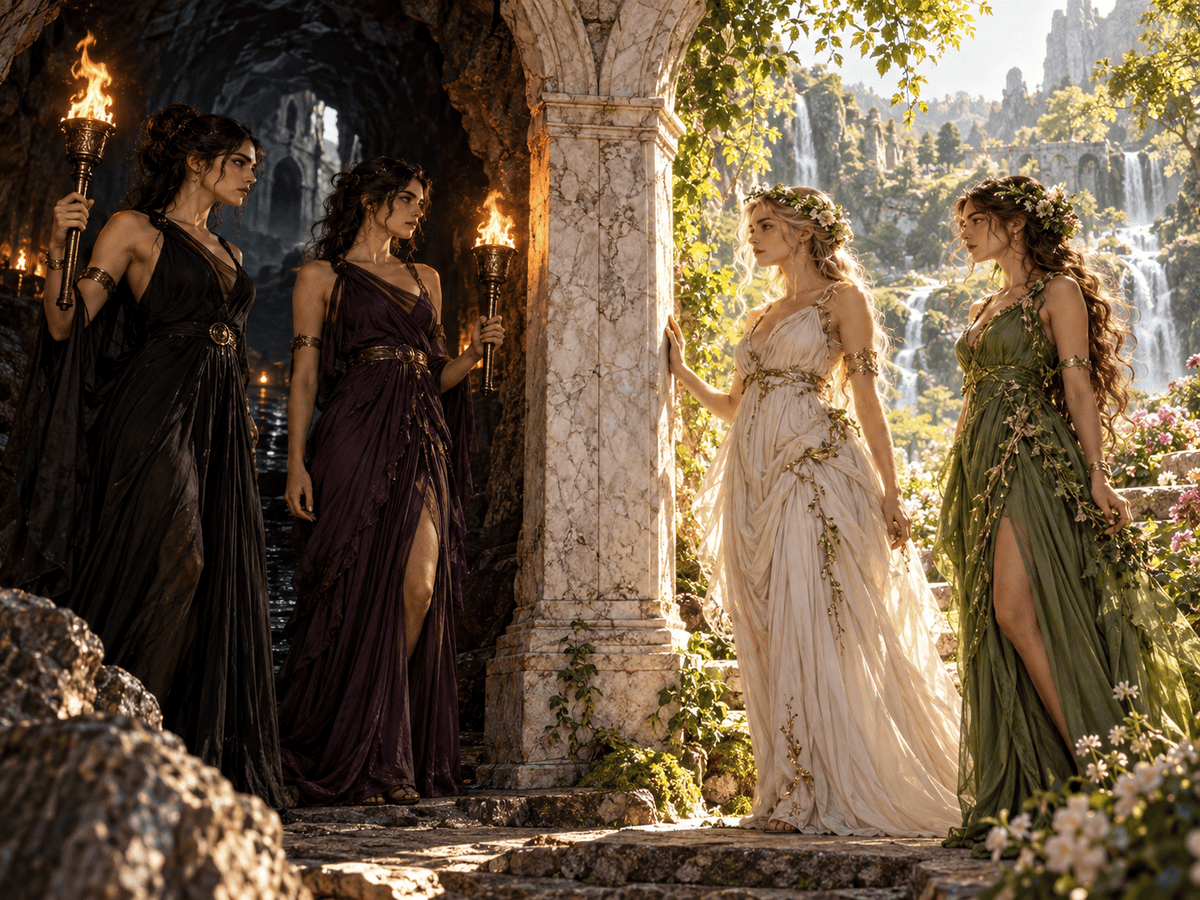
Greek mythology contains many kinds of nymphs. Some lived in rivers and springs.
Others protected trees, mountains, or secluded valleys.
They were often associated with natural beauty, fertility, and the living landscape.
The Lampades occupy a very different setting. Instead of sunlit forests, their world is the Underworld.
Instead of flowing streams and flowering meadows, they are surrounded by darkness and the mysteries of death.
This makes them one of the more unusual groups of nymphs.
Their identity challenges the familiar image of nymphs as gentle spirits of nature.
Greek mythology did not limit female supernatural beings to pleasant landscapes.
The divine world extended beneath the earth as well as across its surface.
The Lampades represent that hidden side of existence.
They are still nymphs, but their surroundings give them an entirely different atmosphere.
Their beauty, when imagined in later artistic portrayals, is often mysterious rather than cheerful.
And their loyalty belongs to Hecate, a goddess associated with powers beyond the ordinary world.
They reveal that even the darkest places in Greek mythology could possess their own supernatural attendants.
7. Their Torchlight Was Connected With Persephone’s Underworld Mysteries
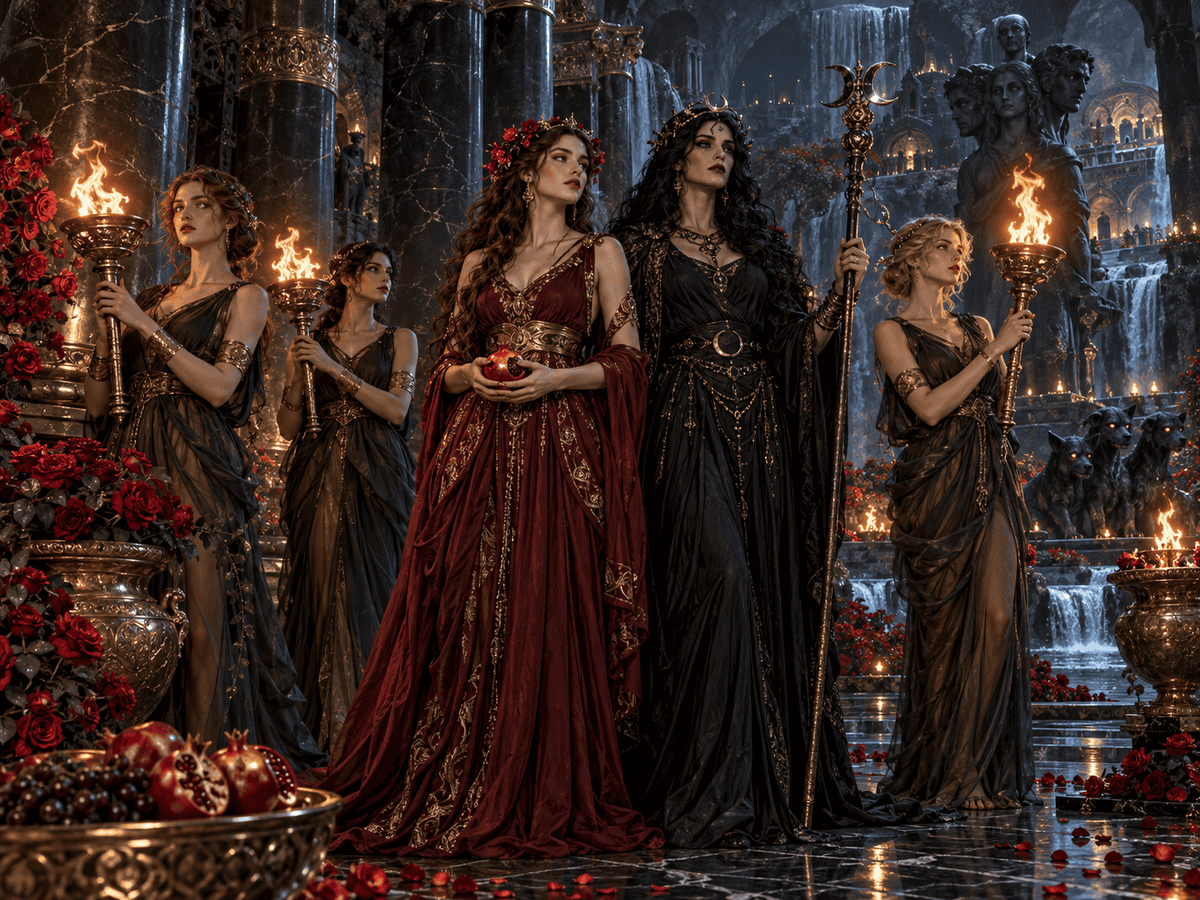
Persephone’s journey between the upper world and the Underworld is one of the most important myths associated with death and renewal.
Her abduction by Hades causes Demeter to search desperately for her missing daughter.
During that search, Hecate appears carrying torches.
She becomes connected with Persephone’s story and later accompanies her in the ancient hymn.
This creates a meaningful connection between the Lampades and the mysteries of Persephone.
As Hecate’s torch-bearing companions, they belong to the same symbolic world of hidden journeys and divine revelation.
Their flames reflect the search for someone lost beyond ordinary reach.
They also suggest the hope of finding a path through darkness.
In later interpretations, the Lampades are pictured illuminating the passages of Persephone’s underground kingdom.
Such scenes are not preserved as individual ancient myths, but they fit the established relationships between Hecate, Persephone, and the Underworld.
The imagery is especially powerful because Persephone belongs to two worlds.
She is associated with spring flowers and the fertility of the earth. But she is also Queen of the Underworld.
The Lampades represent the darker half of that divided existence.
Their flames belong to the realm Persephone enters when she leaves the sunlit world.
They symbolize the mysteries hidden beneath the earth, where darkness and renewal remain closely connected.
8. The Lampades Remain Among the Most Mysterious Spirits of Greek Mythology
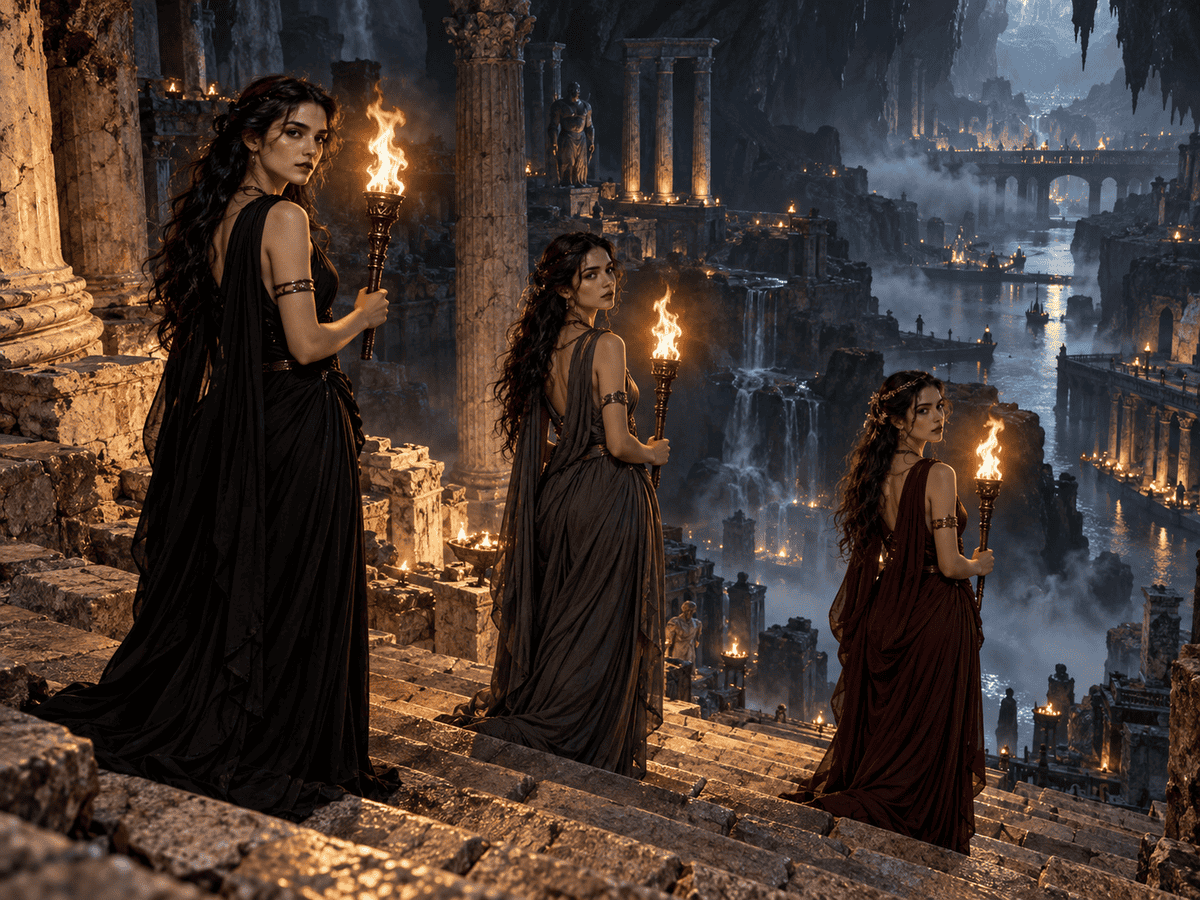
Unlike Athena, Artemis, or Aphrodite, the Lampades do not possess an extensive collection of surviving myths.
There are no famous ancient stories describing individual Lampades falling in love with heroes or challenging the Olympian gods.
Their identities remain largely hidden. Even their appearance is not described in detail.
What survives most clearly is their connection with torches, Hecate, and the Underworld.
Yet these few details create an unforgettable image. A group of mysterious female spirits moving through darkness.
Flames illuminating ancient passages. And a powerful goddess traveling with them.
The Lampades occupy a fascinating place between familiar mythology and the mysteries that ancient writers left unexplained.
Their lack of individual stories makes them feel even more elusive.
They belong to the shadows rather than the center of heroic adventures.
While the Olympian gods gather in magnificent halls, the Lampades remain connected with the hidden world below.
Their torches suggest knowledge that ordinary mortals do not possess.
Their association with Hecate places them near the boundaries of magic, spirits, and death.
And their mysterious nature allows them to represent one of the most haunting ideas in Greek mythology.
Not every divine being seeks attention, worship, or glory.
Some exist in the darkest corners of the mythological universe, carrying out their mysterious duties far from the sunlight.
The Lampades belong to that forgotten world. Their flames continue to illuminate the imagination.

Ho sempre sentito una forte connessione con il Divino fin dalla mia nascita. Come autrice e mentore, la mia missione è aiutare gli altri a trovare l'amore, la felicità e la forza interiore nei momenti più bui.