
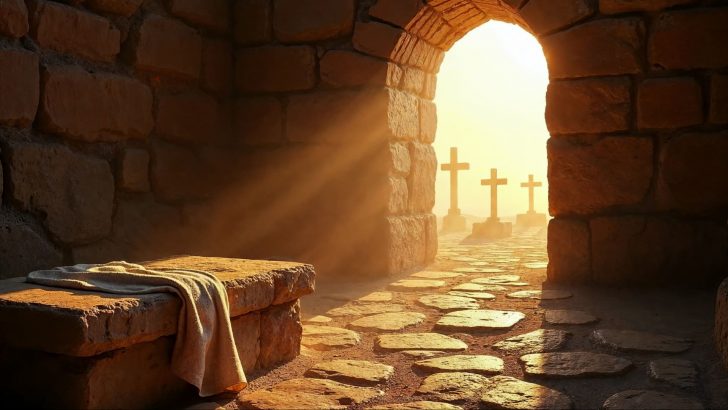
Scientists and historians are very careful when talking about ancient times, especially when miracles are involved!
They don’t assume a miracle happened or didn’t happen.
Instead, they ask about the earliest source and do cross-examination.
When the resurrection of Jesus Christ is observed like this, we’re left with three facts.
Jesus died on the cross, his body was placed in a tomb that was found empty, and his disciples were convinced they saw him alive again.
Let’s look at the evidence!
1. Jesus Christ Was Proclaimed Dead
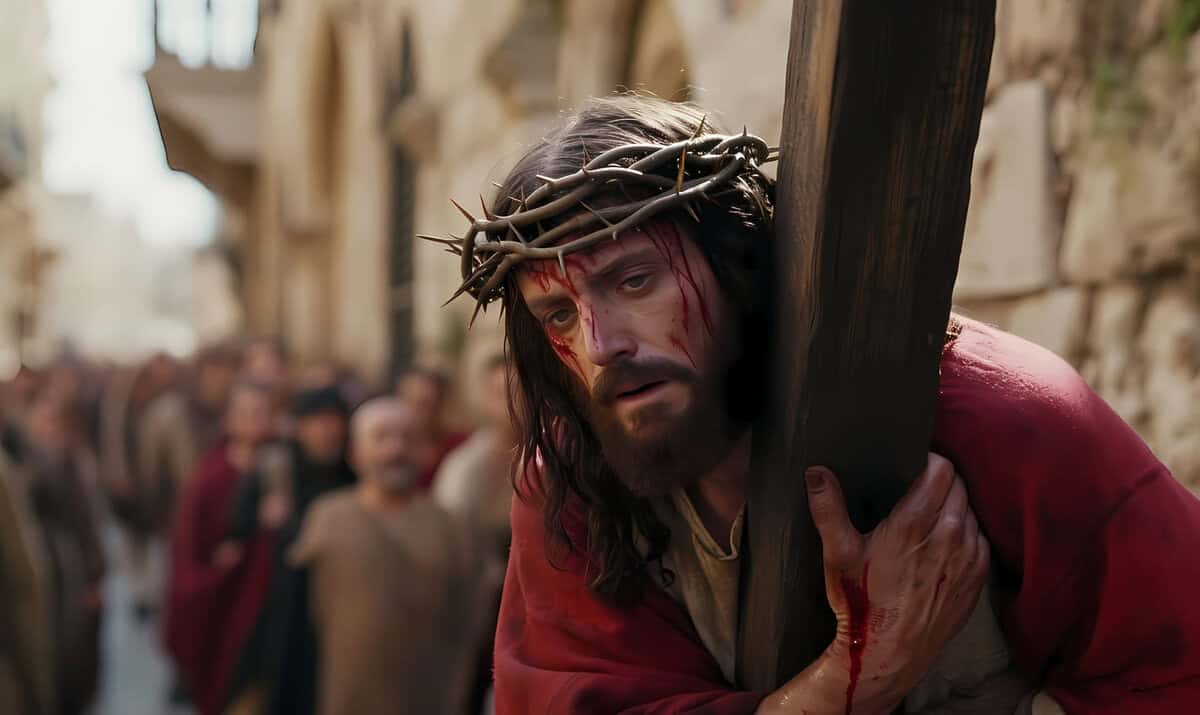
So, what if Jesus Christ didn’t actually die?
Roman executioners had one job: crucifixion. If a condemned person remained alive after being taken down from the cross, the state would consider it a failure.
It could lead to severe punishment for the executioner!
So, was it even possible to survive such torture? We actually need to look at what crucifixion does to a person.
The exhaustion from hanging on the cross would make breathing extremely difficult within hours. The body needs to push itself up to breathe, and it can’t.
John’s Gospel adds a meaningful detail about the moment Christ was pierced by a spear. Blood and water flowed out, which might suggest that His heart sac was pierced.
When you consider all this, there’s no way Jesus didn’t die from his wounds on the cross. They were definitely fatal.
2. What Romans Did After an Execution
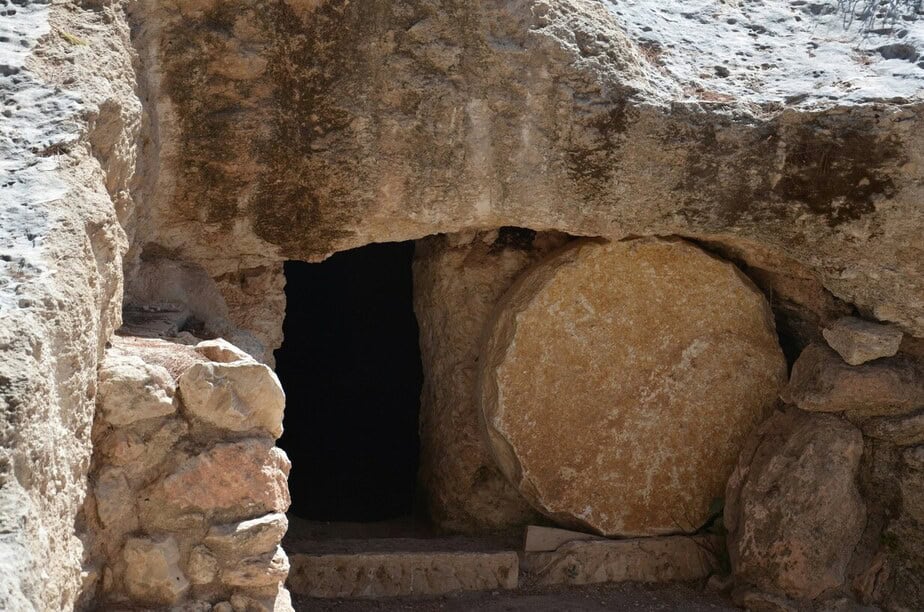
The Romans had a protocol that they followed after each execution, so the bodies couldn’t be lost!
It’s a common suspicion that Christ’s body was lost by the Romans, so his disciples improvised a story about Him leaving the grave.
The law allowed families to request a body back for burial, and Jewish tradition demanded that it had to be in the ground before nightfall.
In the 1960s, archaeologists found a crypt in Jerusalem that held the bones of a man named Yehohanan. That man died by crucifixion.
This matters because it confirms that the Gospels told the truth about Christ’s burial.
It was definitely possible for Him to have been buried properly, by Jewish custom, instead of being disposed of by the Romans.
3. An Empty Tomb and Inconvenient Witnesses
In the first century, in both Rome and Judea, a woman’s testimony barely counted for anything before the law. This goes especially for women from humble backgrounds.
So, if someone wanted to invent a story about a resurrection, they certainly wouldn’t make two women their main witnesses.
Still, every single Gospel insists that was the case!
Historians call this the criterion of embarrassment. Only having women as their witnesses was likely embarrassing for the disciples, but they wrote it down anyway.
On top of that, Rome was very much against Christianity spreading any further. If the Romans had Jesus’s body, they would’ve produced it.
4. There’s Evidence Older Than the Gospels

In 1 Corinthians 15, Paul writes down a creed that historians everywhere believe wasn’t written by him.
It’s thought that Paul was quoting something older, perhaps some public news he had received.
The creed was dated, and it’s said that it was first written two to five years after Christ was crucified.
This means that the resurrection was news that circled among people, at a time when the eyewitnesses were alive and in Jerusalem.
Legends need time to develop, but the truth is immediate.
Many scholars agree that the creed reads like a headline written days after the story broke.
5. Did the Apostles Encounter Christ or Hallucinate Him?

Hallucinating from grief is a real thing, but what Gospels describe doesn’t sound like that at all.
According to Paul’s list in 1 Corinthians 15, whole groups of people saw the risen Christ, sometimes more than ten of them together!
He reportedly ate food in front of people and even invited Thomas to touch his wounds.
So, could this have been a mass hallucination? Those aren’t very well documented, so many scholars reject them.
Whatever happened, the people describing it insisted it wasn’t a feeling or a vision.
It was an encounter, described down to mundane details.
6. Ancient Skeptics Believed in Resurrection
It’s understandable to question the beliefs of the people who loved and followed Christ. They had an agenda, and they wanted to believe!
But how do we explain skeptics who admitted the resurrection was real?
Saul was actively persecuting Christians when he had an encounter with the risen Jesus on the road to Damascus.
From a denier, he became a missionary and a martyr in the name of Jesus!
Gospels mention a few times how James, Jesus’s half-brother, thought that He was mad his whole life.
Yet, James ended up leading the Jerusalem church only a few years after the crucifixion. He even died for his conviction.
These were two known, historical skeptics who changed their minds after Jesus’s death. Why?
7. What Are the Alternatives?

Let’s forget our conviction for a moment and look for some alternative ways to explain what happened after Christ’s death.
Body theft doesn’t hold up. Many historians agree that the story of resurrection and all the chaos it caused would force potential thieves to return the body.
It was even suggested that Gesù was buried elsewhere, so the tomb that was discovered empty wasn’t even His.
The authorities would have known where He was truly buried and would have shown evidence. After all, it was in Rome’s interest to disprove the resurrection!
Group hallucination is also a tricky one because psychology doesn’t even fully accept it as a real thing.
These aren’t stupid arguments, but they simply don’t hold up.

A little Aquarius, devoted to writing and embroidery. Through my writing, I hope to empower readers to align with their true selves and navigate life’s mysteries with confidence.