
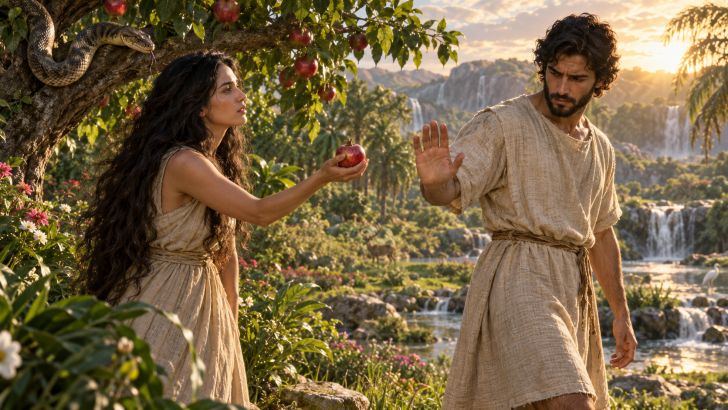
The story of Adam and Eve contains one of the most famous decisions in the Bible.
In Genesis 3, the serpent persuades Eve to eat fruit from the tree of the knowledge of good and evil.
Eve then gives some to Adam, and he eats as well. Their actions are followed by shame, judgment, expulsion from Eden, and a dramatic change in humanity’s relationship with God.
But what if the story had unfolded differently? What if Eve had eaten the forbidden fruit, offered it to Adam, and Adam simply refused?
Genesis never describes this alternative, so there is no definitive biblical answer.
Christian traditions also differ in how they understand the Fall, original sin, and Adam’s particular role in humanity’s condition.
Still, several biblical passages give us clues about why Adam’s refusal could have changed the story dramatically.
Here are five possibilities.
1. Eve Still Would Have Disobeyed God’s Command
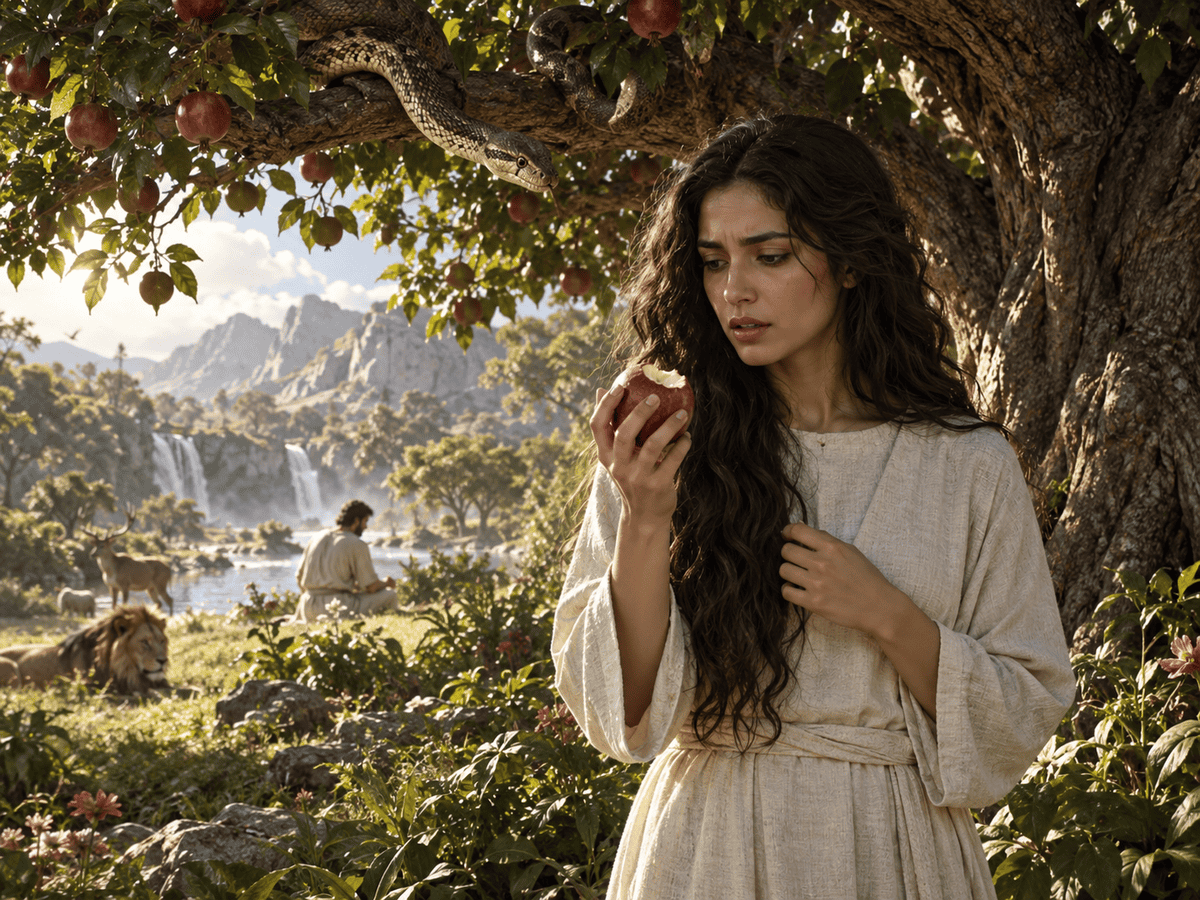
Adam refusing the fruit would not erase Eve’s decision. According to Genesis 3, Eve takes the fruit and eats before giving it to Adam.
Her act of disobedience therefore occurs independently of his decision to join her.
If Adam had refused, Eve would still have crossed the boundary God established.
That means there probably would have been consequences for her actions.
Exactly what those consequences would have looked like is impossible to know because Genesis describes God’s judgment only after both Adam and Eve have eaten.
The alternative raises a fascinating question. Would Eve alone have been expelled from Eden?
Would God have provided some path toward restoration? Could Adam have remained in the garden?
The Bible never answers these questions. What it does make clear is that Adam could not undo Eve’s choice simply by making the opposite one.
He could only decide whether he would repeat it.
2. Adam Would Have Passed the Test He Failed in Genesis
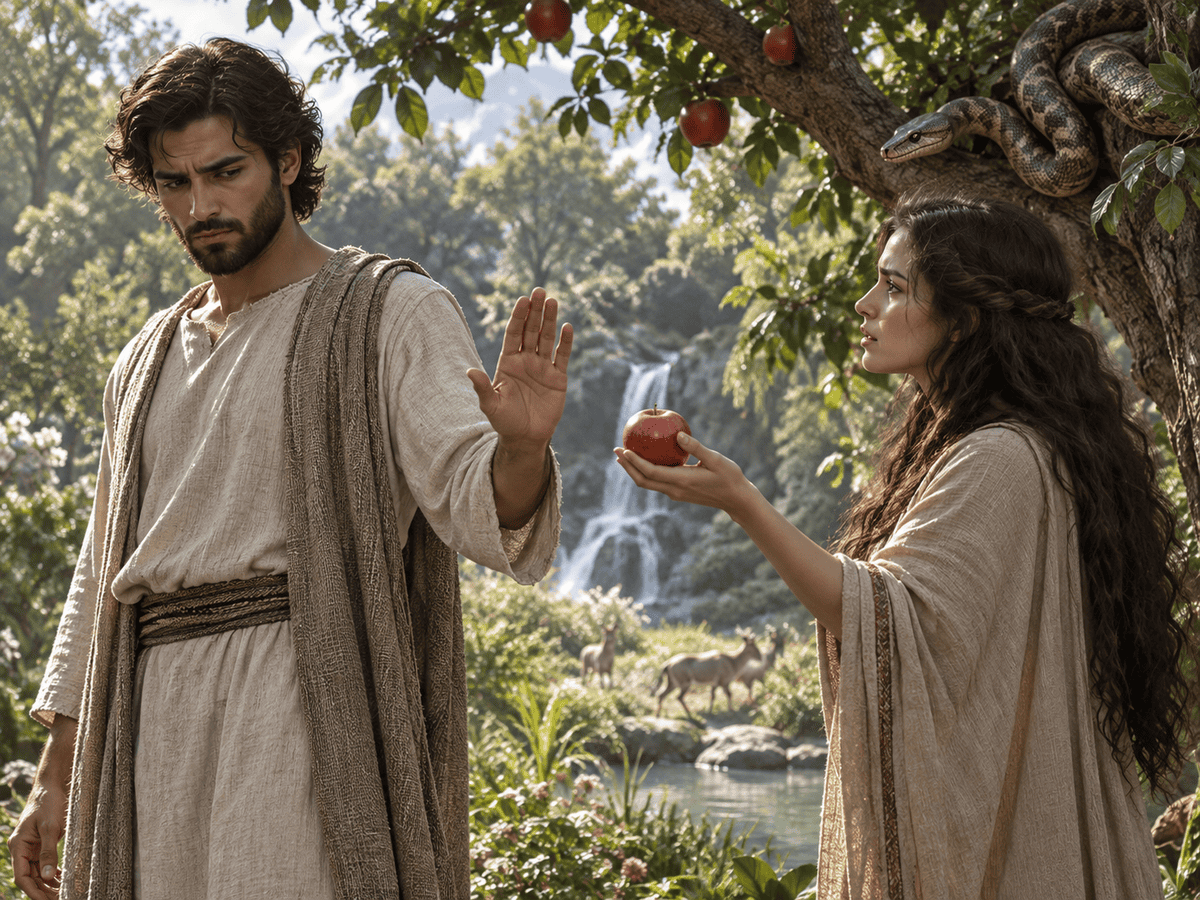
Adam’s refusal would represent a remarkable moment of obedience. Genesis says Eve gave the fruit to her husband and he ate it.
The story provides no long argument between Adam and the serpent. He simply participates.
In the imagined alternative, Adam would face an extremely difficult choice.
Someone close to him has already broken God’s command and now offers him the opportunity to do the same.
Refusing would mean trusting God’s command even when the person beside him made another choice.
Instead of becoming another participant in the transgression, he would become the person who remained obedient when temptation reached him.
The serpent’s strategy would therefore have succeeded with Eve but failed with Adam.
That distinction becomes particularly interesting when we look at how later biblical writers discuss Adam.
3. The Biblical Idea of the Fall Might Have Looked Very Different
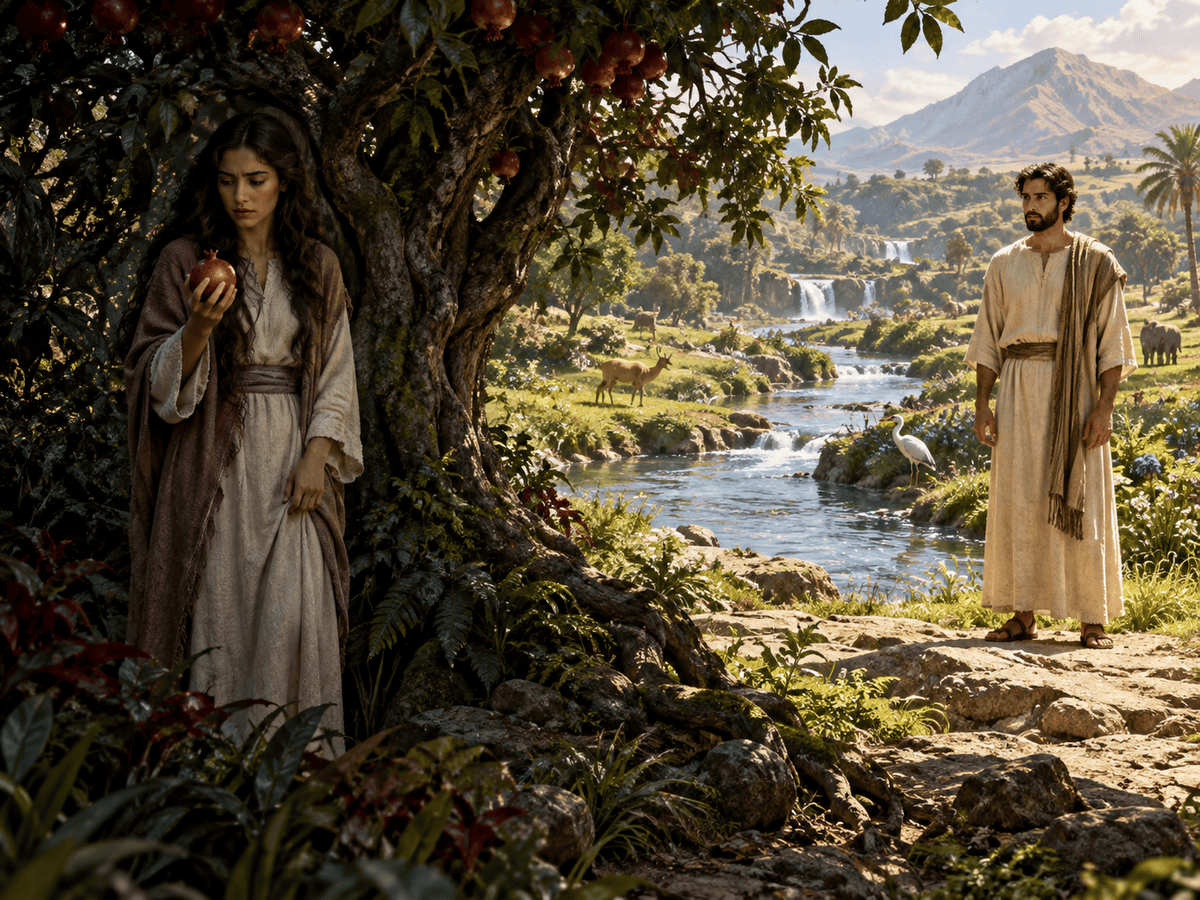
Later Christian theology places enormous significance on Adam’s sin.
Romans 5 famously develops a comparison between Adam and Jesus Christ, describing sin and death entering human experience through one man and contrasting Adam’s disobedience with Christ’s obedience.
First Corinthians 15 also connects Adam with death while presenting Christ as the source of resurrection and life.
Because of passages like these, Adam occupies a particularly important position in many Christian explanations of the Fall.
This makes the hypothetical scenario much more complicated than simply asking what would happen to Eve.
If Adam had refused, one of the central actions later used to explain humanity’s fallen condition would never have happened in the same way.
Would humanity still inherit a fallen condition through Eve alone?
Christian traditions might answer that question differently, and Scripture never directly addresses the imaginary scenario.
What we can say is that the biblical story of sin, death, and redemption would have required a very different explanation.
4. Adam and Eve Might Have Faced a Painful Separation

One of the strangest possibilities is that Adam’s obedience could have separated him from Eve.
Genesis describes the couple together before and after their disobedience. They live in Eden together.
They eat the fruit. They hide. They face God. They eventually leave the garden.
But imagine only one of them becoming guilty of disobedience. Adam might remain obedient while Eve faces judgment.
That could create a situation the actual Genesis story never has to explain.
Would Adam choose to leave with her? Would leaving Eden voluntarily itself violate God’s will?
Would Eve be allowed to remain beside him despite what she had done?
Could their relationship continue under completely different conditions? There is no biblical answer.
The possibility does, however, reveal something interesting about Adam’s hypothetical test.
Refusing the fruit might require choosing obedience to God even when he feared losing the person closest to him.
That would make the decision much more emotionally difficult than simply saying no to a piece of fruit.
5. The Entire Story of Humanity Could Have Changed

The largest consequences would involve everyone who came afterward.
Genesis presents Adam and Eve as the parents from whom human life outside Eden continues.
Their children are born after the events surrounding the Fall and expulsion.
If Adam had remained obedient while Eve had not, almost every assumption behind that story becomes uncertain.
Would they still become parents together? Would their descendants share Eve’s condition, Adam’s condition, or something else entirely?
Would death still become humanity’s universal experience?
Would humanity eventually need redemption in the same way described throughout Christian theology?
Even the later biblical comparison between Adam and Christ would look different.
There is simply no way to reconstruct an alternative Bible with certainty from a choice that the text says never happened.
Yet that may be exactly why the question is so interesting.
Genesis does not present the Fall as the unavoidable result of Eve’s decision alone. Adam receives the fruit and makes his own choice to eat.
Even after someone else makes the wrong decision, another person still faces a decision of their own.
In the biblical story, Adam follows Eve into disobedience.
Had he refused, the history described in Genesis might have become almost unrecognizable.

I always felt a strong connection to the Divine since my birth. As an author and mentor, my mission is to help others find love, happiness, and inner strength in the darkest of times.